Wembanyama: Every Game Against Jokic Is a Lesson
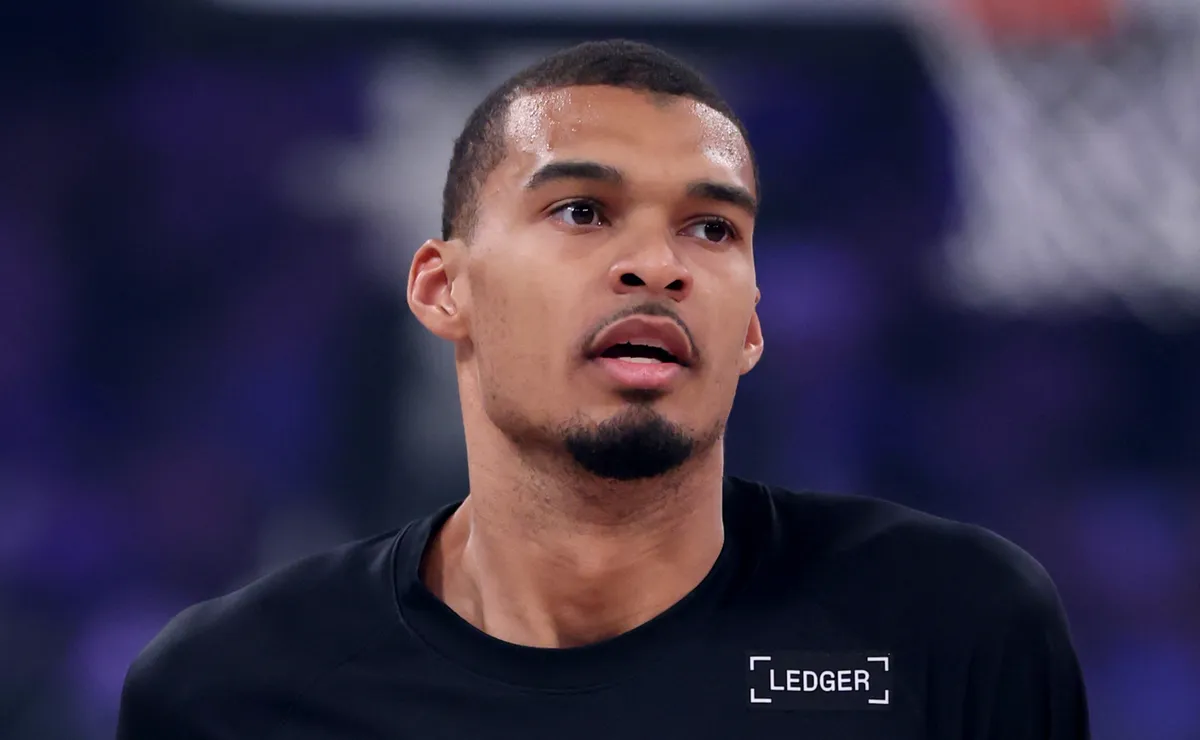
Source: Bolavip. Casualplayhub News adds summary, context, and editorial framing while linking back to the original report.
Victor Wembanyama and Nikola Jokic turned a pair of exhibition games into a preview of a rivalry that could define the next decade of basketball. Over two contests in Belgrade and Orleans, France and Serbia squared off as part of their preparations for the upcoming FIBA World Cup European Qualifiers. The series, split 1-1, offered a glimpse of the growing tension between two of the most dominant big men in the game today.
Serbia drew first blood on Thursday in Belgrade, edging France 90-87. Jokic, the three-time NBA MVP, orchestrated the offense with his usual blend of vision and power, finishing with a near triple-double: 20 points, nine rebounds, and eight assists. Wembanyama, the 22-year-old Defensive Player of the Year, struggled to find his rhythm. He managed only 10 points and four rebounds while committing six turnovers, a reminder that even the most prodigious talents need time to master the nuances of high-level competition.
France responded emphatically in the return leg in Orleans on Sunday. This time, it was a nail-biter that came down to the final possession. A game-winner from Jaylen Hoard sealed a 91-90 victory for Les Bleus, giving the home crowd a reason to celebrate. Wembanyama showed significant improvement, posting 18 points, five rebounds, and three blocks. He played with more aggression on both ends, using his length to disrupt shots and his mobility to finish above the rim. Jokic, however, remained the steady force, tallying 34 points, 13 rebounds, and five assists. His ability to read double teams and find open teammates kept Serbia in the game until the very end.
After the series, Wembanyama reflected on the value of these matchups. “You always learn when you play against Jokic. You always catch some stuff and smarter moves on the court in those duels with him,” he said, as quoted by BasketNews. The young center acknowledged that while he can match Jokic in physical tools, the Serbian veteran’s basketball IQ and craftiness present a different kind of challenge. “He’s been doing this at the highest level for years. Every possession with him is a test of decision-making, patience, and positioning.”
The contrast in styles was evident throughout the series. Jokic relies on footwork, body control, and an uncanny sense of timing to create scoring opportunities and collapses defenses. Wembanyama, at 7-foot-4, uses his wingspan and agility to alter shots and cover ground that few players can. Yet, as the games showed, experience still matters. Jokic commanded the floor at 100% intensity, while Wembanyama occasionally forced plays, leading to turnovers that Serbia capitalized on.
This exhibition series comes at a pivotal time for both players. Wembanyama is making his first appearance with the French national team since the 2024 Paris Olympics, where France fell short of gold. “Our plan is simple. We are going to Paris in a day or two, continue with our preparations, and then we play the qualifier games,” the two-time All-Star said. The FIBA World Cup European Qualifiers represent a chance for him to build chemistry with his international teammates and prove he can carry a team on the global stage.
For Jokic, the series was another opportunity to showcase his enduring brilliance. After a disappointing first-round playoff exit to the Minnesota Timberwolves last season, the Nuggets star remains hungry for redemption. The two centers will not meet in the NBA until March, when the Spurs host the Nuggets in San Antonio. But the seeds of a rivalry are already planted. Both teams are considered top contenders in the Western Conference, and the dynamic between Wembanyama and Jokic will likely shape the conference’s landscape for years to come.
Last season, Wembanyama led the Spurs to the NBA Finals for the first time since 2014, a remarkable achievement for a player still in his early twenties. The Nuggets, meanwhile, are looking to bounce back after a premature exit. The exhibition series in Europe served as a reminder that while the NBA season is months away, the competition between these two giants is already heating up. Fans can expect more chapters in this story when the Spurs and Nuggets clash again in March.
Article commentary
The two-game exhibition series between France and Serbia offered more than just a tune-up for the FIBA World Cup qualifiers. It provided a compelling snapshot of a generational rivalry in the making. Victor Wembanyama and Nikola Jokic represent two different eras of basketball, yet their games are converging in ways that make each matchup a must-watch event. At 31, Jokic has already cemented his legacy as one of the most intelligent and versatile centers in NBA history. His ability to control the tempo, read defenses, and make split-second decisions is unmatched. In the Belgrade game, he demonstrated why he remains the gold standard for big men: even on an off shooting night, he still managed to impact the game through rebounding and playmaking. The 34-point outburst in Orleans was a reminder that when Jokic is locked in, he can single-handedly carry a team. Wembanyama, on the other hand, is still in the early stages of his development. At 22, he has already won Defensive Player of the Year and led the Spurs to the NBA Finals. Yet, the exhibition series exposed areas where he still needs to grow. His six turnovers in the first game highlighted a tendency to over-dribble or force passes that are not there. The second game showed improvement, but the inconsistency is a natural part of his learning curve. What sets Wembanyama apart is his willingness to learn. His admission that he “always learns” from Jokic speaks to a humility that is rare among elite athletes. He is not just trying to beat Jokic; he is studying him. From a tactical perspective, the series underscored the importance of experience in international basketball. Serbia’s system, built around Jokic’s gravity, created open looks for shooters and put France’s defense in constant rotation. France, meanwhile, relied on Wembanyama’s length to disrupt Serbia’s rhythm, but struggled to contain Jokic when he played in the post. The physicality of FIBA basketball, with its shorter shot clock and fewer defensive restrictions, also played a factor. It forced both players to adapt on the fly, something Jokic has mastered over years of international competition. The broader implications for the NBA are significant. The Spurs and Nuggets are both positioned as Western Conference contenders. Wembanyama’s rapid ascension has made San Antonio a destination for free agents, while Denver’s core remains intact. The March matchup between the two teams will be circled on every fan’s calendar. But beyond the regular season, this rivalry could shape playoff outcomes for the next half-decade. If Wembanyama continues to close the gap, the duel between these two centers could become as iconic as the battles between Magic and Bird, or Shaq and Duncan. One more observation: the series also highlighted the value of international basketball in player development. Facing different styles, officiating, and court dimensions forces players to expand their game. For Wembanyama, the experience of playing against Jokic in a high-stakes environment (even an exhibition) is invaluable. For Jokic, it’s a chance to stay sharp and test his skills against a unique defender. The fact that both players showed up and competed at a high level speaks to their professionalism and love for the game. In the end, the split series was a perfect outcome. Neither team claimed dominance, but both players left with something to build on. Wembanyama got a lesson in patience and decision-making, while Jokic reaffirmed that his game translates anywhere. The next chapter of this rivalry, whether in the NBA or on the international stage, promises to be just as thrilling.