Anthropic's Safety Trap: Lessons from Airline Marketing
Source: Fortune. Casualplayhub News adds summary, context, and editorial framing while linking back to the original report.
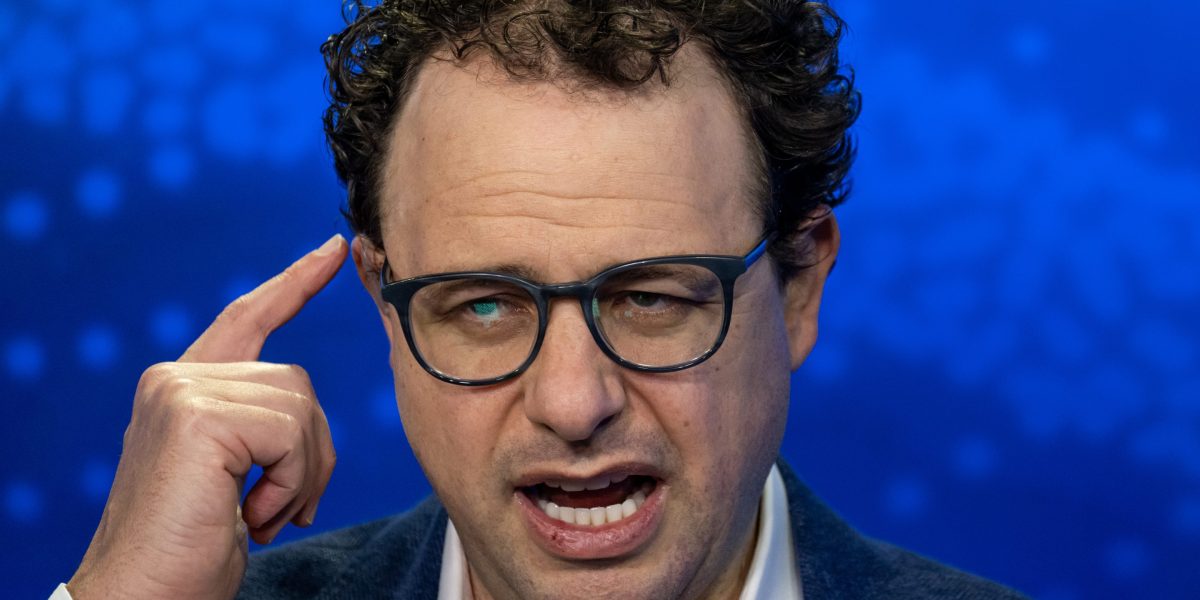
Dario Amodei, co-founder and CEO of Anthropic, has been vocal about the potential dangers of artificial intelligence. He frequently warns about catastrophic risks, from autonomous weapons to AI-driven surveillance. At the same time, he has worked to position Anthropic as the company most committed to building AI safely. But this dual approach may be undermining his own goals.
In a previous interview with Fortune, Amodei stated, "AI safety continues to be the highest-level focus," arguing that this safety-first positioning has reassured corporate buyers that Anthropic's models are less risky than those of competitors. He and his sister Daniela left OpenAI in 2021 partly over disagreements about safety practices. He has also engaged with the Pentagon on concerns about autonomous weapons and AI surveillance.
Yet public skepticism is growing. A recent Gallup survey found that nearly half of adults under 30 now believe AI does more harm than good, a sharp increase from the previous year. Trust in business use of AI has fallen after two years of gains. Pew Research Center's 2026 data shows that most Americans think AI is advancing too fast, and only a small minority expect a net positive impact over the next two decades. A Quinnipiac poll revealed that more than three-quarters of Americans trust AI only rarely or sometimes, even as usage continues to climb.
In a rare lengthy post on X, Amodei wrote that he has composed one major essay on AI's risks and another on its benefits. He argued that negative public perceptions are not due to his or other AI CEOs' warnings about risks, but rather because the industry has not yet delivered on promised benefits like curing diseases. However, while trying to reassure the public, Amodei keeps associating Anthropic with "safety" in a way that implies the entire AI industry is unsafe.
This is a trap that public relations experts have recognized for decades: the problem of association. The airline industry learned long ago to never use the word "safety" in marketing. While safety reminders remain mandatory in flight briefings, airlines have transformed them into entertainment—short films, songs—rather than solemn warnings. Safety simply leaves a bad taste; it is not something people want to think about before boarding.
Historian Richard Popp's research on airline advertising shows that by the 1930s, carriers operated under unwritten rules to keep any hint of danger out of ads: no mountains, night flying, large bodies of water, or maintenance work, because each evoked the possibility of a crash. Despite this taboo, Pan Am ran a reassurance campaign in the 1980s amid hijacking and bombing threats, insisting on its safety. Then in December 1988, a bomb brought down Pan Am Flight 103 over Lockerbie, Scotland, killing 270 people. Aviation security expert Glen Winn said that disaster convinced the industry to retire the word "safe" for good.
The airline industry discovered that stating a fear about yourself is worse than saying nothing, because the word does the same work against you. Linguist George Lakoff's 2004 book "Don't Think of an Elephant" illustrates this: telling someone not to think of an elephant forces them to picture it first. The instruction to stop thinking does not erase the image.
When Amodei created a Responsible Scaling Policy modeled on biosafety tiers and issued public warnings about AI risk and job losses, it resonated with one audience: engineers, safety researchers, enterprise buyers, and investors who view Anthropic's concerns about "catastrophic risk" as diligence. But these were already likely to trust Anthropic's motives. The danger imagery did not attach to the company in the same way it might elsewhere.
Now, Amodei's direct approach may be pushing users against AI. When Anthropic aired a television ad titled "There's hope in hard questions," it opened with a burning house, then showed a crowd being scanned by facial recognition, a person sleeping on a city street, and rows of tombstones resembling a national cemetery. A voiceover asked, "Can AI be trusted?" After seeing it, OpenAI CEO Sam Altman said, "i thought this was satire," mistaking it for a parody. To a general audience, the ad did not convey that Anthropic is the only company willing to grapple honestly with AI risks. Instead, it reinforced the idea that all AI companies, including Anthropic, are ushering in a dystopian future.
That is the lesson airlines learned about selling safety. And it is one the AI industry may need to relearn today.
Article commentary
The article draws a compelling parallel between Anthropic's safety messaging and the airline industry's historical missteps. At its core, the issue is about framing and psychological association. When a company repeatedly emphasizes safety, it inadvertently primes the audience to think about danger. This is a well-documented phenomenon in cognitive linguistics, most famously articulated by George Lakoff: the act of negating a concept still requires the brain to activate it. By telling the public "we are safe," Anthropic forces them to imagine the very risks it seeks to mitigate. For the airline industry, the lesson came hard. Decades of tacit avoidance of safety language in advertising crumbled when Pan Am's explicit reassurance campaign preceded a catastrophic bombing. The disaster cemented the idea that talking about safety invites scrutiny of its absence. Today, airlines focus on the experience of flying—comfort, efficiency, destination—rather than the absence of crashes. This approach works because it shifts the narrative from risk avoidance to value creation. Anthropic's situation is more complex. The company operates in a field where genuine risks exist, and regulators, investors, and the public demand transparency. Amodei's warnings about catastrophic AI risks are not baseless; they reflect a responsible approach. However, the manner in which these concerns are communicated matters. By branding itself as the "safety-first" AI company, Anthropic creates a self-referential trap. Its marketing—including the dystopian TV ad—unintentionally reinforces the very fears it hopes to address. Moreover, the data on public sentiment is unequivocal. Trust in AI is declining, especially among younger demographics. The Gallup, Pew, and Quinnipiac polls cited in the article show a significant erosion of confidence. While Amodei attributes this to unfulfilled promises, the article suggests that his own messaging may be a contributing factor. The distinction is subtle but important: the public may not differentiate between a company that warns about risks and one that embodies those risks. From a strategic perspective, Anthropic might benefit from adopting the airline industry's later approach: embed safety in operations, not in advertising. Instead of leading with safety as a differentiator, the company could focus on demonstrable benefits—like improved diagnostics, productivity gains, or creative assistance—while letting safety speak through actions, such as third-party audits and transparent incident reports. This would align with what the PR industry has long known: actions build trust more effectively than words. However, there is a counterargument. The AI industry is not the airline industry. The stakes are different, and the public's understanding of AI is still nascent. Explicit safety messaging may be necessary to differentiate responsible players from reckless ones. Yet the article's central insight remains valid: marketing that highlights danger, even to rebut it, can backfire. Anthropic's challenge is to balance honesty about risks with a narrative that inspires confidence rather than fear. The airline industry's painful lesson offers a cautionary tale, but the AI sector must adapt it to its own unique context.