AI Clones of Harvard Professors Lead $699 Startup Bootcamp
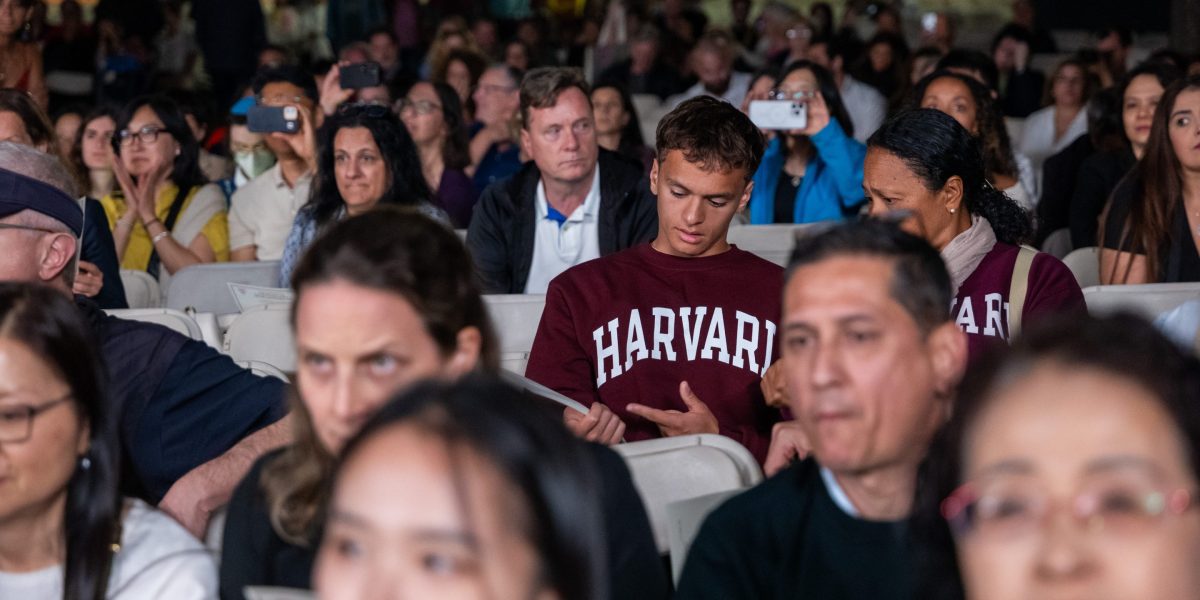
Source: Fortune. Casualplayhub News adds summary, context, and editorial framing while linking back to the original report.
The newest Harvard Business School professor never sleeps, can hear the same pitch 50 times without complaint, and technically isn't a teacher at all. This tireless instructor is an AI clone, one of seven digital avatars now powering a $699 online startup bootcamp designed to help aspiring founders rehearse investor pitches, sales calls, and board meetings with the virtual presence of real Harvard faculty. The eight-week program operates under HBS Foundry, which Harvard calls an "AI-native digital workspace" for entrepreneurs. Alongside live sessions with human experts, participants interact with personalized AI mentors modeled on professors with backgrounds in venture capital, business-model design, board dynamics, and startup strategy. The experience culminates in an opportunity to pitch to real investors for a $100,000 prize. According to a Harvard spokesperson, 760 founders have already enrolled in the bootcamp.
Kat Rings, director of Foundry, explained to Fortune that the idea emerged from founders themselves. "They wanted opportunities to practice and be challenged before getting in front of mentors and investors, so those conversations could be even more meaningful," she said. The seven professors and senior lecturers who volunteered for the project underwent dedicated interviews, recording sessions, and ongoing feedback loops to ensure their digital doubles accurately captured their perspectives. Shikhar Ghosh, one of the cloned professors, emphasized that the AI is not a replacement. "The goal isn't to create a substitute for me," he told Fortune. "It's to give founders another way to prepare and challenge their thinking, so that when we do come together live, we can spend more of that valuable time on the questions where human judgment and conversation matter most."
The bootcamp is not an HBS degree program nor offered for academic credit. Instead, it represents an effort to "extend entrepreneurial support to high-potential founders wherever they are, including people who may never study at Harvard or have access to the networks and resources of a major innovation ecosystem," the Harvard spokesperson said. This experiment sits at the center of a growing tension on campuses: professors complain about students using AI to cheat on exams—Brown University's Robert Serrano, for instance, has urged universities to stamp out AI-enabled cheating—while other institutions are actively deploying AI to scale faculty time. Imperial Business School has created digital twins of its professors, and Georgia Tech has used an AI teaching assistant named Jill Watson across large online classes. Last year, Georgia Tech professor David Joyner built an AI avatar of himself, dubbed "DAI-vid," for an online generative AI course on edX, the platform co-founded by Harvard and MIT.
Lindsay Tanne Howe, whose company LogicPrep helps students gain admission to top schools, sees the potential but also the limits. "Much like online courses have made lectures from top universities broadly available, AI has the potential to go a step further and make not just a professor's knowledge, but some version of their perspective and judgment, available at scale," she told Fortune. "But what it can't replicate is everything that happens between people." Kian Katanforoosh, a Stanford lecturer and founder of AI skills platform Workera, added that AI can handle repetitive tasks—answering unlimited questions, explaining concepts in different ways—but cannot truly know a student. "What AI cannot fully replicate is knowing a student as a person," Katanforoosh said. "A professor can recognize potential, inspire a student, and make an introduction based on years of human interaction. AI can simulate some of these behaviors, but today it cannot put its own reputation at stake or genuinely care what happens next."
Scaling faculty through AI also raises an awkward question for universities: at what point does efficiency begin to undermine what students believe they are paying for? College students already object to professors outsourcing lesson planning and grading to AI, as Fortune previously reported. While Harvard's Foundry program is transparent about its use of AI, it could generate similar friction. "It can't necessarily replicate the experience of an elite education," Howe noted. Joyner, now Georgia Tech's interim Vice Provost for AI in Education, pointed out that the bootcamp's $699 price tag—compared to Harvard Business School's annual tuition of over $84,000—is part of a broader push to make higher education more accessible. However, he stressed that the role of the professors themselves remains "key" to making AI avatars effective. "Faculty using AI to expand the number of students that they can reach and the quality of the instruction they give can have an enormous positive effect," Joyner told Fortune via email. "But if companies or universities try to build these tools out of existing content without strong collaboration with the person being represented, there's no way to really know if the experience is representing the faculty themselves."
Article commentary
Harvard Business School's foray into AI-cloned professors for a $699 startup bootcamp neatly encapsulates the promise and peril of artificial intelligence in education. On one hand, the initiative democratizes access to elite mentorship, allowing founders anywhere to rehearse pitches with a digital version of a renowned venture capital expert. On the other, it forces a reckoning with what higher education actually sells: is it the transmission of knowledge, the credential, or the irreplaceable human connection that sparks growth and opportunity? The program's advocates argue that AI avatars are a natural extension of the online course revolution. Just as recorded lectures from top universities once made high-level instruction broadly available, AI clones can now offer a semblance of personalized judgment at scale. This is especially valuable for entrepreneurs who lack the networks and resources of a Harvard campus. The bootcamp's relatively low price point—$699 versus $84,000 in annual tuition—reflects a deliberate strategy to lower barriers, not to replace the full residential experience. The founders who participate are not seeking a degree; they want practical, high-stakes practice before facing real investors. For that purpose, a tireless, endlessly patient AI clone might be more effective than a human professor who can only offer a few minutes of feedback. Yet the tension is palpable. Critics rightly point out that AI cannot replicate the social capital, inspiration, and genuine care that define transformative education. A professor who recognizes a student's potential and makes a career-changing introduction is doing something no algorithm can. The bootcamp's own director, Kat Rings, acknowledged that the AI experiences were designed to prepare founders so that "those conversations could be even more meaningful" when human mentors are present. This suggests a symbiotic model: AI handles the repetitive drills, humans handle the nuanced judgment. But the boundary between supplement and substitute is fuzzy. If universities begin to scale AI clones for core instruction, they risk devaluing the very human elements that justify their high tuition. Students already object to professors offloading grading and lesson planning to AI; the same resentment could emerge if they feel they are paying for a digital avatar rather than a real mentor. Moreover, the ethical dimension cannot be ignored. The professors who volunteered for cloning had their voices, appearances, and intellectual styles captured. But what happens when the AI begins to give advice that diverges from the professor's actual views? Joyner's warning about the need for "strong collaboration" is crucial. Without ongoing faculty oversight, the avatar might become a static caricature, or worse, a brand that misrepresents the individual. There is also the question of intellectual property: who owns the AI clone? The professor, the university, or the platform? These are not merely theoretical concerns; they will determine whether AI avatars become a boon for access or a tool for exploitation. Ultimately, Harvard's experiment reflects a broader societal shift. We are learning to live with AI that is increasingly indistinguishable from human experts in certain narrow domains. The challenge is to use these tools to augment, not replace, the human touch that makes education transformative. The bootcamp's success—measured not just by the number of participants but by the quality of their eventual pitches and outcomes—will provide a early signal. If founders who rehearse with AI clones go on to secure funding and build thriving companies, the model will likely spread. But if they emerge feeling that something essential was missing, the industry will have to recalibrate. The conversation is just beginning, and as with any powerful technology, the key lies in thoughtful implementation, not wholesale adoption.