Dimon Foundation Pours $12M into 12 HBCUs for Endowment Growth
Source: Fortune. Casualplayhub News adds summary, context, and editorial framing while linking back to the original report.
Ad eligibility review: sensitive-topic
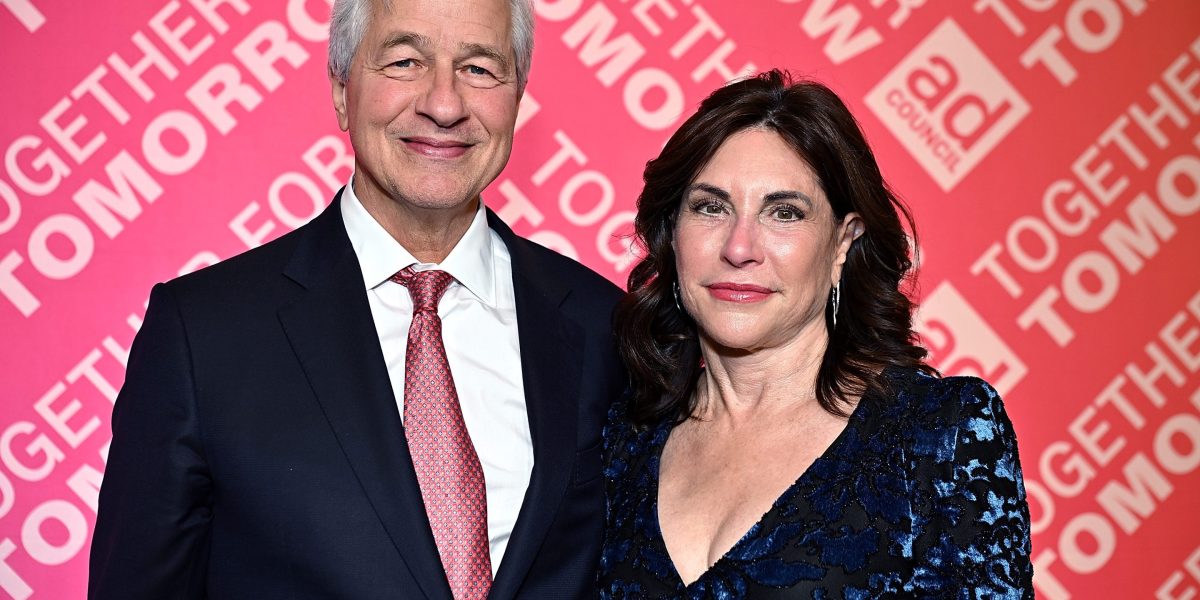
Jamie Dimon, the long-serving CEO of JPMorgan Chase, is a figure whose blunt commentary on the economy and geopolitics often grabs headlines. Yet his philanthropic work, shared with his wife Judith, tends to operate far from the spotlight. Their foundation, The James and Judith K. Dimon Foundation, founded in 1996, lacks even a public website. But its tax filings reveal a steady stream of millions directed toward education and economic mobility. In 2024 alone, the foundation disbursed over $9 million, primarily to public schools and career advancement initiatives.
On August 20, the United Negro College Fund announced a significant new commitment: a $12 million donation from the Dimons to 12 historically Black colleges and universities. This grant establishes The Dimon Fund to Advance Economic Opportunity, part of UNCF’s broader $1.5 billion capital campaign. The money will go into permanent endowments, with each of the 12 schools receiving a share, matched by UNCF’s pooled endowment fund. The approach is designed to give institutions financial stability and flexibility over decades, rather than tying funds to specific short-term programs.
The selected HBCUs span the South and include Benedict College in South Carolina, Dillard University in Louisiana, Edward Waters University in Florida, Huston-Tillotson University in Texas, Jarvis Christian University in Texas, Johnson C. Smith University in North Carolina, Miles College in Alabama, Oakwood University in Alabama, Shaw University in North Carolina, Stillman College in Alabama, Tuskegee University in Alabama, and Voorhees University in South Carolina. UNCF chose these schools for their leadership in producing teachers, nurses, and other healthcare professionals—fields where HBCUs often outperform for first-generation students.
In a joint statement, Jamie and Judith Dimon explained their motivation: "Our system of HBCUs continue to serve as the springboard to success for thousands of students in pursuit of the American Dream. As the children of first-generation high school and college graduates, we were imbued with a thirst for knowledge and a drive to succeed—principles that we have passed on to our own children and that we wish to share with all the students at the selected HBCUs."
Judith Dimon, who serves as foundation president, has overseen grants focused on career-connected learning for New York City public school students. The foundation helped launch FutureReadyNYC, an initiative aiming to provide 100,000 students with hands-on career experience by 2030. Jamie Dimon also previously served on UNCF’s board.
The Dimon gift arrives at a time of heightened uncertainty for HBCUs. The Trump administration has pulled back funding for public institutions, and a 43-day government shutdown that began October 1, 2025, froze new grants from the Department of Education and furloughed most of its staff. Programs like the HBCU Capital Financing Program were left in limbo, even as the department announced a $495 million increase for HBCUs and tribally controlled colleges for fiscal year 2025. Some education experts questioned the sincerity of that support. Mike Hoa Nguyen, an associate professor at UCLA, told The American Prospect in October 2025 that if the administration truly cared about HBCUs, it would not be attacking other sectors of higher education. The shutdown ended November 12, but the reprieve appears temporary, with the department signing agreements to transfer billions in grant programs to other agencies—a step toward the administration’s goal of dissolving the Education Department.
Other billionaire philanthropists have filled the gap. MacKenzie Scott, for instance, has given over $700 million to more than a dozen HBCUs and affiliated organizations. The Dimons’ $12 million endowment-focused donation, while smaller in scale, reflects a strategic bet on long-term institutional strength rather than immediate programmatic relief.
Article commentary
The Dimon Foundation’s $12 million donation to 12 HBCUs is more than a charitable gesture; it represents a strategic investment in the long-term financial health of institutions that have historically been underfunded. By channeling the money into permanent endowments rather than short-term programs, the Dimons are betting on sustainability. This approach aligns with a growing recognition among philanthropists that endowments provide colleges with the autonomy to plan for decades, rather than scrambling to meet annual budgets. For HBCUs, which have faced chronic underinvestment compared to predominantly white institutions, such endowment gifts can be transformative. The timing is particularly significant. The Trump administration’s budget cuts and the 43-day government shutdown in 2025 have created a volatile funding environment for HBCUs. The Department of Education’s delayed grants and the uncertainty surrounding the HBCU Capital Financing Program underscore the fragility of federal support. In this context, private donations from individuals like the Dimons and MacKenzie Scott fill a critical gap. However, this reliance on philanthropy raises questions about the sustainability of higher education funding. Critics argue that billionaire philanthropy, while generous, cannot replace consistent public investment. Moreover, the tax benefits of charitable giving may incentivize wealthy donors to influence educational priorities in ways that are not always aligned with broader societal needs. The Dimons’ personal story adds a layer of authenticity. As children of first-generation graduates, they understand the power of education as a ladder. Their focus on career-connected learning and HBCUs, which excel at graduating first-generation students, reflects a targeted approach to economic mobility. Yet the scale of their giving—$12 million spread across 12 schools—amounts to $1 million per institution, a meaningful but modest sum for endowments. The real impact may lie in the message it sends: that HBCUs are worthy of investment from the highest echelons of corporate America. Jamie Dimon’s role as CEO of JPMorgan Chase, the world’s largest bank, lends weight to the donation. It signals that the financial sector sees value in HBCUs, potentially encouraging other corporate leaders to follow suit. The fact that the Dimon Foundation operates without a website, preferring to stay out of the limelight, contrasts with the high-profile philanthropy of figures like MacKenzie Scott. This quiet approach may be more effective in some ways, avoiding the pitfalls of donor-driven agendas. Ultimately, the Dimon gift is a vote of confidence in HBCUs at a moment when federal support is uncertain. It underscores the importance of private philanthropy as a stopgap, but also highlights the need for systemic reform. Without stable public funding, even the most generous endowments cannot fully address the structural inequities in higher education. The Dimons’ donation is a powerful example of what can be achieved when wealth is directed thoughtfully, but it is no substitute for a robust public commitment to educational equity.