Hawks' Opportunistic Trade: Butler for Kuminga Fix?
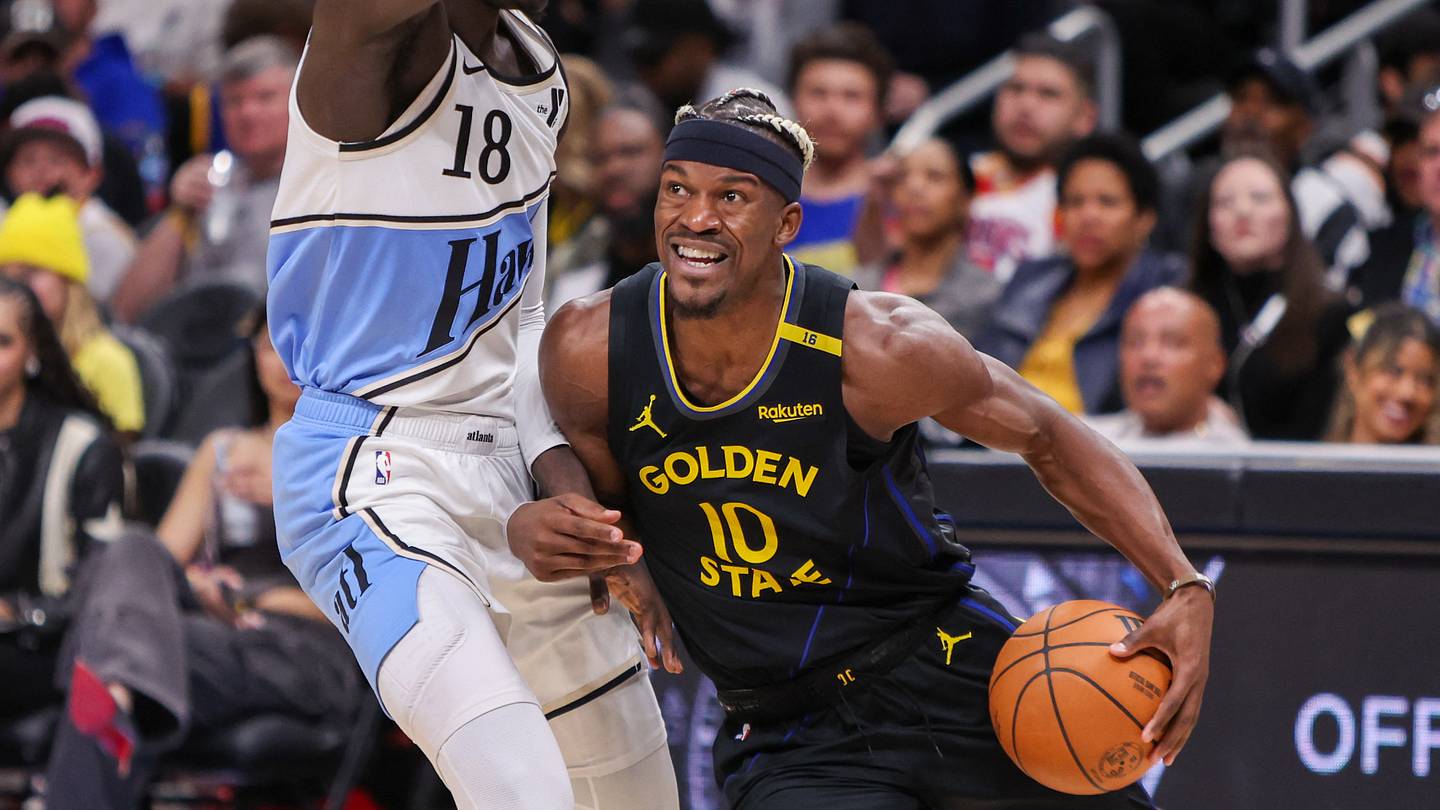
Source: SI NBA. Casualplayhub News adds summary, context, and editorial framing while linking back to the original report.
The Atlanta Hawks are at a crossroads. Five consecutive seasons without a first-round playoff victory, a rapidly improving Eastern Conference, and a roster that feels incomplete despite added depth. The front office, led by president of basketball operations Onsi Saleh, has made clear that an all-in approach—sacrificing multiple first-round picks for a star—does not align with their vision. But there is room for opportunistic moves, and the unresolved situation with Jonathan Kuminga’s free agency provides just that kind of opening.
Kuminga, a restricted free agent, has yet to find a long-term home. The Hawks have the cap space and the need to either extend him or trade him. The better path may be to send Kuminga to a team where he can start and develop, while bringing back a proven veteran who can immediately ease the burden on Jalen Johnson. After the Knicks dismantled the Hawks in Game 3 of their playoff series, it became clear that Johnson cannot carry the offense alone. The Hawks’ depth additions—decent players, but none coming off standout seasons—won’t be enough.
Enter Jimmy Butler. The 36-year-old wing tore his ACL last season but was playing at an elite level before the injury. In 2024-25, he averaged 20 points, 5.6 rebounds, and 4.9 assists on a 64.6 TS% — the second most efficient shooting season of his career. The Golden State Warriors were 13.5 points better per 100 possessions with Butler on the floor. He functioned as a secondary creator alongside Steph Curry and Draymond Green, but also thrived as the primary option when needed. In Atlanta, he would slide into the third starter role, a perfect complement to Johnson and CJ McCollum.
Butler’s game is built on intelligence and cutting. Last season, 29% of his shots came as a play finisher, and he ranked in the 93rd percentile as a cutter. Pairing him with Jalen Johnson, another elite cutter, would create a nightmare for defenses. Butler also improved his three-point shooting in Golden State, hitting 37.6% on 2.2 attempts per game before the injury. He will take and make the open looks the defense gives him. In the postseason, his 130 playoff games, two Finals appearances, and ability to read playoff defenses are invaluable assets the Hawks currently lack.
The proposed trade is a three-team deal that satisfies all parties. The Atlanta Hawks receive Jimmy Butler, a 2030 second-round pick from Golden State, and two 2033 second-rounders (from the Warriors and Bucks). The Milwaukee Bucks get Corey Kispert, Buddy Hield, Mo Gueye, Jonathan Kuminga on a new three-year, $60 million contract, plus three first-round picks: 2027 from Golden State, a 2028 pick swap, and a 2029 first-rounder. The Warriors receive Asa Newell, Myles Turner, Ryan Rollins, Jericho Sims, and a 2027 first-round pick (originally from New Orleans or Milwaukee, via Atlanta).
For the Bucks, this deal provides control over three future first-round selections and a chance to develop Kuminga into a core piece. Kispert and Hield’s contracts expire before Milwaukee’s competitive window opens, and Gueye offers a low-risk frontcourt project. The Warriors get a balanced roster around the aging Steph Curry: a starting lineup of Curry, Rollins or Brandin Podziemski, Draymond Green, Yaxel Lendeborg (or a similar young forward), and a center rotation of Turner, Al Horford, or Kristaps Porzingis. Three centers who can space the floor and defend reduces the burden on Green. Asa Newell, just 20, shows promise as a rebounder and shooter. Giving up three first-round picks is steep, but with Curry likely still playing at an All-Star level for two more years, the Warriors can compete with anyone in the West except perhaps the Thunder and Spurs.
Would all three teams agree? The complexity makes it unlikely, but the Hawks have a strong incentive to try. The Eastern Conference is stacked: the Celtics, Cavaliers, Pistons all won 50+ games last season. The Heat added Giannis Antetokounmpo, the Knicks are defending champions, and the 76ers added LeBron James, while the Raptors got Kawhi Leonard. The Pacers are a wild card. If the Hawks stand pat, they risk another play-in finish. An opportunistic trade for Butler could lift their ceiling without sacrificing their future picks. It’s a gamble worth taking.
Article commentary
This trade proposal, while creative, highlights the tension between short-term competitiveness and long-term asset management that defines the modern NBA. The Hawks, stuck in the middle of the Eastern Conference, face a classic dilemma: do they try to leapfrog the elite teams with a veteran like Jimmy Butler, or do they continue accumulating young talent and picks? Butler’s fit is intriguing. Even at 36 and coming off an ACL tear, he remains a high-IQ, two-way player who can create offense without dominating the ball. His efficiency before the injury was remarkable, and his playoff pedigree is undeniable. For a team that struggled to generate consistent half-court offense outside of Jalen Johnson, Butler’s cutting and passing would be a significant upgrade. The defensive pairing of Butler, Dyson Daniels, and NAW could be suffocating, reducing the scoring burden. However, the risks are substantial. Butler’s injury history is concerning, and he may not be ready until March, if at all. The Hawks would be giving up depth and future flexibility for a player who might not be the same after an ACL tear at his age. The trade also requires the cooperation of two other teams, each with their own motivations. The Bucks get a haul of picks and a young prospect in Kuminga, but they take on the bad contracts of Kispert and Hield. The Warriors get a win-now roster around Curry, but they lose flexibility and three first-round picks. From a broader perspective, this trade reflects the Hawks’ need to show progress. The front office has added depth, but none of those additions are impact players. The Eastern Conference has only gotten stronger. Standing pat likely leads to another play-in appearance and a potential first-round exit. The urgency is real, but so is the danger of making a desperate move. Perhaps the most compelling argument for the trade is that it solves the Kuminga situation. Kuminga, a talented but inconsistent forward, has clearly wanted a starting role and more minutes. The Hawks cannot give him that without stunting Jalen Johnson’s growth. Moving him to a rebuilding team like the Bucks allows him to develop, while the Hawks get a proven star. It’s a win-win for player development. Ultimately, this trade is a calculated risk. If Butler returns to form, the Hawks could become a dangerous playoff team. If he doesn’t, they’ve lost valuable assets. The complexity of the deal makes it unlikely, but it’s the kind of creative thinking that could define the Hawks’ season. The front office must decide whether to gamble on a star’s twilight or continue a patient rebuild. Neither path is easy, but the clock is ticking.