Coach Thumbs Alligator Eye, Escapes Savannah River Attack
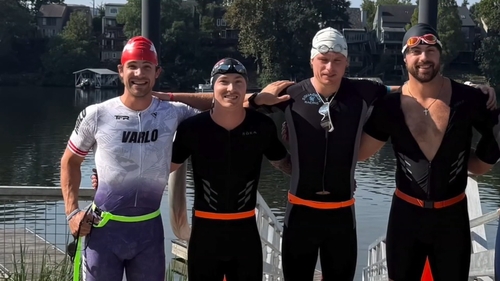
Source: ABC30 Fresno World. Casualplayhub News adds summary, context, and editorial framing while linking back to the original report.
NORTH AUGUSTA, S.C. -- A routine training swim in the Savannah River turned into a life-or-death struggle for a North Carolina triathlon coach and his athletes on Sunday. Jonathan Bruney, a seasoned coach leading a group of triathletes, found himself in the jaws of an alligator just minutes into the water.
“We all jumped into the water. I went first. I’m their coach. I go in first. And we started the swim, and the water felt great,” Bruney recalled. That feeling dissolved roughly a thousand yards from the shore. “So got hit on the side, initially, I was like, ‘oh, did I just swim into a big log?’ I didn’t see any logs in the water. But then I looked, and I was like, ‘oh, no.’ And the pain was like a cold pain up my arm and my body.”
With the alligator’s jaw clamped around his arm, Bruney had seconds to act. He remembered a key piece of survival knowledge: target the eyes. “I just knew the eyes were what you should target. So just grabbed, put my hand on the snout, reached up, and then pushed my thumb into his eyeball, and he released,” Bruney said. The alligator let go, but the danger was far from over.
Bruney immediately turned his focus to his athletes. “Immediately, I’m thinking, ‘OK, let’s get to shore.’ So I look back, uh, to see my athletes, Jared, Will, Matt, say, ‘swim to the docks. Get to the docks as fast as possible,’” he said. They scrambled to a nearby dock, where the team’s training kicked in once more.
Matthew Davis, one of the athletes, sprang into action. “Immediately I took my swim buoy, and I ripped the cord off the swim buoy to make a tourniquet, and just applied a makeshift tourniquet onto his arm. Told him, it’s gonna hurt. Squeezed as hard as I could, and I could watch the bleeding stop as we applied the tourniquet,” Davis said. The bleeding slowed, but help was not yet within reach.
“So we start banging on doors, and no one was home at that time. So then we jumped the fence. We get up to the street. We start running, trying to find someone on the road, and we ended up finding a gentleman walking their dogs and asked them to call 911,” Davis said. Until emergency responders arrived, Davis kept his composure, relying on his training. “OK, he’s stable. Now let’s get him to help. Where is help? It’s not on the water. Let’s get him to the street. And we just started; we just went through the processes. And my training is just evaluate. Process it. Execute; go to the next one. Execute; take it to the next one,” Davis said.
Bruney, now recovering, expressed gratitude. “I’m very thankful that it was not as severe as a bite as it could’ve been. It could’ve been way worse. He could’ve lost his arm. We could’ve had a lot of bleeding. But everything was panning out right; everything was taking place, and we got it taken care of.” Despite the trauma, Bruney remains committed to the sport. “No swimming for three to four weeks, but we’ll be back out there on race day, hopefully in the middle of the group, maybe not in the front for the swim at least, and try to make it a great day,” he said. He added a message to his athletes: “I am a coach that will fight off and take a gator bite to protect you and make sure you’re having a successful swim.”
Wildlife officers searched the area Sunday but could not find the alligator. The Savannah Riverkeeper issued a statement, noting that the incident serves as a reminder that the river is shared with wildlife. The attack underscores the unpredictable risks of open-water training in regions where large reptiles are common.
Article commentary
The attack on triathlon coach Jonathan Bruney in the Savannah River is a stark reminder of the inherent risks that come with open-water swimming in areas where wildlife and humans intersect. While alligator attacks are statistically rare—the Florida Fish and Wildlife Conservation Commission reports an average of about eight unprovoked bites per year in the United States—this incident highlights how quickly a routine training session can escalate into a crisis. Bruney’s quick thinking and his team’s preparedness likely prevented a far worse outcome. What stands out most is the execution of basic survival skills. Bruney’s instinct to target the alligator’s eyes, a technique often taught in wildlife safety courses, proved effective. Equally impressive was Matthew Davis’s immediate application of a tourniquet using a swim buoy—a piece of equipment not typically designed for trauma care. This reflects a level of training and calm that is commendable, but also raises questions about how many athletes in similar environments are equally prepared. Many triathletes train in open water without formal emergency protocols, and this incident could serve as a catalyst for better safety education. The response from the group—banging on doors, jumping fences, finding a dog walker to call 911—demonstrates the importance of teamwork and adaptability. However, the lack of immediate access to emergency services along the riverbank is a vulnerability. Organizers of open-water events should consider mapping out access points, establishing communication plans, and ensuring that participants have basic first-aid training, especially in areas with known wildlife hazards. From a broader perspective, this attack is a reminder that the natural world does not recognize human schedules. The Savannah River is home to alligators, and the riverkeeper’s statement is a necessary caution. Yet, it is also worth noting that the alligator was not found, leaving the possibility that it remains in the area. This raises questions about whether local authorities should step up monitoring or public advisories, especially during peak training seasons. Bruney’s determination to return to racing—albeit with a modified approach—mirrors the resilience common among endurance athletes. His message to his athletes, “I am a coach that will fight off and take a gator bite to protect you,” is both a testament to his character and a reminder of the responsibility that comes with leadership. As the triathlon community processes this event, the takeaways should include not only admiration for the coach’s bravery but also a renewed focus on safety protocols, wildlife awareness, and the value of remaining calm under pressure.