PGA Tour CEO Sets Strict Path for LIV Golf Return
Source: ABC News Sports. Casualplayhub News adds summary, context, and editorial framing while linking back to the original report.
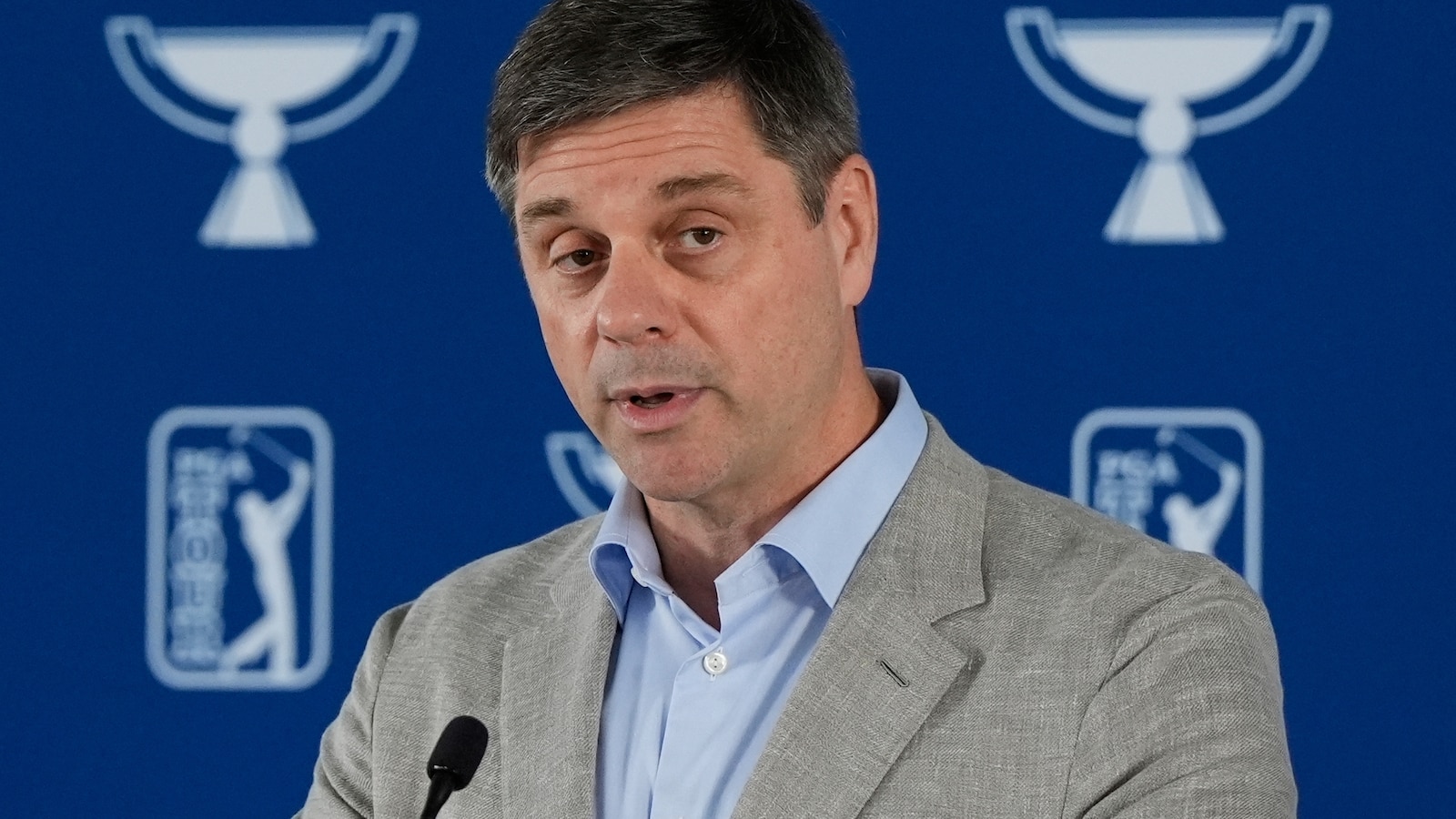
PGA Tour CEO Brian Rolapp has made it clear that the door for LIV Golf players to return is not only narrow but also temporary. Speaking from Atlanta, Rolapp outlined a path that requires players to be completely free of any contractual ties to the Saudi-backed league before the tour can consider their reinstatement. The offer came with a tight deadline, and Rolapp warned that once the window closes, there is no guarantee it will ever reopen.
The timing of these remarks is no coincidence. The LIV Golf League has just wrapped up its abbreviated season, and speculation is swirling about which players might be looking to jump ship. Among the most talked-about names are Jon Rahm and Bryson DeChambeau, both of whom have large signing bonuses and multi-year deals with LIV. Brooks Koepka, who mutually ended his contract with LIV at the end of 2025, serves as a template for what a return might look like. Rolapp noted that Koepka demonstrated he had no remaining obligations, and only then could the tour begin serious discussions.
"Anyone who’s interested in coming to the PGA Tour needs to demonstrate that they are relieved of their contractual commitments or any tail obligations they might have in that legacy model," Rolapp said. "Brooks certainly did that, and until then, we weren’t really able to consider anything seriously. I would say the same thing here."
The PGA Tour CEO also reinforced the importance of the tour's existing rules. Players who left for LIV are typically banned from PGA Tour-sanctioned events for one year after their last LIV appearance. Rolapp emphasized that the tour is a membership organization built on rules that must be enforced to maintain competitive integrity. "Rules only matter if they’re enforced," he said. "Accountability and discipline are essential to any organization, and certainly for the integrity of the tour and for the game, especially in a game that prides itself on rules and integrity."
Elsewhere on the tour, Si Woo Kim is having a remarkable season despite not winning a single event. The 31-year-old South Korean has earned nearly $9.74 million this year, and with last place at the Tour Championship worth $355,000, he will surpass $10 million in season earnings. Kim has been remarkably consistent, with 11 top-10 finishes—only Scottie Scheffler has more—and his only missed cut came at the U.S. Open. He credits a switch to a long putter for curing the putting yips that plagued him for a decade. "I was struggling with the putting yips pretty much the last 10 years," Kim said. "Like shaking hands during putting. First year I got broomstick I won Sony Open after Presidents Cup. Now without the putting yips I think I can play good."
The Rookie of the Year race is heading to a decisive finish at East Lake, with Kristoffer Reitan of Norway and Alex Fitzpatrick of England as the only two first-year players to qualify for the Tour Championship. Reitan won the Truist Championship at Quail Hollow, a signature event, while Fitzpatrick secured his card by teaming with his brother, 2023 U.S. Open champion Matt Fitzpatrick, to win the Zurich Classic. Fitzpatrick has since added four top-10s, all in strong fields. "I would say maybe it all comes down to this week," Fitzpatrick said. "But truthfully it’s not something that I’ve really thought about that much. I think with everything else that’s gone on this year, to be here has been amazing."
Meanwhile, the race to surpass Tiger Woods on the PGA Tour's all-time career earnings list is now a two-man contest. Scottie Scheffler needs just $608,506 to pass Woods, who has topped the list since February 2000. A 13th-place finish or better at the Tour Championship would suffice. Rory McIlroy, who earned $1.36 million for third place at the BMW Championship, needs $3.15 million to overtake Woods, which would require at least a fourth-place finish.
Other notable news: Preston Stout of Oklahoma State earned the Mark H. McCormack Medal as the world's top-ranked amateur, securing exemptions to the U.S. Open at Pebble Beach and the British Open at St. Andrews—provided he remains an amateur. Patrick Cantlay voiced concerns about the condensed 2028 schedule, stressing the importance of an offseason. Adam Scott, at 101 consecutive major appearances, is assured of playing in all four majors next year, extending his streak to at least 106 if he stays healthy. The Solheim Cup will feature only 13 of the top 50 players in the women's world ranking. And Wyndham Clark, joking about the pro-underdog crowds at the Presidents Cup, quipped, "If I don’t get love at the Presidents Cup as a USA guy, then I don’t know. I might move to Mexico or something."
Article commentary
Brian Rolapp's latest remarks on the potential return of LIV Golf players represent a significant moment in the ongoing saga that has fractured professional golf. His approach is methodical and rule-bound, offering a narrow path but with a hard deadline, which signals that the PGA Tour is not willing to immediately welcome back its defectors without conditions. This stance is both pragmatic and strategic: it reinforces the tour's authority and the consequences of leaving, while leaving the door slightly ajar for a select few. Crucially, Rolapp's insistence on contractual freedom as a prerequisite is a direct challenge to LIV's business model. By demanding that players sever all ties—including any future obligations or tail payments—he is making it clear that the tour will not accept partial commitments. This echoes the precedent set by Brooks Koepka, whose mutual termination of his LIV contract in 2025 now serves as a template. For players like Jon Rahm and Bryson DeChambeau, who signed massive deals with LIV, the financial and legal hurdles are immense. The tour's one-year ban for LIV participants further complicates any return, effectively creating a waiting period that could dampen the momentum of players who left. From a competitive standpoint, the PGA Tour's emphasis on meritocracy and rule enforcement is understandable. The tour has long prided itself on a system where players earn their status through performance. Allowing a wholesale return of LIV players without consequences would undermine that principle and potentially alienate the loyal members who stayed. However, the tour also faces a delicate balancing act: it needs to maintain its competitive depth while recovering from the talent drain caused by LIV's lucrative offers. A selective, conditional return could help restore some star power without appearing desperate. Si Woo Kim's remarkable season without a win highlights another aspect of the tour's appeal: the ability to earn significant money through consistency rather than just victories. Kim's story is a testament to the depth of talent on the PGA Tour, where even winless seasons can be lucrative. This is a sharp contrast to LIV's model, which relies heavily on a few marquee names and guaranteed contracts. The Rookie of the Year race between Kristoffer Reitan and Alex Fitzpatrick also underscores the tour's ability to develop new stars, even as the LIV challenge persists. The financial milestones—Scottie Scheffler and Rory McIlroy chasing Tiger Woods's career earnings record—serve as a reminder of the tour's economic power. Woods's record, set in 2000, has stood for over a quarter-century, and it could fall this week. This is a narrative that the tour can leverage to reinforce its legacy and prestige. Looking ahead, the 2028 schedule changes and the fall reshuffling to accommodate European events suggest the tour is still evolving. But Patrick Cantlay's concerns about the off-season highlight a tension between maximizing revenue and player well-being. The Solheim Cup's low representation of top-ranked women is another concern, pointing to the need for stronger global women's golf development. In the end, Rolapp's message is clear: the PGA Tour will not be a haven for players who jumped ship without consequences. The door is open, but only for those willing to pay the price—both financially and competitively. That approach may satisfy the tour's core membership, but it also risks prolonging the fracture in professional golf. The coming months will reveal whether any LIV players are willing to take that step, and whether the tour can maintain its dominance in a divided landscape.