Williams and Alcaraz Ousted in U.S. Open Mixed Doubles
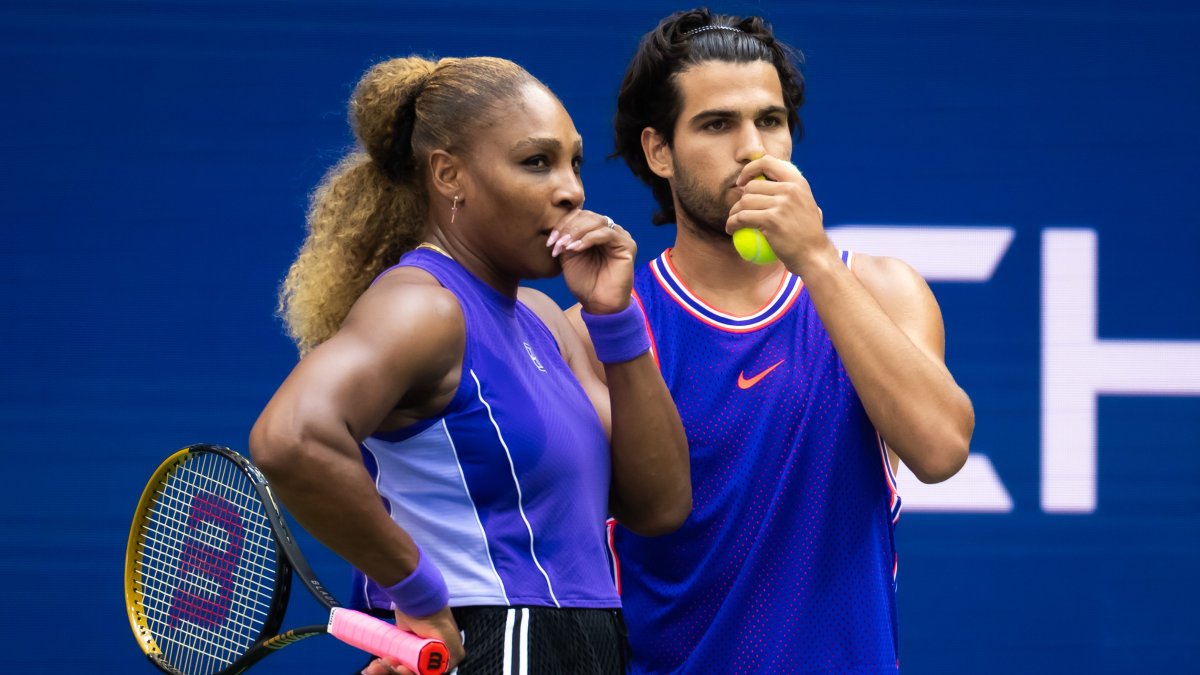
Source: NBC 5 Dallas-Fort Worth Sports. Casualplayhub News adds summary, context, and editorial framing while linking back to the original report.
Ad eligibility review: sensitive-topic
For a fleeting moment, the U.S. Open felt like a time capsule. Serena Williams, stepping onto Arthur Ashe Stadium for the first time since 2022, and Carlos Alcaraz, returning from a four-month injury absence, turned the mixed doubles draw into a blockbuster event. Fans cheered wildly as the duo won their opening match, relishing the sight of the 44-year-old Williams unleashing strokes that echoed her prime and the 23-year-old Alcaraz fighting through visible rust. But the celebration was short-lived. On Tuesday, Williams and Alcaraz fell to Belinda Bencic and Flavio Cobolli in the quarterfinals, losing 5-4 (4), 4-1 in a match that highlighted the gap between star power and sharpness.
Cobolli, before the match, had called his opponents “the queen of tennis and the king of now,” a fitting tribute to two players who have combined for eight U.S. Open singles titles. Williams and Alcaraz had rallied from a slow start in the first round to defeat Erin Routliffe and Lloyd Glasspool 5-3, 4-1, with the crowd clearly on their side. “I never expected to be back on this court,” Williams said after that win. “I never thought this would happen.” Her return, limited to mixed doubles, raises the question of whether she might seek an encore in women’s doubles alongside her sister Venus. Williams has not ruled it out, but she has made clear she does not plan to play singles.
Alcaraz, the defending men’s singles champion and world No. 3, was playing his first competitive match since April 14, having missed the French Open and Wimbledon because of a right wrist injury. He wore a sleeve on that arm and admitted to extreme nerves. “I think everybody could see: I double-faulted on the first point,” he said. “I was really, really nervous. I was out for four months … I almost forget how it feels.” The pair’s chemistry was evident in flashes, but against Bencic and Cobolli, they struggled to maintain momentum. After dropping a tight first-set tiebreaker, they were overwhelmed in the second set.
Bencic and Cobolli, meanwhile, were in awe of the aura their opponents carried. “I don’t know how I landed on this court to play Carlos and Serena,” Bencic said. “It was an honor to play.” Cobolli admitted to feeling tight just because of the opposition. The match unfolded under the new mixed doubles format, which features sets to four games, a tiebreaker at 4-all, and a 10-point tiebreaker instead of a third set. Only the final on Wednesday night will revert to traditional six-game sets. The champions will receive $1 million, part of the tournament’s effort to attract top players to the event.
Williams, who won the U.S. Open mixed doubles with Max Mirnyi in 1998, showed glimpses of her old brilliance. She carried Alcaraz early on, hitting crisp volleys and dictating points. But the duo could not sustain that level. For Alcaraz, the match was a step in his recovery, though he acknowledged the journey ahead. “I almost forget how it feels,” he repeated, capturing the challenge of returning from injury. The crowd’s chants of “Come on, Carlos!” and “Let’s go, Serena, let’s go!” echoed through the stadium, but it was not enough to overturn the deficit.
As the tournament moves forward, the memories of this brief pairing will linger. Williams’ appearance at 44, even without singles, reinforces her enduring connection to the sport. Alcaraz’s return, though uneven, signals his determination to reclaim his form. The mixed doubles experiment, with its condensed format and lucrative prize, has given fans a unique spectacle—one that, for a few days, united generations of tennis greatness.
Article commentary
The quarterfinal exit of Serena Williams and Carlos Alcaraz from the U.S. Open mixed doubles was more than a match result; it was a narrative about time, resilience, and the delicate art of return. The pairing, which seemed almost surreal on paper, delivered exactly what the tournament hoped for: buzz, nostalgia, and a fleeting crossover between tennis’s past and present. Yet the outcome also underscores the unforgiving nature of competition, even when the names on the scoreboard are legendary. Williams, at 44, is no longer the dominant force she once was, but her decision to play mixed doubles—and not singles—reflects a pragmatic acknowledgment of her physical limits. Her presence alone, however, was enough to fill Arthur Ashe Stadium with energy. The fact that she carried Alcaraz in the first round, hitting shots that looked straight out of her prime, shows that her instincts and skill remain intact. The question now is whether she will pursue more doubles appearances, perhaps with Venus, or if this was a final bow. For a player who has redefined greatness, this brief return felt like a gift to fans rather than a competitive statement. Alcaraz’s situation is more complex. At 23, he is at the peak of his career, but a four-month injury layoff is a serious setback. His admission of extreme nervousness and double-faulting on the first point reveals how much the layoff affected his confidence. The mixed doubles format, with its shorter sets and faster pace, may have been a gentle reintroduction, but it also exposed his rust. He was not the explosive, fearless player who dominated the tour last year. For Alcaraz, the real test will come in singles, where he must adapt to the physical and mental demands of best-of-five-set matches. His partnership with Williams, while short-lived, may have provided a psychological boost—playing alongside a legend could ease the pressure of expectations. The new mixed doubles format, with its $1 million prize and condensed sets, is clearly designed to lure top singles players. It succeeded in bringing Williams and Alcaraz together, but it also raises questions about the event’s future. Will other stars follow? The format’s brevity—sets to four games, tiebreakers—may appeal to players who want to minimize risk, but it also reduces the prestige of the competition. The quarterfinal loss of the marquee duo means the final will lack the star power that the tournament hoped for. Still, the experiment has generated conversation, and that is a win for the U.S. Open. Bencic and Cobolli deserve credit for their performance. They handled the pressure of facing two icons with composure, and their victory was not a fluke. Cobolli’s pre-match tribute—“the queen of tennis and the king of now”—was sincere, but once on court, they played without fear. This kind of upset is healthy for the sport; it reminds us that even the greatest names must earn their victories. Ultimately, this mixed doubles chapter was a small but memorable story within the larger U.S. Open narrative. Williams and Alcaraz may have lost, but they gave fans a moment of shared history—a glimpse of what it looks like when two generations collide. The commentary on their defeat will focus on what could have been, but the true takeaway is simpler: tennis, at its core, is about showing up, even when the odds are stacked. Whether Williams returns next year or Alcaraz regains his form, this week will be remembered as a peculiar, beautiful intersection of past and future.