Knicks Unfazed by Cavaliers' Peyton Watson Acquisition
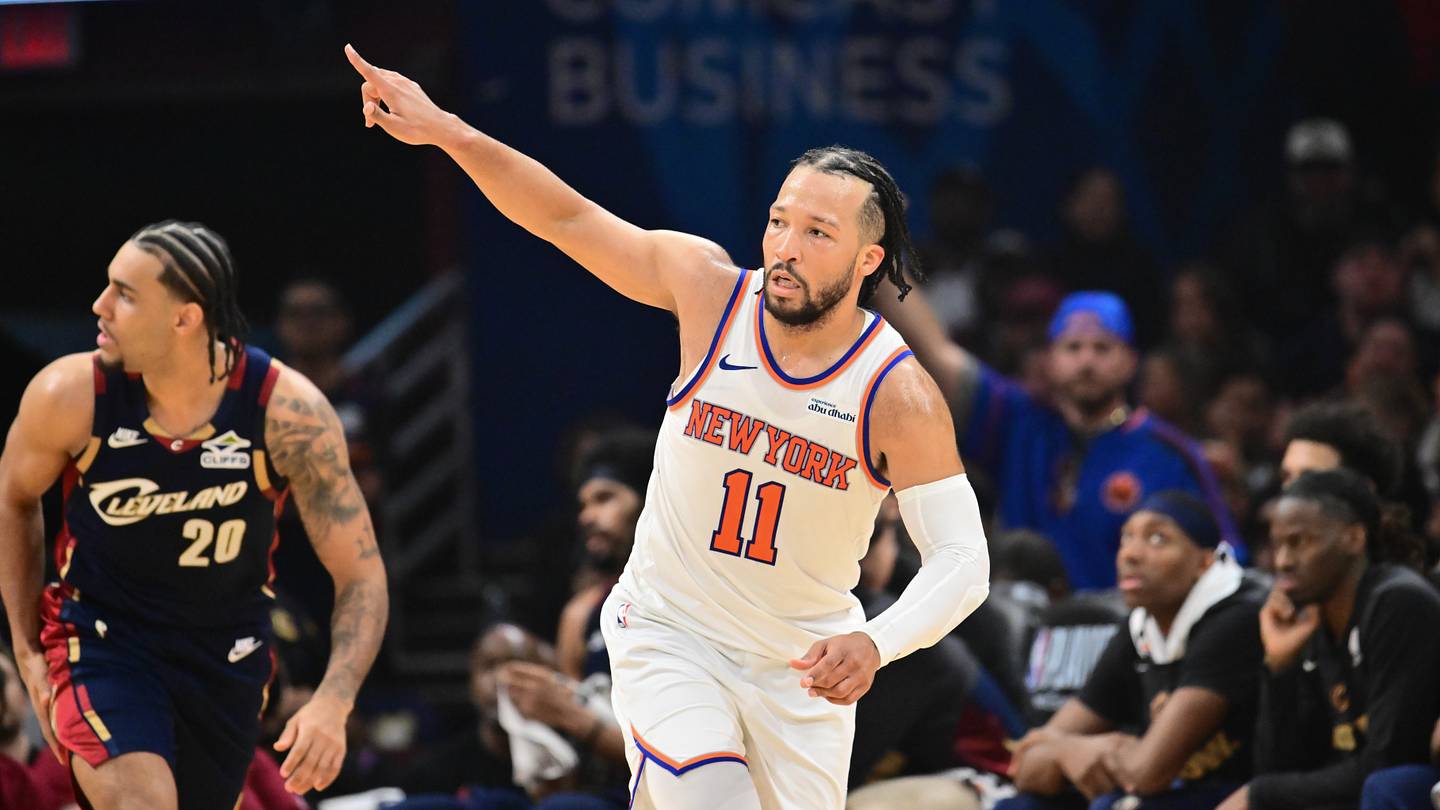
Source: SI NBA. Casualplayhub News adds summary, context, and editorial framing while linking back to the original report.
The New York Knicks are coming off a championship run that ranks among the most dominant in NBA history. Their core rotation is largely intact, and the team is poised to defend its title in 2027. While several Eastern Conference rivals loaded up during a wild offseason, the Cleveland Cavaliers—despite acquiring Peyton Watson last week—have not emerged as a genuine threat from New York's perspective.
Watson, 23, is a talented young wing who averaged 14.6 points and 4.9 rebounds last season while shooting 41.1% from three-point range. He brings athleticism and defensive energy to a Cavaliers lineup that already features Jarrett Allen and Evan Mobley. But the acquisition does little to close the gap with the Knicks, who dismantled Cleveland in a four-game sweep during the 2026 playoffs.
The issue is not that Watson is a bad player—he is not. He developed into a reliable scorer over a 21-game stretch between late December and early February, putting up 20.7 points, 5.3 rebounds, and 2.5 assists per game. But that hot streak came after a sluggish start, and his overall body of work remains limited. Over three seasons with significant minutes, he has shot 36.1% from deep, with only one season above league average. He is not a volume shooter, averaging just 3.6 three-point attempts per game, compared to the 6.8 attempts Max Strus provided before the Cavaliers lost him in free agency. Simply increasing his shot volume is not a guaranteed solution; efficiency often drops when players take on more responsibility.
Defensively, Watson is solid but not elite. He is not on the level of OG Anunoby or Mikal Bridges, both of whom the Knicks have used to stymie opposing scorers. More critically, Watson cannot compensate for the defensive liabilities of Donovan Mitchell and James Harden. Cleveland lost two of its better perimeter defenders in Dean Wade and Max Strus, further exposing a weakness that the Knicks exploited ruthlessly.
The Cavaliers' offensive struggles are equally troubling. Mitchell is a dynamic scorer but not a natural playmaker, and his inability to consistently create for others has haunted Cleveland in the postseason. Harden, despite his court vision, is a defensive sieve and has a history of fading in high-pressure moments. Watson does not improve the team's playmaking; he is a complementary piece who relies on others to set him up. The Cavaliers were noticeably worse offensively when Harden sat during the playoffs, a gap that Watson cannot fill.
New York's advantages are clear. Jalen Brunson proved unstoppable against Cleveland, and the Knicks' depth and defensive versatility overwhelmed the Cavs in every facet. Watson's addition might make the regular season more interesting, but it does not change the fundamental mismatch between these two teams. The Knicks can still exploit Cleveland's perimeter defense, lack of movement shooting, and questionable crunch-time decision-making. Until Mitchell revamps his game, Mobley becomes a reliable three-point shooter and playmaker, and the Cavaliers address their systemic flaws, they will remain an afterthought for a championship-caliber New York squad.
Article commentary
The Cavaliers' trade for Peyton Watson is a sensible move on paper, adding a young, athletic wing who fits their timeline and provides two-way potential. However, the deal does not alter the Eastern Conference hierarchy in any meaningful way. The Knicks, as defending champions, are rightfully dismissive of Cleveland as a threat, and this analysis aligns with the broader consensus among league observers. Watson's value should not be overstated. He enjoyed a breakout stretch but remains unproven as a consistent contributor over a full season and playoffs. His shooting, while impressive last year, lacks the volume and track record to suggest he can stretch defenses the way the Cavaliers need. The departure of Max Strus—a high-volume shooter and secondary playmaker—leaves a void that Watson cannot fill. Cleveland's offense still relies heavily on Donovan Mitchell's isolation scoring and James Harden's playmaking, both of which have shown cracks in the postseason. Defensively, Watson is a plus, but the Cavaliers' perimeter issues run deeper than one player can solve. Harden and Mitchell are both liabilities, and the loss of Dean Wade and Strus weakens the rotation. The Knicks, with their array of lockdown defenders and Brunson's ability to attack mismatches, are well-positioned to exploit these gaps once again. The broader context matters. The Celtics, Bucks, and even the 76ers made significant moves this offseason, raising the competitive bar in the East. Cleveland, by contrast, appears to be standing still. Watson is a nice addition, but he is not a transformative star. The Cavaliers still lack a reliable third scoring option, consistent outside shooting, and a go-to playmaker outside of Harden. From a strategic standpoint, the Knicks' confidence is justified. They dismantled Cleveland in the playoffs, and the core that achieved that remains intact. Health is always a variable, but if the Knicks stay healthy, they are the class of the conference. The Cavaliers, meanwhile, are in a holding pattern, hoping internal development from Mobley and Mitchell will bridge the gap. That is a risky bet, especially given the short window of Harden's prime. Ultimately, the Watson trade is a minor upgrade, not a game-changer. For the Knicks, it is business as usual. The Cavaliers remain a team with potential but not yet a threat to dethrone the champions. Until they address their fundamental weaknesses, New York has little reason to worry.