Williams and Alcaraz Stumble in U.S. Open Mixed Doubles Quarterfinals
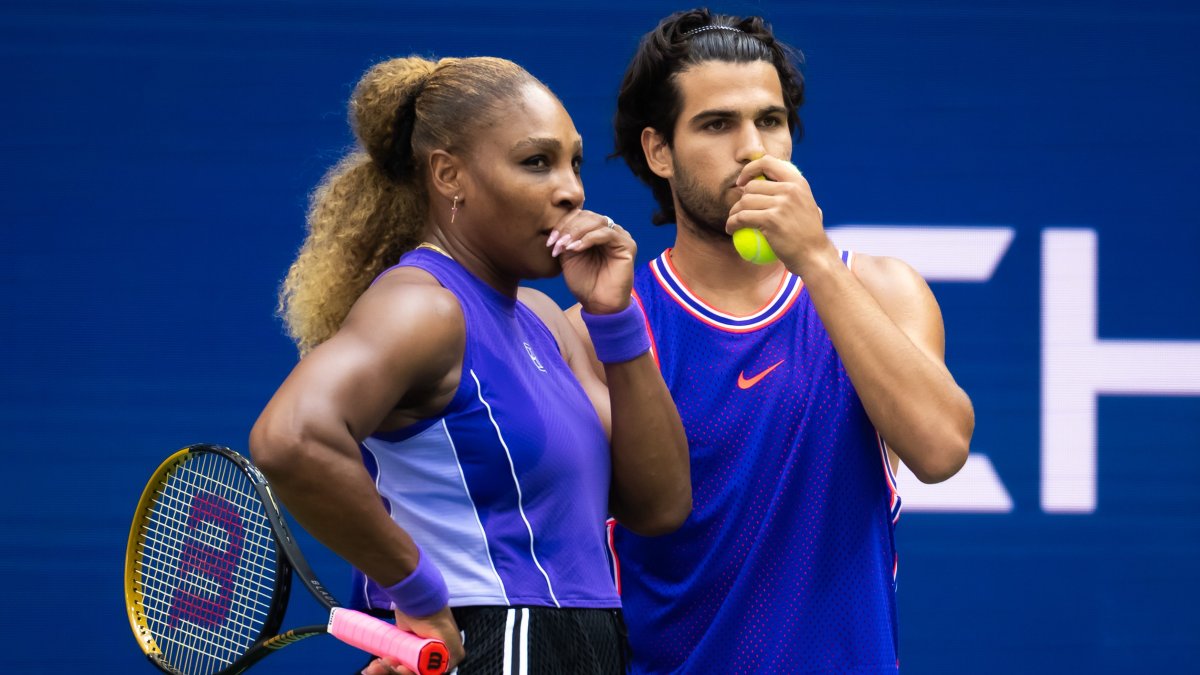
Source: NBC Chicago Sports. Casualplayhub News adds summary, context, and editorial framing while linking back to the original report.
The U.S. Open witnessed a fleeting moment of tennis magic as Serena Williams and Carlos Alcaraz teamed up in mixed doubles, only to be knocked out in the quarterfinals by Belinda Bencic and Flavio Cobolli, 5-4 (4), 4-1, on Tuesday. The defeat ended a short but nostalgic chapter for the Grand Slam tournament, which had welcomed Williams back to Flushing Meadows for the first time in four years and Alcaraz after a four-month injury hiatus.
Williams, now 44, had not competed in New York since 2022, and her return alongside the 23-year-old defending men's singles champion generated immense buzz. Their first-round match against Erin Routliffe and Lloyd Glasspool, which they won 5-3, 4-1, was a celebration inside Arthur Ashe Stadium. Fans roared for the duo, and Williams later admitted, "I never expected to be back on this court. I never thought this would happen." Alcaraz, wearing a sleeve on his right wrist, showed signs of rust after missing the French Open and Wimbledon due to a wrist injury. "I double-faulted on the first point," he said. "I was really, really nervous. I was out for four months ... I almost forget how it feels."
In the quarterfinal, the pair struggled to find rhythm. They dropped the first set in a tiebreaker after Bencic and Cobolli capitalized on early breaks. The second set was even more lopsided, with the opposing team dominating. Bencic, who later reflected on the experience, said, "I don’t know how I landed on this court to play Carlos and Serena. It was an honor to play." Cobolli, before the match, had called Williams and Alcaraz "the queen of tennis and the king of now."
Despite the loss, Williams displayed glimpses of her prime, hitting powerful groundstrokes and sharp volleys that reminded fans of her peak years. She even carried Alcaraz early in the first round, covering the court with the same intensity she showed in her singles career. The question now is whether she will extend her stay at the tournament by entering women's doubles with her sister Venus. Williams has not indicated any plans to play singles.
Alcaraz, ranked third in the world, acknowledged that his lengthy absence affected his performance. The competitive rust was evident, but he remains a top contender in men's singles when healthy. The mixed doubles competition this year features a new format with sets to four games, a tiebreaker at 4-all, and a 10-point match tiebreaker instead of a third set. Only the final, scheduled for Wednesday night, will use traditional six-game sets. The winners will receive $1 million, part of the tournament's effort to attract elite players.
For Williams, the match was a poignant reminder of her enduring legacy. She won the U.S. Open mixed doubles title in 1998 with Max Mirnyi, and her return to the court, even in a supporting role, stirred emotions among fans. Alcaraz, meanwhile, will look to regroup and focus on his singles campaign. The duo's brief partnership, though short-lived, encapsulated the spirit of the U.S. Open—a stage where legends of the past and present can collide, even if only for a few games.
Article commentary
The pairing of Serena Williams and Carlos Alcaraz at the U.S. Open mixed doubles was a marketing dream, but their early exit underscores the challenges of blending generational talent with real competitive demands. Williams, at 44, remains a towering figure in tennis, but her return to Flushing Meadows after a four-year absence was more symbolic than strategic. Her decision to skip singles and focus on mixed doubles with a young superstar like Alcaraz suggests a desire to enjoy the sport without the grind of a full singles draw. Yet, the loss to Bencic and Cobolli reveals that even the greatest players cannot defy time and rust. Alcaraz, on the other hand, is at a critical juncture in his career. His four-month layoff due to a right wrist injury has clearly disrupted his rhythm. The double fault on the first point and his admission of nervousness indicate that mental sharpness, as much as physical fitness, needs rebuilding. While his world ranking remains high, the mixed doubles defeat may serve as a wake-up call for his singles matches. The U.S. Open’s new mixed doubles format, designed to attract top players with shorter sets and a $1 million prize, succeeded in luring these two stars, but the format’s brevity may have amplified the pressure. From a broader perspective, this episode highlights the evolving nature of Grand Slam tournaments. The U.S. Open has been innovative in its scheduling and prize money, but the mixed doubles event still struggles to find its identity. The presence of Williams and Alcaraz boosted viewership and nostalgia, but their quick elimination raises questions about whether such exhibitions are sustainable. For Williams, this might be a farewell tour, albeit an unofficial one. She has not announced retirement, but her age and selective participation suggest she is winding down. For Alcaraz, the experience is a learning curve—how to handle the weight of expectations when returning from injury. Objectively, the match itself was a testament to the depth of women’s tennis. Bencic, a former Olympic gold medalist, and Cobolli, a rising Italian star, played with composure and executed a smart game plan. They targeted Williams’s slower movement and Alcaraz’s tentative forehand, exposing the duo’s lack of practice together. The crowd’s chants of "Come on, Carlos!" and "Let’s go, Serena!" could not compensate for the on-court chemistry that Bencic and Cobolli had built. Looking ahead, the U.S. Open’s mixed doubles final will proceed without its most marketable stars, but the tournament’s focus remains on the singles draws. The Williams-Alcaraz partnership, however brief, captured the imagination of fans and reminded everyone that tennis is as much about stories as it is about scores. Whether this was a one-off or a prelude to more collaborations, it has already left an indelible mark on the 2026 U.S. Open.