Warriors Add Niang and Williams: Grading Veteran Minimum Depth Moves
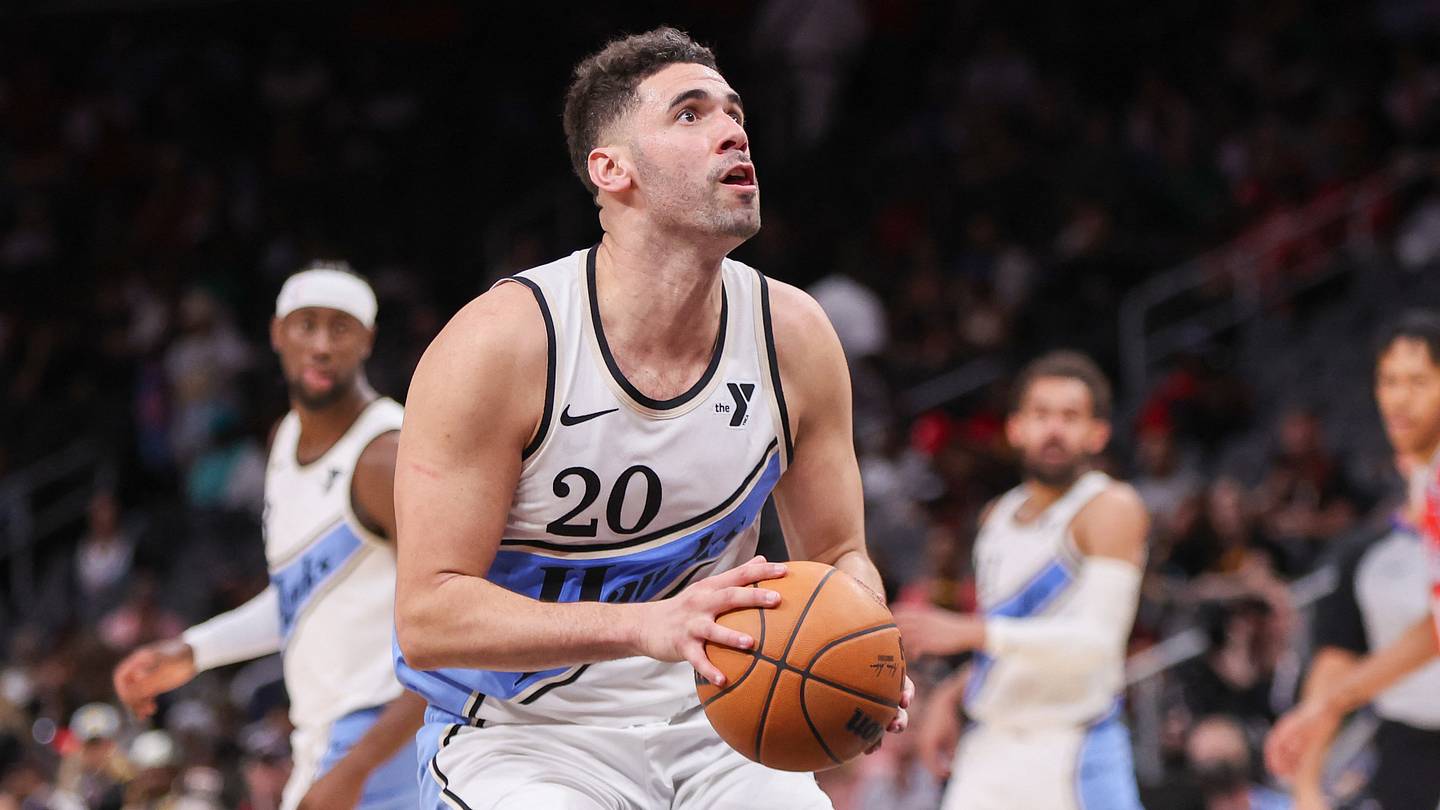
Source: SI NBA. Casualplayhub News adds summary, context, and editorial framing while linking back to the original report.
The Golden State Warriors finalized their 15-man roster Tuesday by agreeing to terms with point guard Brandon Williams and power forward Georges Niang. Both players signed veteran minimum contracts, each counting $2.4 million against the cap. These moves fill the last two roster spots, and the question now is how well they fit into Steve Kerr's system and whether they represent the best options available.
Brandon Williams, at 6-foot-1, was arguably the best point guard left on the free-agent market. That alone gives the signing a solid baseline. Yet concerns about his fit with the Warriors are significant enough to lower the grade. On defense, Williams is a clear target. That's par for the course for many backup point guards, but it's still a problem. Offensively, his game relies heavily on dribble penetration. Williams has a deep bag of moves, but he tends to over-dribble, which could clash with Kerr's preference for ball movement. He is also a non-threat from beyond the arc, creating spacing issues when paired with non-shooters like Draymond Green and Charles Bassey.
Despite these flaws, Williams can get into the paint and score in ways few Warriors can. That is a skill the team needs. Interestingly, the Mavericks, who were one of the worst three-point shooting teams last season (34.4%), still scored 4.9 points per 100 possessions more with Williams on the floor, according to Cleaning the Glass. The Warriors themselves shot 35.6% from three last season, and in theory they have better shooters to surround Williams. One potential downside is if two-way player LJ Cryer outperforms him. Cryer is not as athletic but is a much better shooter and a feisty defender. Even if that happens, the Warriors can clear a roster spot by the trade deadline to upgrade Cryer's contract. For the veteran minimum, the Warriors could have done worse. Other point guard options like Gabe Vincent and Aaron Holiday were clear downgrades. It's also good practice to sign a 26-year-old, as players in that age bracket are more likely to improve than decline. Grade: B+.
Georges Niang's main selling point is his three-point shooting. The 33-year-old has a career 39.9% mark from deep. But does his shooting offset his poor defense? Niang has posted four consecutive seasons with Defensive EPM in the 24th percentile or worse, per Dunks and Threes. The Warriors are already without two of their best wing defenders—Jimmy Butler and Moses Moody—for at least half the season. That limits lineup combinations that can hide Niang's on-ball defense. The few that do work might leave Gui Santos or Yaxel Lendeborg exposed. On the positive side, Niang has played rotation minutes on many winning teams and has been durable aside from missing last season with a foot injury. He is likely to see significant playing time in the first half, especially when the Warriors' offense stagnates or goes cold from the perimeter. Once Butler and Moody return, the team will have enough wing and frontcourt depth to bench Niang. That doesn't make him a bad signing. Other veteran-minimum options like Kelly Olynyk, Bruce Brown, and Dalen Terry all have their own warts. Still, the best-case scenario for Niang is less impactful than for Williams. That Niang feels underwhelming is a symptom of the Warriors not being aggressive enough on the veteran-minimum market earlier in free agency. On the plus side, he should unlock some extremely efficient lineups. Groups featuring Stephen Curry, Brandin Podziemski, Niang, and Al Horford will take and make a lot of threes. Grade: B-.
Article commentary
The Warriors' signings of Brandon Williams and Georges Niang reflect a team navigating the constraints of the second apron while trying to remain competitive. Both deals are veteran minimums, which is the only path left for a team already deep into luxury tax territory. In that context, the signings are defensible, but they highlight the trade-offs the front office must accept. Brandon Williams offers a clear offensive skill—penetration—that the Warriors lack. Last season, Golden State often struggled to generate easy baskets when Stephen Curry was off the floor. Williams can collapse defenses and create for himself or others. However, his inability to shoot from distance and his defensive shortcomings are real concerns. Steve Kerr's system demands spacing and disciplined defense. If Williams cannot adapt, he may find himself glued to the bench, especially in playoff-style games where teams target weak defenders. The comparison to LJ Cryer is telling: a two-way player who is a better shooter and defender could make Williams expendable by midseason. The B+ grade acknowledges the value of a young, athletic point guard at the minimum, but the fit is far from seamless. Georges Niang is a more straightforward case. He is a known quantity: a floor-spacing forward who cannot guard anyone. The Warriors have a history of making such players work—think of players like Omri Casspi or even Juan Toscano-Anderson in limited roles—but Niang's defense is particularly poor. With Jimmy Butler and Moses Moody out, the team will have to rely on lineups that expose Niang. Once those wings return, Niang becomes a situational shooter. The B- grade reflects that he is a low-risk signing, but also a low-ceiling one. The missed opportunity is that the Warriors could have pursued a more versatile forward earlier in free agency. Kelly Olynyk, for example, offers more passing and size, though he too has defensive issues. From a broader perspective, these signings underscore the Warriors' strategy of using the veteran minimum to fill roster spots while hoping for internal development. The team's core is aging, and the second apron restricts their ability to make trades or sign buyout players. The gamble is that Williams and Niang can provide enough value in the regular season to keep the team afloat until Butler and Moody return. If they underperform, the Warriors still have the flexibility to waive them or package them in a trade. The grades are fair: Williams has a higher upside but more risk, while Niang is a steady but limited piece. Neither signing will define the season, but both could tip the balance in a tight Western Conference race.