DeepMind's AI Talent Drain: New Data Shows Rivals Gaining Ground
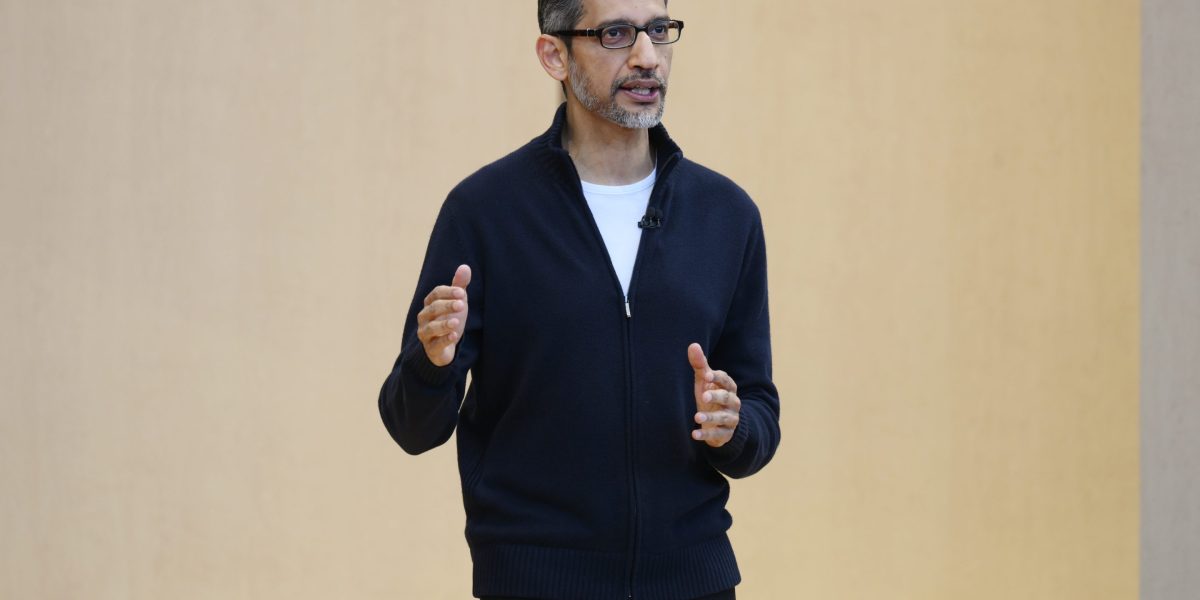
Source: Fortune. Casualplayhub News adds summary, context, and editorial framing while linking back to the original report.
The AI talent market no longer resembles a typical hiring cycle—it evokes the frenzy of a professional sports draft. Cash-rich labs are dangling salaries more common in the NBA or NFL, paired with equity packages that can mint billionaires among early employees. This allure of transformative wealth has accelerated the churn of elite researchers between rival labs at a dizzying pace. Once the crown jewel of AI research, especially in Europe, Google DeepMind now finds itself on the defensive, according to a new analysis of engineering talent flows shared exclusively with Fortune by Zeki Data, a UK-based intelligence firm.
The data paints a stark picture: where OpenAI and Anthropic are surging, DeepMind and, to a lesser extent, Meta are stumbling. Interviews with current and former staff suggest that DeepMind's shifting identity has eroded part of its historic magnetism. As Google pushes to close the gap with OpenAI and Anthropic, the lab has become more tightly focused on improving and commercializing Gemini. This shift, some researchers say, displaces the open-ended, long-horizon science that once made DeepMind a dream destination for academics.
Three current and two former DeepMind staffers told Fortune that the recent exodus stems from a mix of factors: rival labs like Meta and Microsoft poaching talent with aggressive cash offers, growing frustration inside Google about its position in the AI race, sinking morale, and the pull of pre-IPO stock at competitors such as OpenAI and Anthropic. This month alone, DeepMind lost Jeff Dean, the company's long-time chief scientist and a 27-year veteran, alongside senior fellow Sanjay Ghemawat and researchers Oriol Vinyals and Quoc Le, who left to launch a startup called Discovery Loop. On the same afternoon, Demis Hassabis, DeepMind's cofounder and CEO, announced he would step back from day-to-day control to become chairman of DeepMind and Alphabet's chief scientist, handing operational reins to CTO Koray Kavukcuoglu.
Zeki's data suggests these public exits signal a broader reversal. DeepMind's share of research and advanced-engineering hires across Europe, the Middle East, and Africa fell from 49% in 2022-23 to 18.6% in 2025-26—the sharpest market-share drop Zeki recorded for any major AI lab in any region. "They had the crown in Europe forever, and then it started to erode from a very high base," said Tom Hurd, founder of Zeki Data. "The likes of Microsoft AI Superintelligence and Meta Superintelligence are eating into their market share, and then there's OpenAI and Anthropic on the side."
The stakes of recruiting and retaining elite talent are immense. A relatively small group of researchers and engineers possess the experience to train and improve the frontier models driving the AI boom. Their work determines how quickly a lab improves its models, whether it can turn research breakthroughs into products, and how credibly it attracts the next wave of talent. Hiring and retaining these top engineers has proven difficult even for the best-funded companies.
Globally, DeepMind still brings in more research and advanced-engineering staff than it loses. But its arrivals-to-departures ratio—a measure of hires relative to exits—has fallen sharply, from about 12-to-1 in the second quarter of 2023 to roughly 2-to-1 in the third quarter of 2026, according to Zeki. That means it now adds about two people for every one who leaves, compared with roughly 12 earlier. For context, Meta's ratio in 2025 was 3-to-1, OpenAI's was 5.7-to-1, and Anthropic's was 22-to-1. Anthropic has become the leading destination for departing DeepMind researchers: of those who left in the past 12 months, 25% went to Anthropic, 21% to Meta, and 14% to OpenAI.
Representatives for Google DeepMind did not respond to a request for comment on Zeki's findings. The deterioration coincided with the lab tightening its publication rules, Hurd said, something Zeki researchers say may have weakened one of the lab's most important draws for research-minded staff. The Financial Times reported in April 2025 that DeepMind had introduced a tougher internal review process and a six-month embargo for some strategically sensitive generative-AI papers, aiming to prevent competitors from benefiting from its research. The FT noted that the new approach made it harder for researchers to publish, especially work that could expose product weaknesses or reveal commercially valuable techniques. DeepMind said at the time it remained committed to research publication and was updating its policies to preserve its teams' ability to contribute to the broader ecosystem.
For a lab built on public breakthroughs like AlphaGo and AlphaFold, the shift created friction. "Most old timers who joined DeepMind before the ChatGPT moment joined to be part of an AI research lab," one former DeepMind engineer told Fortune. "Anyone who joined before 2023 thought they were joining an AI research lab, and suddenly they were asked to build products for Google."
Zeki found that research and engineering hiring across the sector has grown at a compound annual rate of 23% since 2022. But the growth flows disproportionately to newer frontier labs. OpenAI's research and engineering headcount has grown at roughly 97% annually and Anthropic's at 152%, compared with 27% for Google DeepMind. While starting from a smaller base, these figures show how quickly their organizations have expanded relative to DeepMind.
DeepMind also faces new competition in regions it long dominated. Mistral AI and Anthropic have been the primary beneficiaries of DeepMind's declining share in Europe, the Middle East, and Africa. In Asia-Pacific, where DeepMind opened a new research lab in Singapore last November, domestic players including ByteDance, Sakana AI, and Sarvam AI are building share in markets historically underinvested in by incumbent labs.
This shift is visible in a growing list of prominent departures. David Silver, the reinforcement-learning pioneer behind AlphaGo, AlphaZero, and AlphaStar, left after nearly 13 years to launch Ineffable Intelligence earlier this year—a London startup now valued at $5.1 billion after a $1.1 billion seed round. Other long-serving employees who departed include Wojciech Czarnecki, now CTO at Fundamental, and Lasse Espeholt. Misha Laskin and Ioannis Antonoglou, who worked directly with Silver on AlphaGo, left in 2024 to found Reflection AI. This summer also saw a sharp run of exits: in June, Google lost Gemini co-lead Noam Shazeer to OpenAI and John Jumper, who shared the 2024 Nobel Prize in Chemistry for AlphaFold with Hassabis, to Anthropic within a day of each other. Fellow AlphaFold researchers Jonas Adler and Alexander Pritzel followed Jumper to Anthropic shortly afterward.
"The more research-heavy people feel that they'd quite like to look at opportunities elsewhere, and then you start to see a much larger number than usual going to set up their own thing and bringing some of their friends with them," Hurd said. "Over time, that's added up to a large number of people."
Zeki's data suggests the losses are not evenly spread. Comparing the expertise of leavers and joiners over the past 12 months, the firm found a net loss in large language models and multimodal systems: 19.2% of leavers specialized in those areas, compared with 15.6% of joiners. The company also lost ground in computer vision. The AlphaFold team—defined as the group that produced AlphaFold2, the AI system that predicts protein structures from genetic sequences—has suffered heavy losses: of the 29 named authors on the AlphaFold2 paper, 13 have left DeepMind. The Financial Times reported in July that DeepMind had reassigned most of the original paper's authors during the preceding year, with staff moving to Gemini-related projects, as well as enzyme design, genomics, nuclear fusion, and Isomorphic Labs, Alphabet's drug-discovery subsidiary.
DeepMind is gaining ground, however, in robotics, embodied AI, and machine learning for science. These fields reflect areas where the company is expanding its capacity—and, in some cases, competing for talent with Nvidia as much as with rival AI labs. Zeki's analysis tracks 20,900 people in research and advanced-engineering roles at 10 companies, using publicly available information compiled in August 2026. The group includes research scientists, research engineers, machine-learning and deep-learning engineers, applied scientists, and members of technical staff; it excludes managers, executives, interns, customer-facing roles, and non-technical staff. Because the analysis relies on public information, it may undercount the total number of people in these roles.
DeepMind still has Google's compute, cash, reputation, and institutional reach to attract staff. But in a market where the best researchers can choose almost anywhere and work on almost anything, some of its old advantages appear harder to preserve.
Article commentary
The data from Zeki Data presents a compelling narrative of a once-unassailable AI research powerhouse facing a structural talent crisis. Google DeepMind's decline in market share for elite researchers, especially in its home European region, is not merely a temporary blip but a symptom of deeper shifts in the AI landscape. The numbers are stark: a drop from 49% to 18.6% in EMEA hires over three years, and a arrivals-to-departures ratio collapsing from 12:1 to 2:1. This suggests that the lab's gravitational pull is weakening at a time when the demand for top-tier AI talent is at an all-time high. Several factors converge to explain this trend. First, the maturation of the AI industry has created a more competitive market for talent. Labs like OpenAI, Anthropic, and Meta are not just offering high salaries but also the promise of equity windfalls through pre-IPO stock or already-public valuations. The allure of becoming a billionaire overnight is a powerful motivator, especially for researchers who have spent years in academia or corporate labs. DeepMind, as part of the larger Alphabet structure, may not be able to match the equity upside of smaller, more agile startups or even Meta's aggressive compensation packages. Second, DeepMind's identity shift from a pure research lab to a product-focused organization under Google's Gemini umbrella has alienated some of its most creative minds. The tightening of publication policies, as reported by the Financial Times, is a classic example of the tension between research freedom and commercial secrecy. For researchers who joined to pursue blue-sky science—like the work that produced AlphaGo and AlphaFold—the new emphasis on product-building and strategic embargoes can feel like a betrayal. The quote from a former engineer captures this sentiment perfectly: "Anyone who joined before 2023 thought they were joining an AI research lab, and suddenly they were asked to build products for Google." This cultural friction is not easily resolved by salary increases alone. Third, the departure of key figures like Jeff Dean and David Silver creates a ripple effect. When a lab loses its long-time chief scientist and the pioneer behind its most famous achievements, it signals instability. Younger researchers may perceive that the best opportunities for groundbreaking work now lie elsewhere. The exodus of AlphaFold authors—13 out of 29—is particularly damaging because it undermines the lab's reputation as a leader in scientific AI. While DeepMind is still hiring, the net loss in specialized areas like LLMs and multimodal systems indicates that it is falling behind in the very fields that define the current AI frontier. However, it is not all doom and gloom. DeepMind is gaining in robotics and embodied AI, areas where it has a long history and where Google's resources remain unmatched. The lab still has access to massive compute, cash reserves, and institutional prestige. The question is whether these assets can sustain its position in a market where talent is the ultimate currency. The relatively low 27% annual growth in research headcount, compared to OpenAI's 97% and Anthropic's 152%, suggests that DeepMind is losing the hiring race, even if it is still net-positive. From a broader perspective, this talent drain highlights a fundamental challenge for large tech companies: how to retain creative, independent-minded researchers when the industry is shifting toward productization. The AI boom has created a sellers' market for expertise, and the most talented individuals are increasingly choosing to work for labs that offer either maximum financial upside or maximum research freedom—or both. DeepMind, caught between Google's corporate structure and its own legacy, may need to rethink its approach to retain its edge. Whether it can do so without sacrificing the very culture that made it great remains an open question.