Appeals Court Rejects McIver's Bid to Dismiss ICE Assault Charges
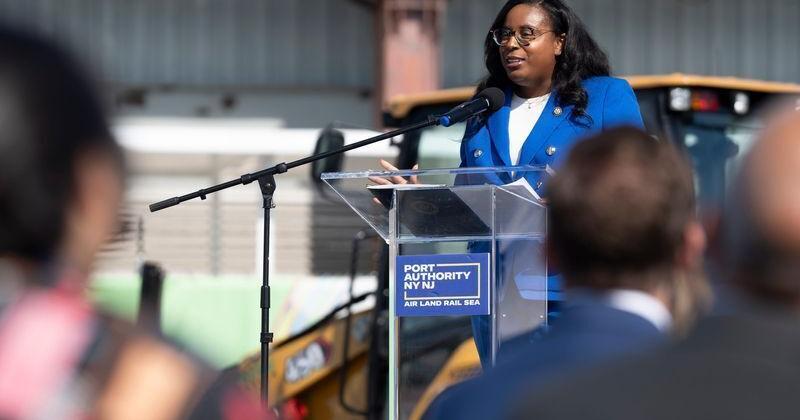
Source: Press of Alantic City Business. Casualplayhub News adds summary, context, and editorial framing while linking back to the original report.
A federal appeals court has cleared the way for a trial against U.S. Representative LaMonica McIver, a New Jersey Democrat, on charges that she assaulted an Immigration and Customs Enforcement agent during a protest outside a detention facility in Newark. The Third Circuit Court of Appeals, in a split 2-1 ruling issued Wednesday, rejected McIver's bid to have the charges dismissed under the Constitution's "speech or debate" clause, which shields lawmakers from prosecution for actions taken in the course of legislative duties.
Judge Thomas L. Ambros dissented from the majority opinion, which spanned 49 pages. The court found that the brief confrontation between McIver and law enforcement officers outside Delaney Hall on June 8 did not qualify as a protected legislative act. The Department of Justice, which brought the charges, argued that it was not prosecuting McIver for any legislative action but rather for an alleged assault that occurred during a physical altercation.
According to federal law, members of Congress can make unannounced "oversight" visits to immigration facilities that detain individuals, but a Department of Homeland Security policy requires lawmakers and their staff to request such visits at least seven days in advance. The press and public are barred from those visits. The protest outside Delaney Hall, however, was not a scheduled oversight visit but a public demonstration involving activists, lawmakers, and law enforcement.
McIver has maintained her innocence, calling the charges "politically motivated" and a tool to silence critics of the Trump administration's immigration enforcement. Newark Mayor Ras Baraka was also arrested during the protest. The ICE facility at 26 Federal Plaza has become a focal point for Democrats opposing what they describe as unlawful overreach by federal immigration agents. It is one of 25 ICE Enforcement and Removal Operations facilities nationwide. McIver and other Democrats have regularly held press briefings outside the building to criticize ICE tactics.
In a statement following the ruling, McIver said, "I fundamentally believe that the court got it wrong here. To protect the people, their elected representatives must be authorized to conduct oversight of the executive branch without fear of retaliation." She added that the decision "emboldens the Trump administration to continue persecuting our most vulnerable communities, those who try to defend them, and anyone who dares to hold the president or his lackeys accountable."
A bipartisan group of 20 former members of Congress, including many Republicans, filed a legal brief arguing that allowing the charges to proceed would have a "chilling effect" on legislators' ability to perform their oversight duties. They wrote to the court, "To fail to dismiss would deter Members of Congress from carrying out their essential oversight responsibilities and insulate Executive abuses from the checks and balances the Constitution intends. Thus, it is no exaggeration to say that if this prosecution is allowed to proceed, it would imperil the constitutionally mandated powers of Congress and the fabric of our constitutional order."
The appeals court's majority, however, emphasized that the confrontation was not part of any legislative function. The ruling allows the case to move forward to trial, where McIver will have the opportunity to defend herself against the assault allegations. Her legal team has signaled they will continue to challenge the charges, possibly seeking further review. The outcome of the trial could set a significant precedent regarding the limits of congressional immunity and the extent to which lawmakers can be held criminally liable for actions taken during protests or other public demonstrations.
Article commentary
The Third Circuit's decision to allow the prosecution of Congresswoman LaMonica McIver to proceed raises fundamental questions about the boundaries of legislative immunity and the separation of powers. At its core, the case hinges on whether a physical altercation during a protest can be considered a "legislative act" protected by the Constitution's speech or debate clause. The court's majority concluded it cannot, drawing a clear line between protected oversight functions and unprotected personal conduct. This distinction, while legally sound, carries significant political and practical implications. McIver's supporters argue that the ruling threatens the ability of lawmakers to conduct robust oversight of the executive branch, particularly on controversial issues like immigration enforcement. The bipartisan amicus brief from former members of Congress underscores a genuine concern: if prosecutors can target individual representatives for actions taken during oversight visits or at protest sites, the deterrent effect could chill aggressive congressional scrutiny. This is especially pertinent in an era of heightened partisan conflict over immigration policy, where visits to detention facilities have become symbolic battlegrounds. Yet the court's reasoning is equally compelling. The speech or debate clause was never intended to grant lawmakers blanket immunity for any act they commit while performing their duties. Its purpose is to protect the legislative process from executive interference, not to shield members from criminal liability for physical violence or other unlawful conduct. The DOJ's case focuses narrowly on the alleged assault, not on McIver's policy positions or oversight efforts. By framing the incident as a criminal act distinct from legislative work, the court avoided expanding immunity into dangerous territory. The political context cannot be ignored. McIver and her allies view the prosecution as retaliation for her outspoken criticism of the Trump administration's immigration policies. The fact that the charges were brought by the Justice Department under a Republican administration adds a layer of partisan tension. However, the court's ruling does not endorse the prosecution's motives; it simply finds that the legal basis for immunity does not apply. The trial will ultimately test the strength of the evidence, not the political winds. Looking ahead, this case could have lasting effects on how lawmakers conduct oversight of federal facilities. If McIver is convicted, it may deter some members from engaging in unannounced visits or participating in protests near detention centers. Alternatively, if she is acquitted, the ruling could reinforce the principle that lawmakers retain their immunity as long as they stay within the bounds of legitimate legislative activity. The dissenting opinion by Judge Ambros suggests that the issue is far from settled, and an appeal to the Supreme Court is possible. Beyond the legal nuances, the case highlights the broader struggle between Congress and the executive branch over immigration enforcement. The ICE facility at 26 Federal Plaza has become a flashpoint for Democratic resistance, and McIver's trial will likely serve as a rallying cry for both sides. Whatever the outcome, the decision underscores the importance of maintaining clear legal standards that protect both the integrity of legislative oversight and the rule of law. The balance between accountability and immunity is delicate, and this case will help define that balance for years to come.