Gap's Revival: Cutting Discounts, Embracing Hailey Bieber
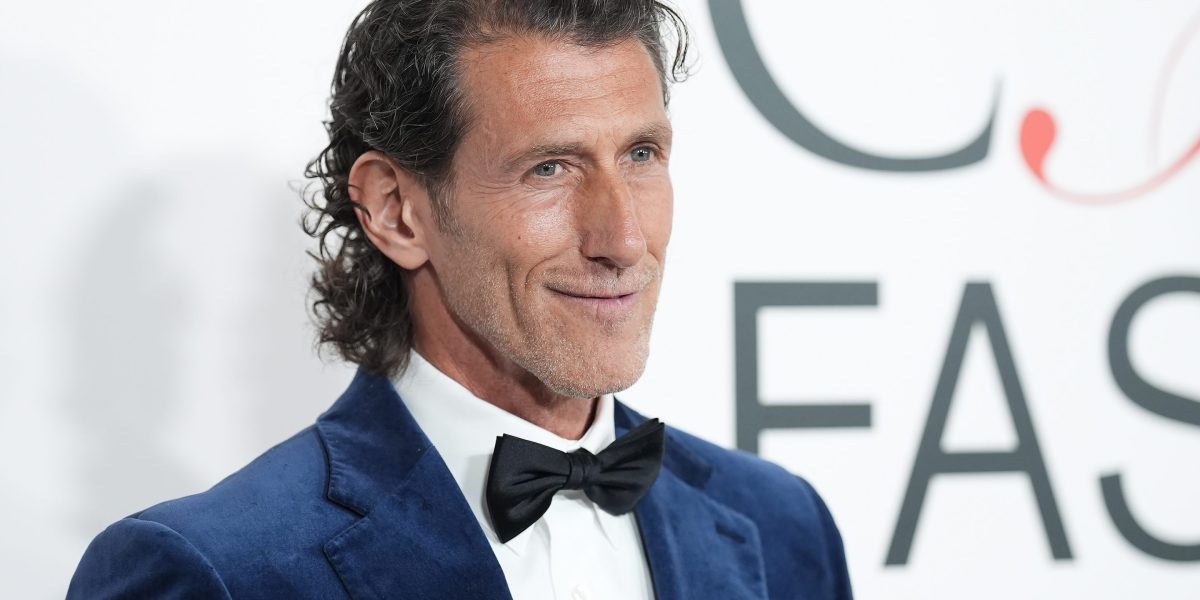
Source: Fortune. Casualplayhub News adds summary, context, and editorial framing while linking back to the original report.
During a walkthrough of Gap's remodeled flagship store in New York's Flatiron District, CEO Richard Dickson stopped at a staircase adorned with 16 framed sepia-toned images. These are works by legendary photographers Annie Leibovitz and Bruce Weber, featuring celebrities from Debbie Harry to Willie Nelson to Lauren Hutton, all from Gap's past ad campaigns. Dickson discovered the photos in the company archives soon after becoming CEO in 2023. They reminded him of a time when Gap was a pop culture powerhouse. Just a few feet away, larger-than-life posters of Hailey Bieber, the influencer and cosmetics entrepreneur, promote her new jeans line for Gap.
From the start, Dickson has made restoring Gap's "cultural relevance" his top priority, alongside improving product quality, store design, and supply chain. He hired designer Zac Posen as Gap Inc.'s creative director and Old Navy's chief creative officer. "We need to celebrate our history and now we add new people," Dickson told Fortune. "When you look at Hailey Bieber, with the legendary talent we brought to the Gap over the years—it shows the continuity."
The buzz around Gap has grown significantly. Its "Better in Denim" campaign last year featured a viral Busby Berkeley-style dance number with global girl group Katseye, viewed 80 million times. A limited-edition $100 hoodie designed with the group sold well. Other recent collaborations include Gen Z singer-songwriter Malcolm Todd, actress Inde Navarrette, and designer Victoria Beckham. Old Navy is working with rapper Cardi B on a jeans line.
The remodeled Flatiron store nods to Gap's history, with photos of its first store in San Francisco in 1969 and a vinyl records section recalling its origins as a record store that sold Levi's jeans. At its peak, Gap's celebrity roster included LL Cool J, Sarah Jessica Parker, and Joan Didion. But by the 2010s, sales plummeted and hundreds of stores closed. Before Dickson took over in 2023, Gap Inc. had five CEOs in five years. Dickson says the company developed a "positivity bias" that prevented executives from facing problems. "We had great storytelling and brands, but somewhere along the way, we lost the story and became more about the stuff," he said. "Cultural connection and relevance are a fundamental part of brand management."
Dickson previously revitalized Barbie at Mattel, helping set up the blockbuster 2023 movie. "I love iconic American brands. I'm really fascinated with brands that had a cultural impact then lost their way. I love a good turnaround," he said. Signs of recovery: Gap's comparable sales rose 10% in the first quarter of this year and have been rising for two years. However, Gap's sales of $3.5 billion last year are still about half its peak in the early 2000s. Old Navy now generates over half of company revenue. Gap brand accounts for 23% of revenue but remains spiritually crucial as the founding label. Dickson even changed the stock ticker from "GPS" to "GAP" in 2024.
Mark Breitbard, who became Gap brand CEO in 2020, said the business stagnated with dated stores, uninspiring clothing, and falling out of the cultural conversation. Discounting became the primary sales driver. He realized he had to stop that cycle and restore cultural relevance. "They are ways of bringing new customers into the brand," Breitbard said of celebrity collaborations. He noted that Hailey Bieber works because "she's a Gap girl" and her look—white tank top with blue jeans—taps classic codes with a modern vibe.
Gap's approach is not unique. Levi's has used nostalgia and celebrities like Beyoncé; Abercrombie & Fitch and American Eagle have also revived their brands. American Eagle got a boost from its "Sydney Sweeney Has Great Jeans" campaign. Despite signs of progress, Gap Inc. shares are down 20% this year and have been flat since Dickson's appointment. Analyst Simeon Siegel of Guggenheim Partners called the turnaround a "show-me" story. He noted that many apparel retailers have seen sales growth partly due to tariff-driven price increases. The real test is whether Gap can raise prices because people truly want its products. "What is the purpose of cultural relevance? It should be to drive revenues, and also drive prices," Siegel said.
Dickson acknowledges there is still much work to do for Gap and its sister brands. But he is pleased to see the brands back on the "scoreboard." "It's a challenge. But it's an optimistic period where we feel like we are making a lot of progress," he said.
Article commentary
Gap's current strategy under CEO Richard Dickson represents a deliberate pivot from the deep discounting that characterized the brand's recent past. By leaning into nostalgia and celebrity partnerships, the company hopes to recapture the cultural cachet it enjoyed in the 1990s and early 2000s. This approach has yielded some early successes—comparable sales have risen for two consecutive years, and the brand has generated significant buzz through campaigns featuring Hailey Bieber, Katseye, and others. However, the true test lies in whether this renewed relevance can translate into sustainable pricing power and margin improvement. The strategy is not without risks. Celebrity collaborations can be fickle; a single misstep or a failed partnership could set the brand back. Moreover, Gap is not the only retailer tapping into nostalgia. Levi's, Abercrombie & Fitch, and American Eagle have all employed similar tactics, making the market increasingly crowded. Gap's reliance on a few high-profile names—Bieber, Cardi B for Old Navy, Victoria Beckham—raises questions about the depth of its brand equity. If the celebrities move on, does the brand's appeal fade? Another challenge is the broader economic environment. Apparel retailers have benefited from inflation-driven price increases, but consumer spending may soften as interest rates remain high. Gap's stock decline of 20% this year suggests investors are skeptical about the durability of the turnaround. Analyst Simeon Siegel's "show-me" stance is apt: the company needs to demonstrate that it can command higher prices through desirability rather than discounts. Dickson's background at Mattel, where he revitalized Barbie, gives him credibility. But Barbie is a toy brand with a vastly different consumer base and market dynamics. Translating that success to a mid-market apparel brand is a different challenge. The internal culture he inherited—described as having a "positivity bias" that avoided hard truths—may still linger. Changing that mindset is as important as any external campaign. On the positive side, Gap's rich archive of cultural icons provides a unique asset. The photos of Leibovitz and Weber remind consumers of the brand's storied past. The challenge is to weave that heritage into a coherent modern identity without seeming nostalgic or out of touch. The Hailey Bieber collection does that effectively by updating classic Gap codes. Ultimately, Gap's revival is a work in progress. The green shoots are real, but the path ahead is steep. The company must balance short-term buzz with long-term product innovation, operational efficiency, and consistent brand messaging. If Dickson can deliver on all fronts, Gap may once again become a cultural touchstone. If not, it risks being another cautionary tale of a fallen icon.