Kuminga Takes Prove-It Deal in Minnesota, Plus 2026-27 Breakout Picks
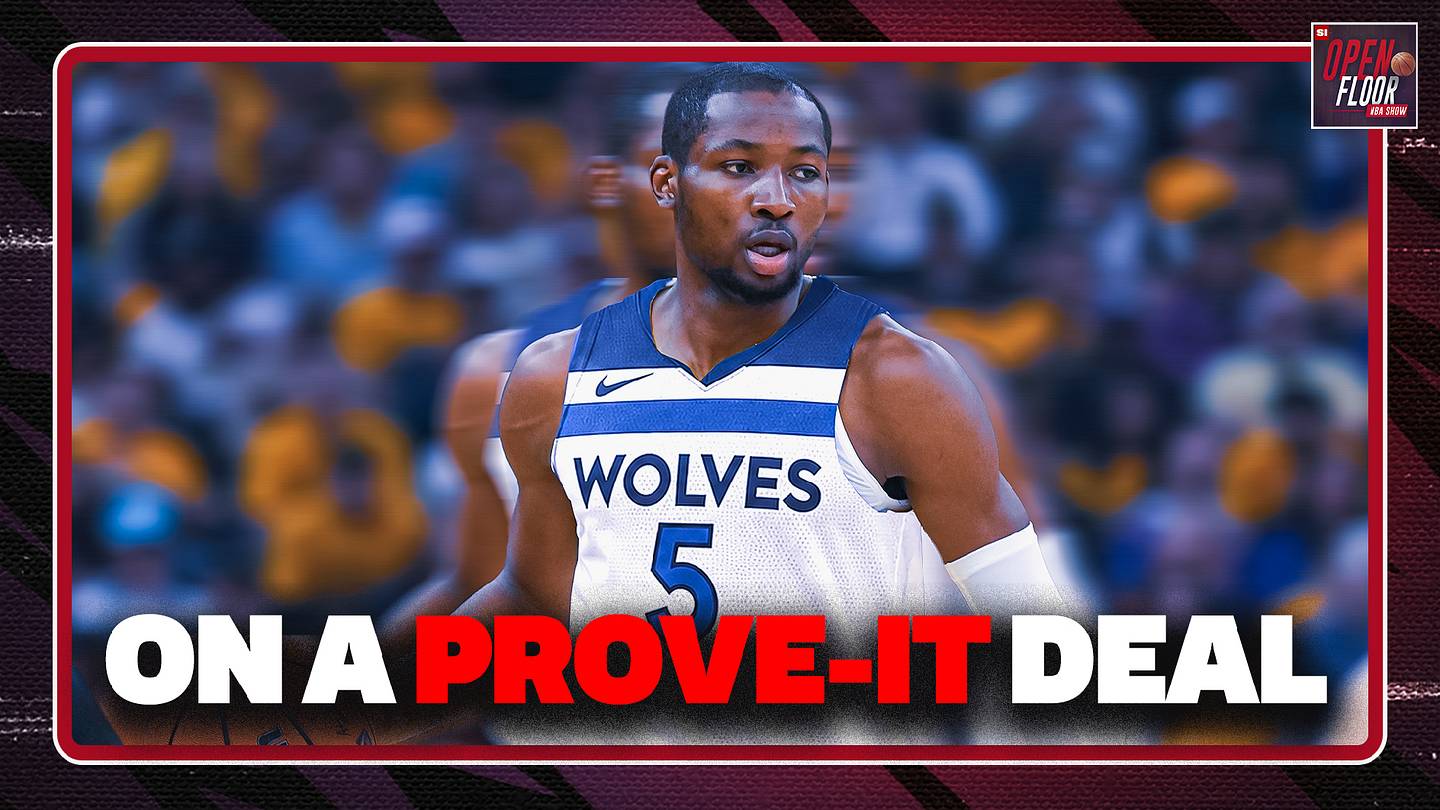
Source: SI NBA. Casualplayhub News adds summary, context, and editorial framing while linking back to the original report.
Ad eligibility review: sensitive-topic
The NBA offseason, often a quiet stretch, has delivered a flurry of late-August moves. The latest domino to fall: Jonathan Kuminga, the former lottery pick whose career has been a rollercoaster of promise and frustration, has found a new home. He signed a two-year, $13 million contract with the Minnesota Timberwolves—a prove-it deal that, at face value, represents a significant financial step back from the $20 million annual salary he was reportedly seeking. The news broke via ESPN's Shams Charania, and it immediately reshaped the Timberwolves' rotation.
For Minnesota, the move is a necessary patch. After trading away both Naz Reid and Julius Randle in the blockbuster deal to acquire LaMelo Ball, the Wolves were left with a glaring hole at power forward. The initial plan was to shift Jaden McDaniels into that role, but at a listed 185 pounds, McDaniels is severely undersized against today's 220-plus-pound forwards. Kuminga, listed at 225 pounds, brings the bulk and athleticism to guard bigger opponents, freeing McDaniels to play the 3, where his elite defense can shine. As Blake Silverman noted on the SI podcast, "Every minute they can save McDaniels from guarding up benefits them."
But the fit is not without concerns. Kuminga has a reputation for inconsistent defense and a tendency to freelance on offense. His time with the Golden State Warriors was marked by a desire for a larger role, and he struggled to buy into a tertiary option behind Stephen Curry and Draymond Green. After being traded to the Atlanta Hawks at the deadline last season, he showed flashes—helping them steal a playoff game against the Knicks—but still often played isolation ball. The Timberwolves' offense, built around LaMelo Ball's playmaking and Anthony Edwards' scoring, demands that Kuminga embrace a role as a lob threat, transition finisher, and spot-up cutter. The question is whether he can channel his talent into discipline.
Silverman and Liam McKeone discussed the deal's implications. McKeone pointed out that the Wolves were hard-capped at the second apron, meaning they still need to clear cap space—likely by waiving Josh Green. The signing also impacts Ayo Dosunmu, who inked a five-year, $112 million extension this offseason. With DiVincenzo out until at least March after tearing his Achilles, Dosunmu will likely come off the bench, providing defensive depth. "It's an upgrade for the Wolves," McKeone said. "You can't be too mad about it."
Kuminga reportedly turned down offers from Portland, Chicago, and the Lakers. The Lakers, long linked to him, were seen as a natural fit, but the money didn't align. In Minnesota, he gets a chance to prove himself on a contender—and on a national stage. The Wolves are expected to compete in the Western Conference, and if Kuminga can be a reliable starter, he could opt out of his player option next summer and chase a bigger payday.
Beyond the signing, the podcast also explored breakout candidates for the 2026-27 season. Names like Jalen Duren (still unsigned with Detroit), Benedict Mathurin (now with New Orleans), and others were discussed. The consensus: young players with untapped potential who are in positions to thrive, whether due to expanded roles, system changes, or health. The Wolves' own young core—LaMelo, Edwards, McDaniels—already has breakout stars, but Kuminga could be the wild card that elevates them.
The Timberwolves' summer bonding trip to France, paid for by Rudy Gobert, also came up. It's part of a trend where NBA stars host team retreats—Lauri Markkanen took teammates to Finland, Victor Wembanyama led the Spurs in France, and Cade Cunningham brought the Pistons to San Diego. These trips build chemistry, and for a team with so many new faces, that camaraderie could be crucial.
As the dust settles, the Timberwolves have a new-look starting five: Ball, Edwards, McDaniels, Kuminga, and Gobert. It's a mix of elite defense, explosive scoring, and question marks. If Kuminga buys in, Minnesota might have the forward depth to challenge the Thunder and Spurs. If not, the narrative of "what if" will follow him into another free agency.
Article commentary
The Jonathan Kuminga signing is a textbook case of a player betting on himself in a market that has shifted hard against mid-tier forwards. At $13 million over two years, this is a fraction of the $20 million annual salary he was reportedly seeking last summer. The drop-off speaks to how teams now value positional versatility, shooting, and defensive consistency—areas where Kuminga remains unproven. For the Timberwolves, the move is a calculated risk with a high ceiling. They needed a power forward after trading away Naz Reid and Julius Randle, and Kuminga's physical profile—225 pounds, explosive athleticism—gives them a player who can body up bigger forwards and finish lobs from LaMelo Ball. The defensive upside is real, but the on-court discipline is a concern. Kuminga's tenure in Golden State was defined by a tug-of-war over his role; he wanted starter minutes and touches, but the Warriors needed him to be a connector. In Atlanta, he showed flashes of maturity, but his isolation-heavy style occasionally stalled the offense. In Minnesota, he will be the third or fourth option behind Ball, Edwards, and possibly Gobert on pick-and-rolls. The pressure is on him to accept that hierarchy. From a team-building perspective, the Timberwolves are threading a needle. They are hard-capped at the second apron, meaning they must waive someone like Josh Green to finalize the deal. That's a small price if Kuminga delivers. But the bigger question is whether this signing pushes them past the Thunder and Spurs in the West. The Thunder have depth and shooting; the Spurs have Victor Wembanyama's generational impact. Minnesota's path likely relies on Ball and Edwards being a top-five duo, with Kuminga providing the kind of disruptive two-way presence that made Naz Reid so valuable. The breakout candidates discussion adds another layer. The NBA is entering a period where young players from the 2023 and 2024 draft classes are poised to leap. The podcast's focus on players like Jalen Duren and Benedict Mathurin highlights a trend: teams are increasingly willing to let young players fail and learn, rather than trading them for win-now pieces. For the Timberwolves, their own breakout candidate could be Kuminga himself—if he can harness his talent, he might be the missing piece. The team bonding trip to France, paid for by Rudy Gobert, is a fascinating subplot. These player-organized retreats are becoming more common—Lauri Markkanen took Jazz teammates to Finland, Cade Cunningham took the Pistons to San Diego. They build chemistry in a way that training camp cannot, and for a team with three new starters (Ball, Kuminga, Dosunmu), that cohesion could be the difference between a first-round exit and a deep run. Ultimately, the Kuminga signing is a low-risk, high-reward bet for Minnesota. If he fails, they lose little cap flexibility. If he thrives, they gain a valuable asset for a playoff push. The commentary on his free agency cycle—"get ready for more Jonathan Kuminga"—is apt. He will be back on the market next summer, and the narrative will restart. For now, the Timberwolves have a new puzzle piece, and the West just got a little more interesting.