Hormuz Crisis Forces Asia to Rethink Its Energy Strategy
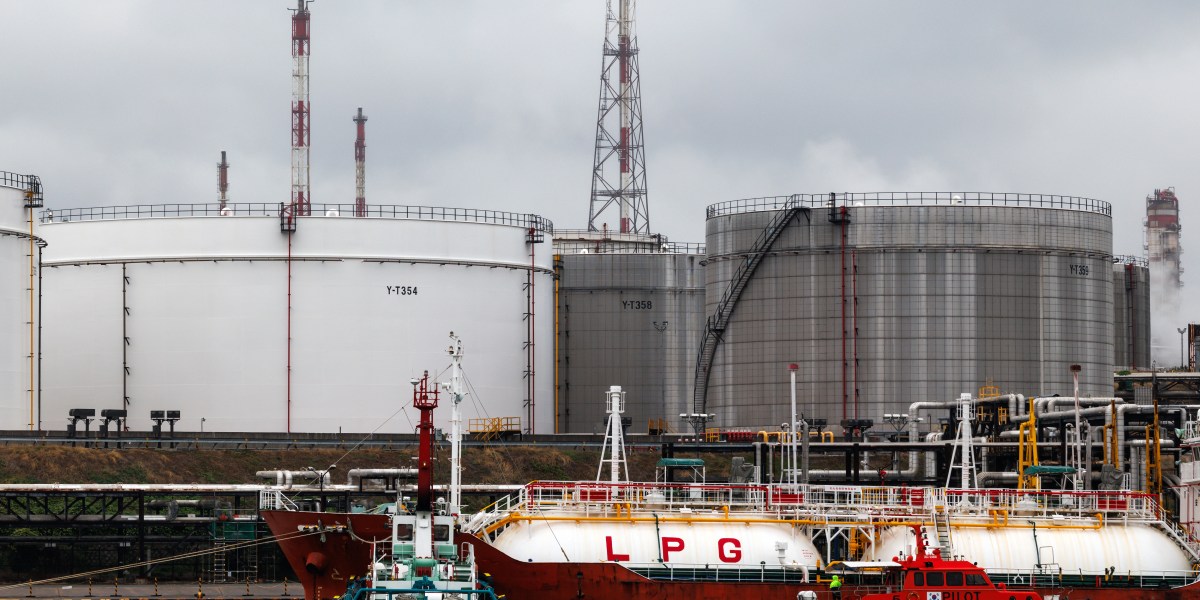
Source: Fortune. Casualplayhub News adds summary, context, and editorial framing while linking back to the original report.
The war with Iran exposed a stark reality: the global economy’s Achilles’ heel is a narrow, 20-mile stretch of water separating Iran from Oman. Within days of the U.S. launching airstrikes on Iranian targets, Tehran threatened to strike any vessel attempting to navigate the Strait of Hormuz, the conduit for a substantial portion of the world’s oil and gas exports. The specter of shortages sent shockwaves through Asia. Countries from Japan to India imposed export restrictions, reduced import duties, and began rationing fuel to stretch existing supplies.
Half a year into the conflict, the apocalyptic forecasts—$200-a-barrel oil, long lines at petrol stations, rolling blackouts, stranded aircraft—have not materialized. A combination of ramped-up production and massive emergency reserves has cushioned the blow. On Wednesday, Iran announced a new revenue-sharing agreement governing the waterway, though a military official accused the United States of “obstructing this process.” Still, the crisis has hammered home a critical lesson: how easily a single state can threaten one of the world’s most vital maritime arteries.
“Global oil and gas supply is still a major point of geopolitical leverage,” said Saul Kavonic, head of energy research at MST Financial. “Notwithstanding the rise of alternative and green technologies over the past decade, the global economy is still very reliant on oil and gas. Hostile actors can threaten that for their geopolitical ends.”
Before the conflict erupted, roughly one-fifth of the world’s oil trade passed through the Strait of Hormuz. More than 80 percent of that volume was destined for Asia, primarily China, India, Japan, and South Korea. The war demonstrated that the threat is not hypothetical. “Before this crisis many market observers would have told you it would be impossible to block or completely close the Strait of Hormuz, because a country like Iran did not have the capabilities. They tried in the 1980s, but they did not succeed,” said Carole Nakhle, CEO of Crystol Energy. Yet the conflict has shown “how easy and inexpensive it has become to threaten very expensive energy infrastructure,” she added, noting that relatively cheap drones can now put refineries, pipelines, and ports at risk.
“This has been the big wake-up call for the entire global energy industry. It’s a fundamental paradigm shift of the last 50 years of the energy industry,” said Kavonic. “We’re moving from just-in-time supply chains to just-in-case supply chains.”
Energy importers are already scrambling to diversify. Before the war, the Middle East supplied 90 percent of Japan’s crude oil and roughly 11 percent of its liquefied natural gas. “Japan found it was more vulnerable than expected, particularly when it comes to LNG—it imports 100 percent of its energy,” Kavonic noted. “In Japan, if the LNG doesn’t arrive, the lights go off and the country shuts down.” Tokyo is now investing elsewhere. Japan’s Inpex formed a joint venture to expand its LNG footprint in Australia’s Northern Territory. “It’s boomtime for Woodside and Chevron, two big LNG players who aren’t too concentrated in the Middle East. The oil majors are now also rapidly ramping up their investment in LNG,” Kavonic said.
Exporters, too, are adapting. Oil producers are pouring billions into building ports on Saudi Arabia’s western coast and along the Gulf of Oman, effectively bypassing the strait. Pipelines such as the East-West pipeline in Saudi Arabia are being expanded. If these investments come to fruition, only 10 percent of the world’s oil will need to transit the Strait of Hormuz, down from 20 percent before the war.
Gas presents a more difficult challenge. While crude oil can be rerouted through pipelines, LNG cannot easily bypass the strait. Qatar, one of the world’s largest LNG producers, is pursuing diplomacy, seeking new customers, and preparing a fast recovery plan to restart production once the strait reopens. The vulnerability of gas supply remains a looming concern.
The market has proven more resilient than many predicted. In April, the head of the International Energy Agency warned that Europe might need to ground flights due to jet fuel shortages. Oil prices did spike to $126 a barrel, but they did not reach the dreaded $150–$200 range. Several Asian countries enacted emergency conservation measures, but a prolonged, catastrophic shortage never occurred. “The global market is proving to be more resilient to major supply shocks than many thought,” Kavonic said.
A key factor was the sheer volume of emergency stockpiles. The IEA requires its 32 members to hold at least 90 days of oil reserves; similar mandates for gas were introduced after Russia’s invasion of Ukraine. In March, the agency coordinated the release of 400 million barrels from these reserves, the largest such intervention in history. Producers like the United States, Saudi Arabia, and the UAE also increased output. Yet perhaps the most critical buffer was China, which tapped its vast strategic reserves, leaving more oil available for others.
“OPEC has lost its primary role as global oil market manager,” Kavonic argued. “It’s now moved to China.” He noted that China’s growing influence has ripple effects across the Pacific. “We can see how dependent Pacific Island nations are on diesel to keep the lights on. So we’ve seen countries in Asia not just have to manage their own imports but support the Pacific as well. Otherwise 30 years of Pacific policy could be undermined in a few months.”
But the current stability may be temporary. Tensions between Iran and the U.S. have escalated again, and a prolonged closure of the Strait of Hormuz now looks increasingly likely. “We spent the last four months living on the oil market credit card. And if we continue at that rate, that credit card will be maxed out in a few months,” Kavonic warned.
Article commentary
The Strait of Hormuz crisis has laid bare a profound vulnerability in the global energy system. For decades, the assumption that the waterway would remain open underpinned the energy strategies of major economies. The conflict between the U.S. and Iran shattered that assumption, revealing that a relatively modest investment in drones and missiles could disrupt the flow of oil and gas that powers much of Asia. The immediate response—drawing down emergency stockpiles, ramping up production, and imposing conservation measures—worked, but only temporarily. The deeper lesson is that the era of cheap, reliable, and uninterrupted energy supply from the Middle East may be ending. The shift from “just-in-time” to “just-in-case” supply chains is not merely a logistical adjustment; it represents a structural transformation of the energy industry. Companies and governments are now prioritizing security over efficiency. This means investing in redundant infrastructure, diversifying supply sources, and building strategic reserves that go beyond IEA mandates. The crisis has accelerated the development of alternative routes, both physical (pipelines, ports) and commercial (new LNG contracts with non-Middle Eastern suppliers). For Asia, which relies heavily on Hormuz, the urgency is especially acute. One of the most striking outcomes is the rise of China as a de facto manager of global oil markets. With its massive strategic reserves and willingness to use them, Beijing has gained leverage that OPEC once held. This shift has geopolitical implications. As China’s influence grows, Pacific Island nations and other smaller economies become more dependent on Beijing’s goodwill. The crisis has exposed the fragility of energy-dependent states and the potential for energy to be used as a tool of foreign policy. The vulnerability of LNG is a particular concern. Oil can be rerouted through pipelines, but LNG requires specialized tankers and terminals. If the Strait of Hormuz remains blocked, Qatar’s exports are essentially trapped. The global gas market, already tight due to the aftermath of Russia’s invasion of Ukraine, could face severe disruptions. The crisis has prompted a rush to secure LNG from Australia, the U.S., and other non-Middle Eastern sources, but supply constraints and long lead times for new projects mean that the transition will be gradual. The resilience shown so far should not breed complacency. The emergency stockpiles that saved the day are being depleted. The IEA’s 400-million-barrel release was a one-time measure. As Kavonic warns, the “credit card” is nearly maxed out. If the strait remains closed for an extended period, the world could face a much more severe crisis. The next shock might not be as easily absorbed. In the long term, the crisis may accelerate the transition to renewable energy and alternative fuels, as countries seek to reduce their dependence on fossil fuels altogether. But that transition will take decades. In the meantime, the Strait of Hormuz will remain a chokepoint, and the geopolitical tensions surrounding it will continue to shape energy markets. The region’s rewriting of its energy playbook is a necessary step, but it is only the beginning of a much larger transformation.