After 14 Years of Training, Truck Driver Wins Golden Belt at Nationals
Source: Fortune. Casualplayhub News adds summary, context, and editorial framing while linking back to the original report.
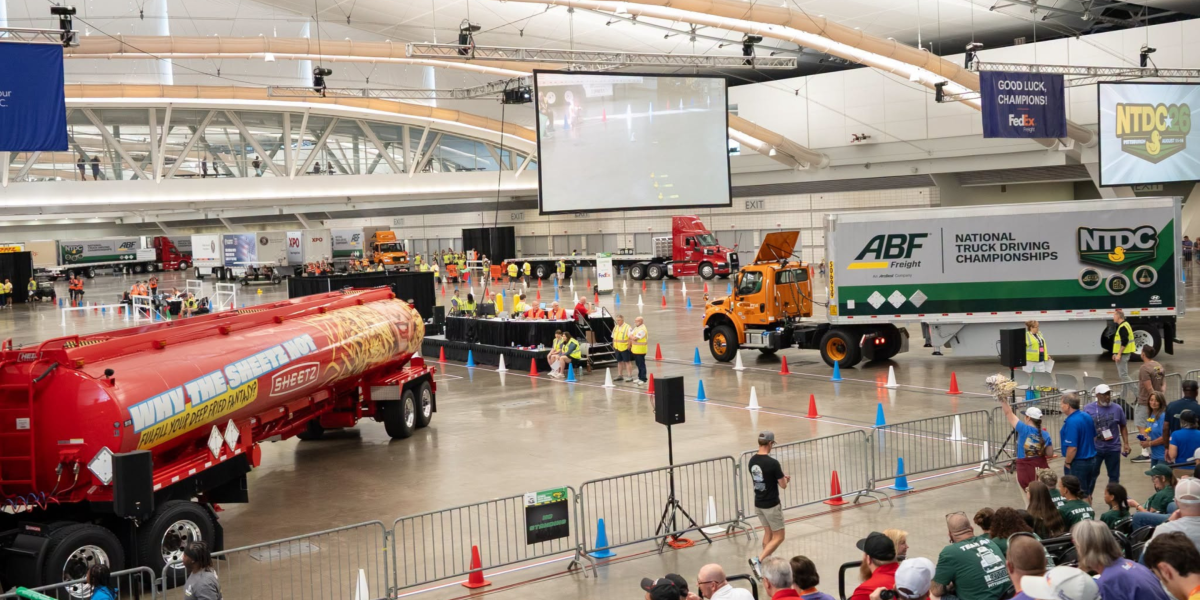
This summer has been a season of high-stakes competition, with Spain claiming the World Cup, the Knicks staging a remarkable NBA finals comeback, and now, truck drivers from across the United States revving up for the National Truck Driving Championships (NTDC), often called the "Super Bowl of trucking." The event, held in Pittsburgh earlier this month, drew 429 drivers from 49 states, whose combined safe driving miles exceed 775 million—enough to circle the Earth more than 31,000 times. Participants hailed from 55 companies, from small family-owned operations to Fortune 500 powerhouses like Walmart, FedEx, XPO, and UPS, all vying for glory in tests of maneuvering, turning, and parking—all executed safely.
Jacob Pierce, executive director of the American Trucking Associations’ Safety Management Council, explained the program’s core mission: "The entire motivation of this program is to make them better on the road and to continue to drive safe. It creates a company culture where everybody buys into ‘every day is a safe day.’" This focus on safety is critical, given that large trucks accounted for 9% of all vehicles involved in fatal crashes in 2024, according to the National Safety Council. With 11 billion tons of freight moved by truck last year, the stakes are immense. A loaded tractor trailer requires 20% to 40% more stopping distance than a car, per the Insurance Institute for Highway Safety, and fatal crashes involving large trucks have risen 30% over the past decade, reaching 5,218 in 2024.
Eric Ramsdell, a Walmart tank trunk driver who won his division, emphasized the responsibility that comes with the job. "Every day we have to understand we have people’s lives at stake, equipment, our safe mileage record," he told Fortune. The skills course, he added, mirrors real-world pressures, demanding focus and safe maneuvering. To qualify for nationals, drivers must win their state competition, maintain a clean accident-free record for the previous year, and meet full-time driving requirements. Even minor incidents like hitting a curb can disqualify a driver. Pierce noted that some drivers have attempted state competitions 20-plus times without reaching nationals, yet they persist.
Unlike typical timed events, the NTDC prioritizes precision over speed. The three-day competition began with a written exam on road knowledge and safety, followed by a pre-trip inspection where drivers identified planted safety risks—from unsecured loads to subtle issues like a cracked frame or missing wiper blade. The obstacle course featured cones and bright yellow plastic ducks, with drivers required to navigate as close to the 3.5-inch-tall ducks as possible without hitting them. To keep the challenge pure, safety-assistance technologies like backup cameras were covered. "We are purists when it comes to driving a truck," Pierce said.
On the final day, companies like FedEx, Walmart, and UPS dominated the leaderboards. FedEx fielded 18 finalists, Walmart nine, UPS five, and XPO three. After a grueling course of tight turns, reverse parking, and controlled stops, winners were selected for nine truck classes, from flatbeds to five-axle vehicles. Richard Prescott, a Walmart driver with 45 years in the industry, took first in the flatbed division. A first-time national winner, he described the journey as "baby steps." When Walmart was announced as the winner, he initially thought the trophy belonged to a teammate. "My boss… grabs me from behind, and I told him Mark won, and he says, ‘No, you did,’" Prescott said. "It’s still sinking in."
Miguel Corral, competing for UPS in the four-axle division, claimed the grand champion title. A nine-time NTDC participant, Corral told Fortune he feels nerves but also a sense of family. He approaches the pre-trip inspection with the same thoroughness as his daily routine: "I inspect my equipment every day, making sure to be thorough and complete each time." On the obstacle course, accuracy is paramount, not speed. "Speed doesn’t prevent accidents, accuracy does," Corral said. "You want to take your time and be safe." The event may be competitive, but its core skills are rooted in the everyday discipline of professional trucking.
Article commentary
The National Truck Driving Championships offer more than just a spectacle of skill; they serve as a powerful reminder of the critical role safety plays in the trucking industry. With large trucks involved in 5,218 fatal crashes in 2024—a 30% increase over a decade—the competition’s focus on precision and accident-free records is both timely and necessary. The event’s rigorous qualification process, which demands a clean driving record and state-level victories, ensures that only the most disciplined drivers reach the national stage. This emphasis on safety, rather than speed, reflects a broader industry shift toward reducing risks on the road, where a loaded tractor trailer requires up to 40% more stopping distance than a car. The NTDC also highlights the collaborative culture among companies, from small operators to giants like Walmart and UPS. The participation of 55 firms, with many drivers returning year after year despite repeated failures, underscores a shared commitment to excellence. Jacob Pierce’s comment about drivers trying 20 times to reach nationals speaks to the perseverance and pride inherent in the profession. This dedication is not just about winning a golden belt buckle; it’s about instilling a mindset where "every day is a safe day" becomes a company-wide ethos. The competition’s use of decoys, obstacle courses, and covered backup cameras strips away technological crutches, forcing drivers to rely on raw instincts and experience—a reminder that human judgment remains irreplaceable. However, the broader context of rising fatal crashes cannot be ignored. While the NTDC celebrates safety victories, the industry faces systemic challenges, including driver fatigue, regulatory pressures, and the increasing size of trucks. The championship’s emphasis on accident-free records is laudable, but it may inadvertently create pressure to underreport minor incidents. Moreover, the 30% rise in fatal crashes over the past decade suggests that individual driver skill, while essential, is not enough to reverse the trend. Infrastructure improvements, stricter enforcement of hours-of-service rules, and wider adoption of collision-avoidance systems are equally vital. The stories of drivers like Richard Prescott, who spent 45 years in the industry before winning his first national title, and Miguel Corral, a nine-time competitor, illustrate the long arc of mastery. Their journeys reflect a profession where incremental progress and relentless practice are the only paths to success. The NTDC, at its core, is a celebration of that ethos—a reminder that in trucking, as in life, the most valuable victories are hard-won through patience, precision, and a steadfast commitment to safety. As the industry evolves, events like this will continue to shape the culture, but they must be paired with broader policy efforts to truly make the roads safer for everyone.