Jackson Hole Takeaways: Warsh’s Inflation Focus, Global Divergence
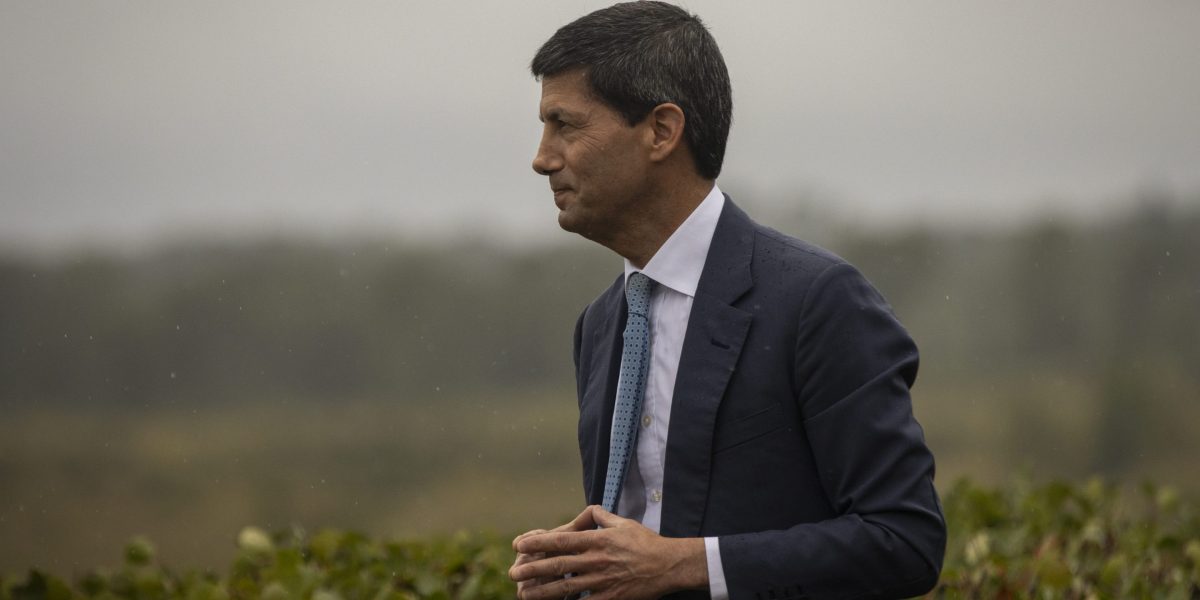
Source: Fortune. Casualplayhub News adds summary, context, and editorial framing while linking back to the original report.
The Federal Reserve Bank of Kansas City’s annual economic symposium in Jackson Hole, Wyoming, concluded Saturday, with Kevin Warsh delivering his first keynote address as the central bank’s chairman. The gathering, long a stage for signaling policy shifts, this year centered on Warsh’s firm stance on inflation. He used his speech to reiterate that curbing price growth remains the Fed’s paramount objective, even as he avoided offering explicit guidance on the direction of interest rates. That stance had frustrated investors in recent months, but Warsh finally provided enough insight into his economic outlook to ease some of that tension. The new clarity immediately sent expectations for a near-term rate increase higher. Market participants now look ahead to the next round of consumer inflation data, due September 11, just days before policymakers convene in Washington on September 15-16. While Warsh did not signal his support for a hike, he warned that inflation is not slowing meaningfully. He stressed that policymakers must be confident it is moving toward the 2% target. “Here is my standard: We must be confident that underlying inflation is moving to our objective, clearly and at sufficient speed. Otherwise, we have work to do. That’s our job,” he said. He added that financial conditions are not restraining the economy, and described interest rates as the Fed’s “predominant tool” for achieving its mandate. Warsh also dispelled speculation that he might alter the Fed’s inflation goal. He called the 2% target, measured by the personal consumption expenditures price index, a “firm, fixed target.” Across the Atlantic, European Central Bank officials echoed a similar caution. Primoz Dolenc, a member of the ECB’s Governing Council and head of the Slovenian central bank, told Bloomberg that the region’s economic resilience and persistent conflict in the Middle East warrant a rate hike in September. “With the new data coming in, we see that the inflation situation doesn’t resolve itself,” Dolenc said. Austrian central bank governor Martin Kocher, another ECB rate-setter, highlighted “more momentum” in the economy and, on inflation—estimated at 3.3% in August—said there is “alertness, there is no complacency.” Bank of England Governor Andrew Bailey offered a more tempered view. In his first public remarks on monetary policy since July 30, when he voted with the majority to keep rates on hold, Bailey told Bloomberg TV: “We’re seeing quite subdued second-round effects. I think we’ve seen a softening labor market for some time now. I’ve taken the view that I think we can watch this situation for the moment.” Several prominent central bankers were absent from Jackson Hole this year. European Central Bank President Christine Lagarde and Bank of Japan Governor Kazuo Ueda skipped the symposium to attend a meeting of G-20 finance ministers and central bank governors in Asheville, North Carolina, on Monday and Tuesday. Former Fed Chair Jerome Powell also did not attend, breaking with tradition after his term as chair expired in May. He has since remained on the Board of Governors but out of the spotlight, as he had pledged. Beyond the policy chatter, the symposium served as a forum for high-level research. Papers presented this year focused on financial innovation and its implications for payments and monetary policy. The discussions underscored how central banks are struggling to keep up with technological changes, particularly tokenization, which is reshaping how financial assets are held and transferred. On the sidelines, a political undercurrent emerged. The White House has renewed efforts to fire Fed Governor Lisa Cook over allegations of mortgage fraud. On Wednesday, Cook’s lawyer responded with a letter calling the allegations “unfounded and untrue.” The White House did not immediately comment. President Donald Trump had previously sought to oust Cook, narrowly losing that bid at the Supreme Court on procedural grounds. The developments added a layer of tension to an already eventful conference.
Article commentary
Kevin Warsh’s debut as Fed chair at Jackson Hole was a carefully calibrated performance, balancing the need for transparency with the Fed’s long-standing aversion to market guidance. His message was clear: inflation remains the enemy, and the central bank will not waver. Yet Warsh deliberately avoided locking into a specific rate path, a move that simultaneously soothed and frustrated investors. The jump in rate hike expectations afterward suggests markets interpreted his tone as hawkish, but the lack of explicit commitment leaves room for flexibility. This is a smart play. Warsh knows that every word from a Fed chair is dissected. By affirming the 2% inflation target as a “firm, fixed target,” he quashed any speculation of a shift in the framework, a fear that had lingered since his predecessor, Jerome Powell, faced pressure from the White House. The divergence between the Fed, the ECB, and the Bank of England highlights a fragmented global recovery. The ECB’s Dolenc and Kocher are clearly worried about persistent inflation fueled by geopolitical conflict and resilient demand. Their hawkish tone suggests Europe may be more willing to tighten, even if the U.S. takes a wait-and-see approach. Meanwhile, Bailey’s cautious stance reflects the UK’s softening labor market and weaker second-round effects. This split could create currency volatility and complicate trade flows. The most striking undercurrent was the political drama surrounding Fed Governor Lisa Cook. The White House’s renewed effort to remove her over mortgage fraud allegations, which her lawyer has dismissed, injects a destabilizing element into the institution. Even if the allegations are baseless, the mere attempt to fire a Fed governor undermines the central bank’s independence. Trump’s earlier loss at the Supreme Court on procedural grounds shows that the administration is willing to test the limits of executive power. Cook’s case could set a precedent for how far the White House can go in reshaping the Fed. The absences of Lagarde, Ueda, and Powell also speak volumes. Lagarde and Ueda prioritized the G-20, signaling that global coordination on financial stability may be gaining urgency. Powell’s decision to stay away, while adhering to his pledge to remain out of the spotlight, also hints at a deliberate distancing from the current leadership. The research papers on financial innovation and tokenization were a timely reminder that central banks are racing to keep pace with technology. As digital assets and tokenized financial instruments proliferate, traditional monetary policy tools may become less effective. The fact that Jackson Hole dedicated a session to this topic indicates that policymakers are taking the challenges seriously. Overall, this year’s symposium was less about dramatic policy shifts and more about reinforcing resolve. Warsh is establishing his authority, the ECB is preparing for a potential hike, and the BoE is watching the sidelines. The political backdrop adds a layer of uncertainty that will likely persist. Markets should brace for a volatile autumn as inflation data and central bank rhetoric collide.