Europe's Summer Drought: Desertification Threat Intensifies
Source: Fortune. Casualplayhub News adds summary, context, and editorial framing while linking back to the original report.
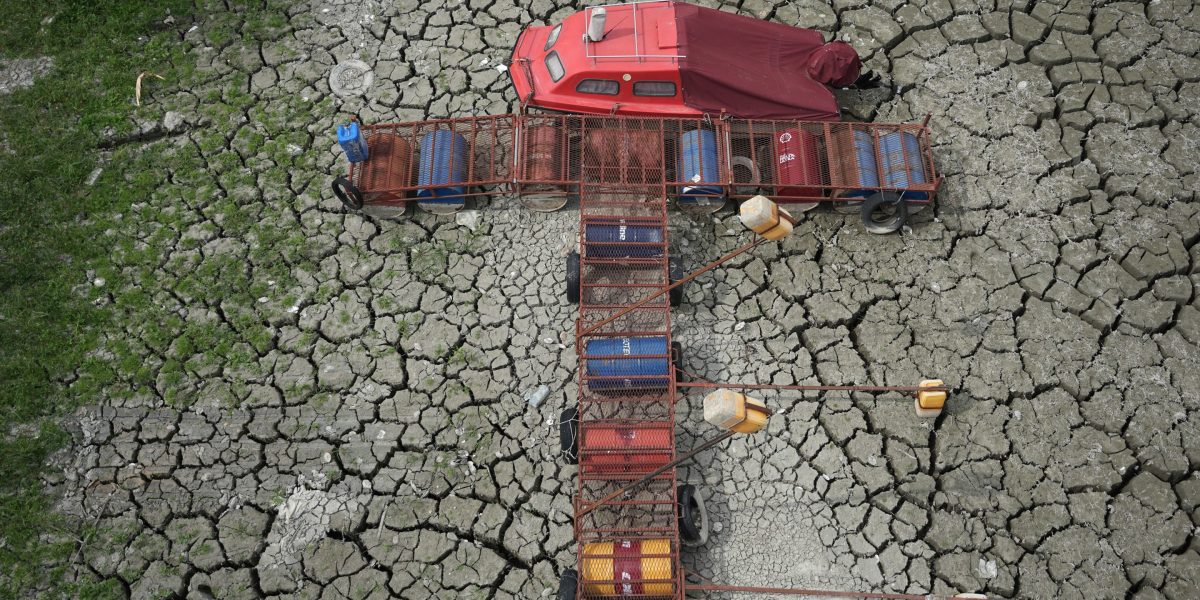
The Danube River, Europe's second-longest waterway, has become a symbol of this summer's brutal drought. In northern Serbia, a side channel near Novi Sad has shriveled to a few stagnant ponds, leaving small boats stranded on cracked earth. Fisherman Dusan Jovanovic watches the fish circle in the shallow, overheated water. "This is all we have, these two little ponds that are full of juvenile fish," he said, his voice carrying the weight of desperation. The water temperature has climbed above 30 degrees Celsius (86 degrees Fahrenheit), and Jovanovic fears the worst. "If they start to die, they will all die at once." His concerns echo across a region where persistent drought and record-breaking heat have upended lives and livelihoods. From a lake in Slovenia to fish farms in Bosnia, Romania, the Czech Republic, and Hungary, the toll is mounting. The fish industry alone faces millions of euros in losses, compounding existing problems with energy shortages, water supply disruptions, devastated crops, and reduced river traffic. Governments and businesses, many of which were unprepared for this year's intensity, are now scrambling to devise strategies to cope with future extreme weather events that scientists attribute to human-driven climate change. In Hungary, the national meteorological service reports that nearly 99% of the country's land is under severe or extreme drought conditions. Desertification, a process where vegetation retreats due to high heat and low rainfall, now threatens vast stretches of the Great Hungarian Plain. The country's roughly 27,000 hectares (67,000 acres) of fish ponds have been among the hardest hit. According to the Agriculture and Food Economy Ministry, 1,588 hectares (3,924 acres) of those ponds have completely dried out, resulting in the deaths of nearly 280 metric tons of fish at 20 farms. The estimated revenue loss stands at 1.3 billion forints ($4.2 million). Producers warn that replacing lost fish could take years. In some cases, operators were forced to drain one pond and divert its water to save fish in another, the Hungarian Aquaculture and Fisheries Inter-branch Organization noted in early August. Across the border in Romania, fish farmers, particularly those cultivating carp, are still reeling from severe droughts in 2023 and 2024. Catalin Platon, president of the ROMFISH National Association of Fish Producers, explained that carp production relies on a three- to four-year cycle. "So what we lost in 2023 has had an impact every year since," he said. He added that water-use policies during previous droughts prioritized irrigation for agriculture, "leaving us with no water for the fish." In the Czech Republic, fish farmers have implemented emergency measures, including reducing or suspending feeding to lower oxygen consumption, aerating ponds, or draining them when necessary. Officials from the Czech Fishing Association say sustained rainfall could ease the immediate crisis, but long-term solutions are needed to retain more water in the landscape. Jan Sokolik, a technician at the Rybarstvi Trebon fishery, noted that "some ponds that were actually low on water have already been fished, but they were all marginal ponds." He added, "Now we're just starting to plan what to do with the big ponds." In Bosnia, Veljko Budjen owns a trout farm near Trebinje in the southeast. He described how hot, dry summers have brought serious problems to the mountainous country, known for its trout restaurants. "Trout is a cold water fish, which requires cold water with a lot of oxygen," he said. "So during the summer you are forced to reduce trout production and feeding so the business can just barely survive." One option, he noted, is to add liquid oxygen to the water during the summer months. Otherwise, "you wait for the first rain." In eastern Slovenia, emergency teams have been pumping water into Lake Pristava, a popular fishing spot, to prevent a mass fish suffocation from lack of oxygen and an overgrowth of water chestnut covering the lake's surface. Firefighters have pumped in 8 million liters (2 million gallons) of water, but they still fear it may not be enough. "We are surprised that any fish has survived at all," Danijel Fras from the Pesnica Lenart Fishing Association told public broadcaster RTV Slovenia. In Serbia, the only solution for the endangered fish in the Danube side channel seems to be relocation. Jovanovic, the Serbian fisherman, summed up the pervasive sense of alarm: "The temperatures this year are extreme. No one can remember anything like this."
Article commentary
This summer's extreme drought across Europe is not just a seasonal anomaly—it is a stark signal of a changing climate that is reshaping ecosystems, economies, and daily life. The scenes from the Danube side channel, where a fisherman watches helplessly as juvenile fish circle in dangerously warm water, capture the human and ecological toll of a crisis that has been building for years. While droughts are a natural part of Europe's climate, the intensity and frequency of recent events bear the fingerprints of human-induced global warming. The fact that 99% of Hungary's land is under severe or extreme drought, and that desertification now threatens the Great Hungarian Plain, underscores the urgent need for adaptation. The impact on the fish industry is particularly telling. Fish farming relies on stable water temperatures and sufficient oxygen levels, both of which are compromised during heatwaves. The losses—millions of euros in damages, years needed to rebuild stocks—are not just economic setbacks; they represent a disruption to food systems and rural livelihoods. The cascading effects, from water-use conflicts to reduced river traffic, highlight how interconnected our infrastructure is with climate stability. What is striking is the sense of unpreparedness. Countries and businesses are now pondering ways to minimize future impacts, but the window for proactive planning is narrowing. The emergency measures described—pumping water into lakes, aerating ponds, draining one pond to save another—are reactive and unsustainable. Long-term solutions, such as improving water retention in landscapes, adopting more resilient aquaculture practices, and revising water allocation policies, require political will and investment. The challenge is that these measures must compete with other urgent priorities, such as energy and food security, which are also strained by the same climate pressures. The commentary from fish farmers reveals a deeper frustration with policy decisions. In Romania, water-use policies that prioritized irrigation for agriculture left fish farmers without water. Such trade-offs are inevitable in a drought, but they expose the need for integrated water management that considers all stakeholders. The Czech Republic's call for sustained rainfall and long-term measures echoes a common theme: dependence on natural precipitation is no longer reliable. The economic implications extend beyond fish farming. The drought has devastated crops, reduced river traffic, and strained energy supplies. The costs are likely to ripple through supply chains, affecting prices and availability of goods. The European Union's agricultural and environmental policies must grapple with this new reality. The EU's Common Agricultural Policy and water framework directive offer some tools, but implementation at national and local levels is uneven. The human element cannot be overlooked. Fishermen like Dusan Jovanovic and Veljko Budjen are not just business owners; they are stewards of traditions and ecosystems. Their stories underscore the emotional weight of watching a way of life slip away. The fact that no one can remember such extreme conditions speaks to the unprecedented nature of the current crisis. Looking ahead, Europe must accelerate its climate adaptation efforts. This includes investing in infrastructure to capture and store water, promoting drought-resistant crop and fish species, and reforming water allocation to prioritize essential uses during shortages. The scientific community has been clear: extreme weather events will become more frequent and severe. The choice is not whether to adapt, but how quickly and effectively. The summer of 2024 may be a turning point—a moment when the abstract threat of climate change becomes a tangible, everyday reality for millions.