Cave Creek mayor: Water crisis like a meteor strike – 'You can see it coming, but can't get out of the way'
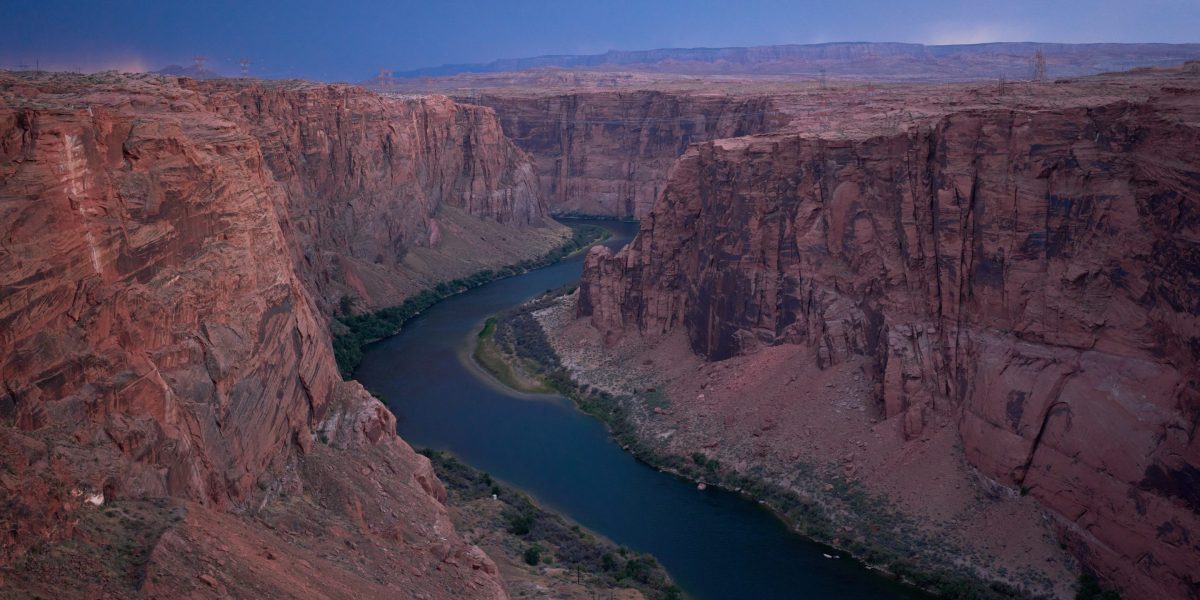
Source: Fortune. Casualplayhub News adds summary, context, and editorial framing while linking back to the original report.
On the fringes of Phoenix, Cave Creek—a small desert community of roughly 5,000 people—has been forced to confront the harsh realities of a dwindling Colorado River. The town has put a lid on new development, reactivated old wells, and struck water-sharing agreements. But Mayor Robert Morris remains haunted by the possibility that these steps may not be enough to keep the town afloat in the long run. A sweeping federal plan intended to address the river system's crisis, he says, offers little help.
Cave Creek draws nearly all its water from the Colorado, a river that supplies 40 million people across the American West. The river has been shrinking due to climate change, growing demand, and overuse. The town already had to cut its water use this year, and the new federal plan expects even deeper reductions. Morris compares the predicament to watching a meteor hurtling toward Earth: "You can see it coming, but you can't get out of the way, and you don't know what the damage is going to be."
This uncertainty ripples across seven U.S. states, tribal nations, and Mexico. Farmers are struggling to decide which crops are worth the risk. Phoenix could, for the first time, lose some municipal and industrial water, forcing it to tap backup supplies. Residents may face even higher water bills. Nevada raised the stakes this week by suing the Interior Department and the U.S. Bureau of Reclamation, arguing that basic needs in the Las Vegas area will go unmet if the region must absorb up to 70% cuts in its Colorado River allotment over the next decade. A Bureau spokesperson said Thursday it does not comment on litigation.
"The uncertainty is going to continue to build in the wrong direction," warns Tom Buschatzke, director of the Arizona Department of Water Resources.
Water in the West is stored mainly in reservoirs, aquifers, and snowpacks. But a record snow drought has left far less water to replenish those sources. The two largest reservoirs in the country—Lake Mead and Lake Powell—serve as barometers for the Colorado River system. Both hit record lows this month. Eight other reservoirs operated by the Bureau of Reclamation have recently recorded their lowest levels in at least 30 years. Among them are Elephant Butte Lake in New Mexico, which supplies crops in southern New Mexico, Texas, and Mexico; Green Mountain Reservoir in Colorado; and Guernsey Reservoir in Wyoming, which provides water to farmers in eastern Wyoming and western Nebraska.
Under the Bureau's plan, California, Nevada, and Arizona will collectively cut water use by 1.25 million acre-feet (about 1.54 billion cubic meters) annually over the next two years—enough to fill more than 600,000 Olympic-sized swimming pools. Larger cuts could follow depending on conditions. Colorado, Utah, Wyoming, and New Mexico are not required to reduce use for now, but may do so voluntarily.
El Niño could bring heavy moisture to the northern Rockies and the Southwest in the coming months, but it will not undo decades of drought. "Drought is a slow-moving phenomenon, and it can take time to come into it and also come out of it," says David Mocko, a senior research scientist who recently authored a U.S. Drought Monitor map.
John Boelts grows vegetables, melons, durum wheat, and other crops in Yuma, Arizona—a region that produces about 90% of the leafy greens eaten in North America during winter. Farmers there hold high-priority water rights and may avoid cuts to their Colorado River supply over the next two years. But Boelts, president of the Arizona Farm Bureau, says the reprieve isn't enough for long-term planning. That makes farmers reluctant to plant new acreage. Citrus, date, and other orchard crops that thrive in the region take years to become commercially productive. "There's no food that we grow in a hurry," Boelts says. "Beef takes years to produce. The lettuce you eat today? A farmer was working on how they would grow that crop six-plus months ago."
Ray Martinez grows alfalfa on a reservation home to the Colorado River Indian Tribes. The tribe holds some of the river's oldest rights, and while its Arizona allocation is huge, an old irrigation system and lack of infrastructure keep much of the water out of reach. Martinez and the water department worry about having enough water to finish this growing season. He has left some fields unplanted for years to help prop up Lake Mead. If the reservoir keeps dropping, he says, surface water for him and neighboring farms will be further limited. "Unfortunately, Mother Nature has its own way of doing things, and we have no control of that," he adds.
The water crisis is not just a regional problem—it's a slow-motion catastrophe that challenges the very foundation of life and economy in the arid West.
Article commentary
The water crisis unfolding across the U.S. West is a textbook case of a systemic failure masked by incremental adaptation. The story of Cave Creek, Arizona, captures the dilemma perfectly: a small desert town doing everything it can—capping growth, reviving wells, striking deals—yet still facing an existential threat that no local action can fully resolve. Mayor Robert Morris's meteor metaphor is not just vivid; it's disturbingly accurate. The crisis is visible, predictable, and yet the region seems unable to move out of its path. At the heart of the problem is the Colorado River, a lifeline for 40 million people and vast agricultural lands. The river's decline is driven by a trifecta of climate change, over-allocation, and relentless demand. The federal plan to cut water use by 1.25 million acre-feet over two years is a stopgap, not a solution. It buys time, but does not address the structural imbalance. The fact that states like Nevada are already suing the federal government over the cuts indicates how painful the transition will be. The legal battle underscores a deeper truth: the Colorado River system is being asked to do more than it can sustain. Agriculture, which consumes the lion's share of Colorado River water, faces the most difficult choices. Farmers like John Boelts and Ray Martinez are on the front lines. Boelts's point about the long lead times for crops—years for beef, months for lettuce—highlights the disconnect between annual water allocation cycles and agricultural planning. Farmers cannot simply flip a switch. Their decisions about planting, irrigation, and fallowing are made years in advance. When water supply becomes uncertain, they are forced to make conservative choices that ripple through the entire food supply chain. The drought is not a sudden event but a slow-moving phenomenon, as researcher David Mocko notes. This makes it harder to address because it lacks the urgency of a hurricane or wildfire. Yet the cumulative effects are just as devastating. Record low reservoir levels at Lake Mead, Lake Powell, and eight other key reservoirs signal that the region's water storage system is dangerously depleted. Even if El Niño brings heavy precipitation, it will take years of above-average snowpack to replenish the system. The drought has been building for decades, and recovery will be equally slow. What is missing from the current approach is a long-term vision that goes beyond emergency cuts. The federal plan focuses on short-term reductions, but there is no comprehensive strategy for rebalancing water use across states, tribes, and Mexico. The Colorado River Compact, signed in 1922, allocated water based on river flows that no longer exist. The system is now living on borrowed time. Without fundamental reform—including conservation mandates, agricultural efficiency improvements, and possibly even desalination or water recycling on a massive scale—the region will continue to lurch from crisis to crisis. Moreover, the human cost is already visible. Farmers may lose their livelihoods, communities may shrink, and the cost of water will inevitably rise. The lawsuit by Nevada is a sign of the desperation setting in. The fact that the Bureau of Reclamation declines to comment only adds to the sense of a system in denial. The meteor is coming, and the West is still trying to figure out whether to run or to build a shelter. The time for decisive action is now, before the damage becomes irreversible.