Hawks Rookies Face Key Tests: Three Questions for 2025-26
Source: SI NBA. Casualplayhub News adds summary, context, and editorial framing while linking back to the original report.
Ad eligibility review: sensitive-topic
The Atlanta Hawks find themselves in an enviable spot with their rookie class. In an era where draft picks are highly valued, the team secured three players who could become meaningful contributors within two years. The headliner is Kingston Flemings, the No. 8 overall pick, widely regarded as the second-best point guard in the draft after Darryn Peterson. His freshman season at Houston was exceptional: he led the Cougars in points, assists, steals, and three-point percentage, while finishing second on the team in defensive rebounds—a rare feat for a point guard. Expectations are sky-high, and for good reason.
Yet Flemings faces a critical question: can he finish at the rim? His passing and shooting are already promising. During Summer League, he displayed high-level vision, and his shooting indicators are solid. In college, he attempted only 3.6 threes per game but shot 84.5% from the free-throw line and 44.3% from midrange, with 10.5 midrange attempts per 100 possessions—all above-average marks that suggest NBA floor-spacing ability. However, his rim finishing is a legitimate concern. He generated nine rim attempts per 100 possessions (86th percentile) but converted just 57.2% of those shots. Summer League only amplified the worry, as he shot 31.8% from the field and seemed more inclined to find teammates than attack the basket. While the sample size is small, this trend bears watching. If Flemings hovers around 55-60% at the rim this season, it would signal encouraging growth. His primary value to the Hawks lies in the physicality he brings compared to CJ McCollum—a factor that could accelerate a transition to a starting role next season.
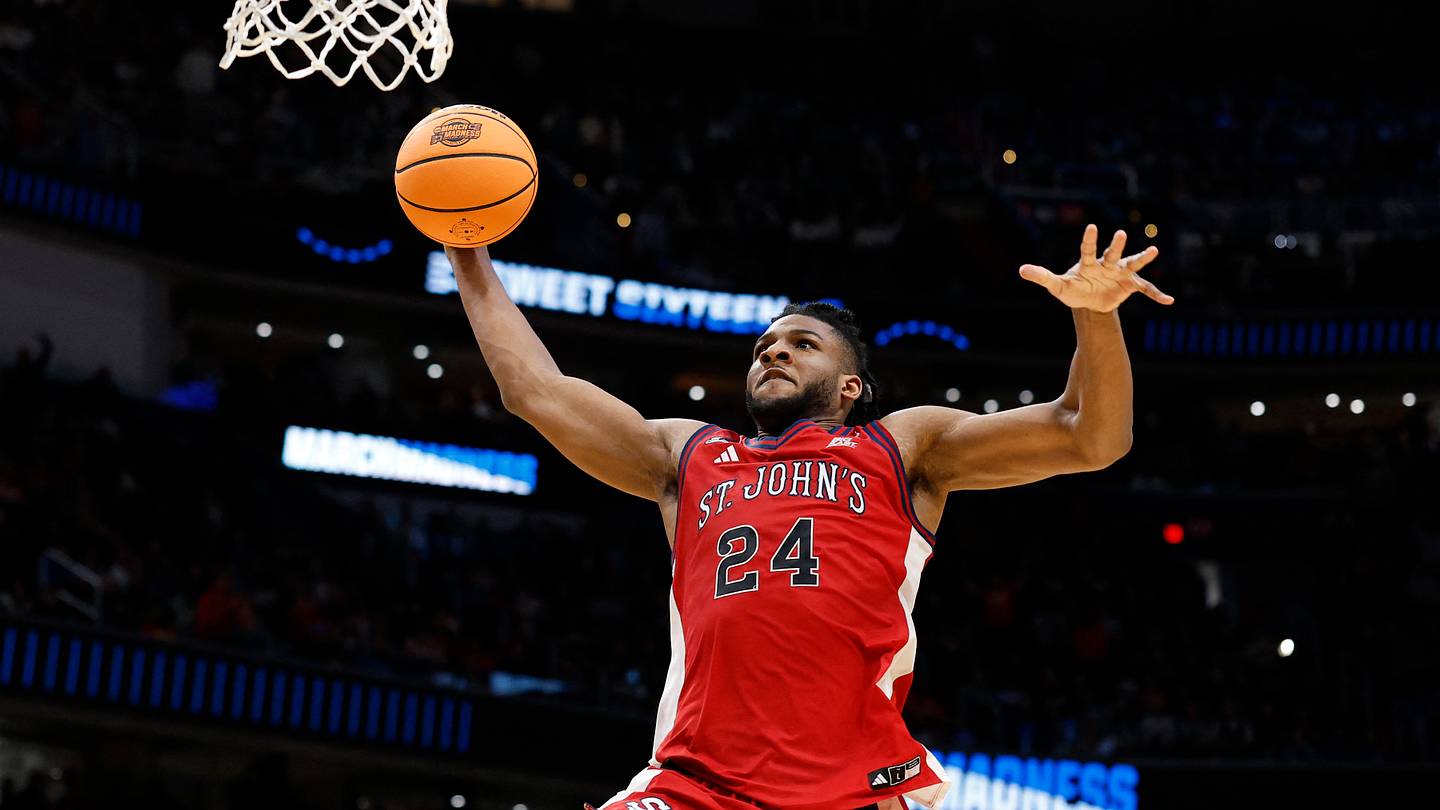
Zuby Ejiofor, selected at No. 23 from St. John’s, faces a steeper climb. NBA forwards and centers typically develop slowly, but Ejiofor’s age (22) and four years of college experience give him an edge. He is immediately useful as a hustle player—grabbing boards and blocking shots. At St. John’s, he posted a block percentage of 7.2% (80th percentile) and grabbed 12.1% of available offensive rebounds (80th percentile). His defensive rebounding was weaker, at 14.7% (4th percentile), but his motor and a reduced NBA role should help him improve. In college, he carried the team across multiple categories, which limited his ability to focus solely on rebounding. In the NBA, a simplified role will allow him to refine strengths and minimize weaknesses. His shooting is the key question. Ejiofor made 30% of his threes as a senior but improved to 35.3% on 4.3 attempts per game during Summer League. That percentage is serviceable, but whether it translates to NBA games remains uncertain. His motor makes him playable as a finisher and rotation big, but consistent shooting will determine his minutes.
Henri Veesaar, the second-round pick out of UNC, enters with a smaller role. He lacks Flemings’ pedigree and Ejiofor’s experience, but he offers a unique skill: shooting. Veesaar hit 42.6% from three on decent volume while protecting the paint as a seven-footer. However, his defense is a major question. At North Carolina, he posted a block percentage of 3.8% (75th percentile), which is modest for a center. He is adequate in drop coverage but lacks speed and strength to body up opponents. If he cannot become a reliable shot blocker, his playing time will be limited. His shooting touch is legitimate—he connected on 53.5% of midrange attempts and over 40% from deep—and he grabbed 21.9% of available defensive rebounds (84th percentile). The path to a backup role exists, but it may be better for him to develop defense in College Park (the G League affiliate) for most of the season before earning spot minutes later. Gaining strength while preserving his shooting stroke will be critical for his defensive survival. Whether that improvement arrives in Year 1 will be fascinating to watch.
Article commentary
The Atlanta Hawks’ rookie class presents a mix of immediate potential and long-term development challenges. Kingston Flemings, as the eighth overall pick, carries the highest expectations. His ability to finish at the rim is a legitimate concern, but it is a fixable flaw. Many point guards struggle with finishing early in their careers, especially those who rely on finesse rather than explosive athleticism. Flemings’ strong shooting indicators suggest he can adapt, but the Hawks must be patient. If he improves his rim finishing to even an average level, his combination of playmaking and shooting could make him a franchise cornerstone. The team’s willingness to part with CJ McCollum next season hinges on Flemings’ growth, adding pressure to a rookie who already has a lot on his plate. Zuby Ejiofor represents a more traditional development path. His motor and rebounding make him immediately playable, but his shooting is the swing skill. In today’s NBA, a big man who cannot stretch the floor is often limited to a backup role, especially if he lacks elite defense. Ejiofor’s Summer League shooting improvement is encouraging, but it came in a small sample. The Hawks should give him consistent minutes off the bench to see if that touch holds. His age and experience give him an advantage over younger prospects, but the team must be careful not to rush him into a role that exposes his weaknesses. If he becomes a reliable three-point shooter, he could be a valuable rotation piece for years. Henri Veesaar is the most intriguing wildcard. In an era where floor-spacing bigs are in demand, his shooting ability is a rare commodity. However, his defensive limitations could keep him off the court. The Hawks have a history of developing players with unique skill sets, but Veesaar’s path is narrow. He needs to add strength without losing his shooting touch, and he must improve his positioning and shot-blocking instincts. The G League will be a crucial proving ground. If he can become even a neutral defender, his shooting could earn him a niche role. If not, he may become a one-dimensional player who struggles to find minutes. Overall, the Hawks have assembled a rookie class with complementary strengths. Flemings provides the star potential, Ejiofor offers stability, and Veesaar adds a unique skill. The key will be patience and proper development. The team’s front office has shown a willingness to invest in young talent, and these three could form the core of a new era. However, the questions each must answer are real and pressing. How they respond in their first season will shape not only their careers but also the Hawks’ trajectory in a competitive Eastern Conference.