Utah Jazz Trade: Winners and Losers in Cody Williams Deal
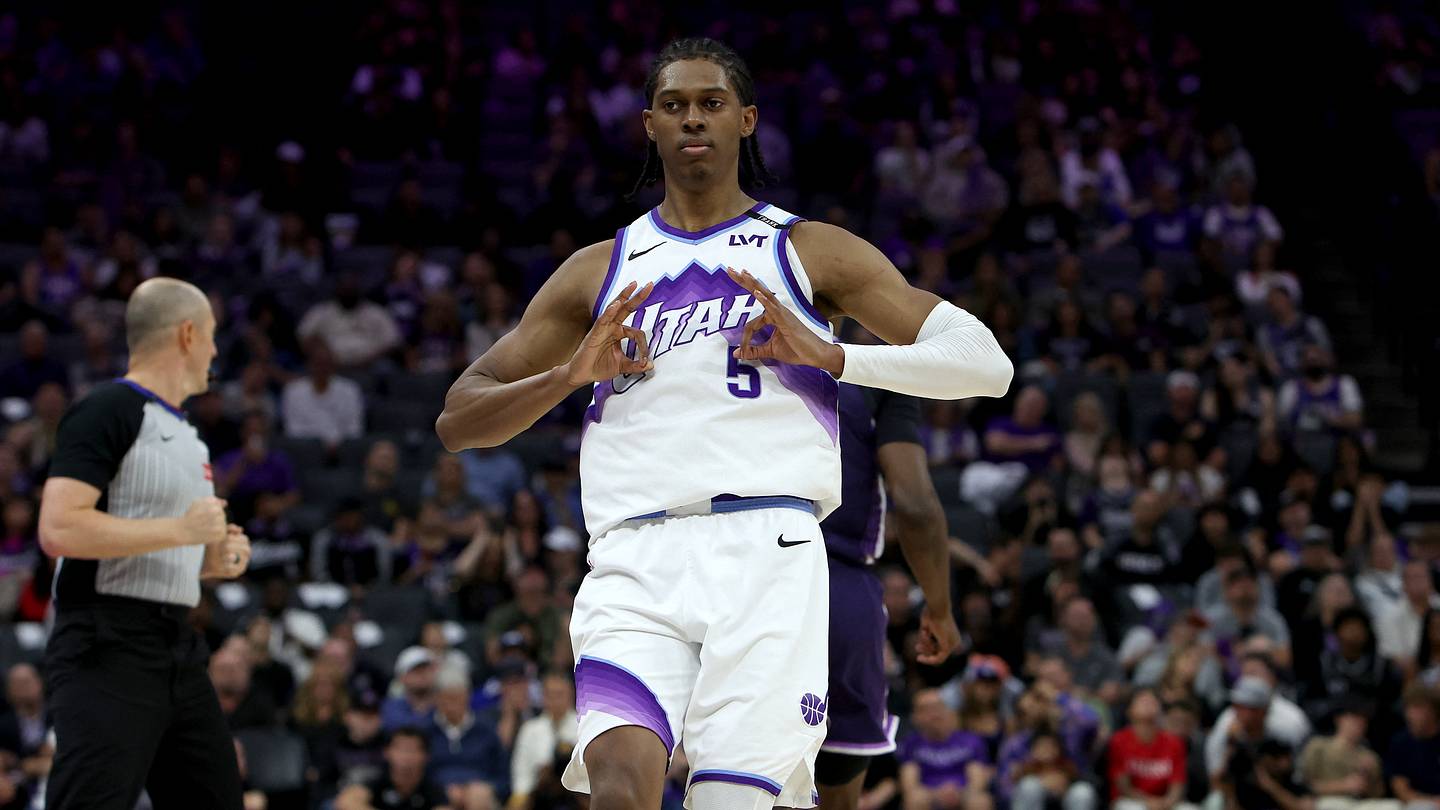
Source: SI NBA. Casualplayhub News adds summary, context, and editorial framing while linking back to the original report.
The Utah Jazz shook up their roster late Friday night with a trade that sent their No. 10 pick from the 2024 NBA Draft, Cody Williams, along with guard John Konchar to the Minnesota Timberwolves in exchange for Josh Green and an undisclosed amount of cash. The transaction, first reported by ESPN's Shams Charania, comes at a quiet point in the offseason calendar, making the move particularly striking. By dealing away a lottery pick just two years after selecting him, the Jazz are essentially admitting that Williams' development did not meet expectations. In return, they acquire an expiring contract in Green, a swingman who has carved out a reputation as a plus-level defender over six seasons in the league. For a team that has struggled defensively on the perimeter for years, Green's arrival offers an immediate upgrade. The deal also clears salary cap space for Utah, providing flexibility heading into future negotiations. But as with any trade, the ripple effects are felt across the roster. Some players now see expanded opportunities, while others find their paths to playing time suddenly blocked. Here is a breakdown of the biggest winners and losers from Utah's latest move. Kyle Filipowski emerges as a clear winner. The rookie forward had been competing with Williams for minutes at the backup four spot behind the starting frontcourt. Both players brought different skills—Filipowski with his offensive versatility and rebounding, Williams with his length and defensive potential. Now, with Williams gone, Filipowski becomes the primary backup power forward alongside center Jaxson Hayes. The pairing may have defensive vulnerabilities, but Filipowski's ability to stretch the floor and secure boards gives the second unit a much-needed boost. On the losing side, Josh Okogie faces an uphill battle. Signed to a two-year deal earlier this offseason, Okogie was expected to be a key wing defender off the bench. But Green's arrival adds another defensive-minded guard to the mix, and both players have similar profiles: reliable on defense but inconsistent offensively. Okogie's smaller frame and shorter wingspan compared to Green could work against him in the competition for minutes. The Jazz's perimeter defense, however, is a clear winner. Despite adding Okogie earlier, the team still lacked a consistent wing stopper. Williams had been drafted precisely to fill that role, but his two seasons in Utah failed to produce the expected results. Green brings a proven track record of defending guards and wings at a high level, and his experience should help stabilize a unit that has lagged behind the league's best. John Konchar is perhaps the hardest hit. The veteran guard, who had shown grit and hustle during his brief stint with the Jazz, was included in the trade only to be waived by the Timberwolves shortly after. Now he must find a new NBA home in a thin market. Surprisingly, Cody Williams himself might be a winner. While being traded away from the team that drafted him is rarely seen as a positive, Williams gets a fresh start with a Timberwolves squad that has a clear hole at the forward position. The change of scenery could reignite his development, especially if Minnesota exercises his fourth-year team option. Finally, Svi Mykhailiuk finds himself in a similar position to Okogie. The sharpshooter was expected to log significant minutes on the wing, but Green's presence creates direct competition. Mykhailiuk has the advantage of being a better offensive fit and a known commodity in Utah's system, but whether that outweighs Green's defensive value remains to be seen. Follow Utah Jazz On SI for ongoing coverage.
Article commentary
The Utah Jazz's decision to trade Cody Williams, their 2024 first-round pick, just two years after drafting him is a telling move that reflects both the pressures of roster building in the modern NBA and the organization's shifting priorities. On the surface, the trade appears to be a pragmatic pivot: Williams, a raw but athletic forward, failed to translate his physical tools into consistent production, and the Jazz are not in a position to wait indefinitely for development. By swapping him for Josh Green, a reliable, if unspectacular, wing defender with an expiring contract, Utah is opting for immediate defensive improvement and financial flexibility over long-term upside. This is a classic win-now or win-later calculation, and the Jazz have clearly chosen to address their most glaring weakness—perimeter defense—rather than hold onto a project player. From a macro perspective, the trade also signals that the Jazz are not yet ready to bottom out fully. Despite missing the playoffs in recent seasons, the front office under CEO Danny Ainge has resisted a full rebuild, instead collecting assets like Williams while also adding veterans who can contribute immediately. The acquisition of Green, combined with the earlier signing of Josh Okogie, suggests that Utah wants to build a defensive identity around head coach Will Hardy's system. The loser in this equation is perhaps the notion of patience in player development. Williams was a high-upside pick, but the Jazz gave him only two seasons to prove himself—a short leash by historical standards. In a league where first-round picks are often given four years to show their value, this trade underscores the growing impatience among teams to turn assets into production. However, the move also carries risks. Green's offensive limitations are well documented; he is a career 35% three-point shooter who rarely creates his own shot. If his defense does not significantly elevate the Jazz's unit, the trade could be seen as a lateral move that merely traded one flawed player for another. Meanwhile, the Timberwolves benefit from adding a young, cost-controlled forward who still has theoretical upside. For Minnesota, which has a clear need at the forward spot, Williams represents a low-risk flier. If he fails to develop, they can simply decline his option. If he succeeds, they have a valuable rotation piece. The inclusion of John Konchar, who was subsequently waived, is a minor footnote but a harsh reminder of the transactional nature of the league. Ultimately, this trade is a bet on the present for Utah and a bet on the future for Minnesota. The Jazz are hoping that Green's defensive chops will help them climb the Western Conference standings, while the Timberwolves are banking on a change of scenery unlocking Williams' potential. Only time will tell which side made the smarter move, but the trade itself is a fascinating case study in how teams balance immediate needs with long-term aspirations.