NBA Draft: Three Returnees Who Could Transform Their Game
Source: SI NBA. Casualplayhub News adds summary, context, and editorial framing while linking back to the original report.
Ad eligibility review: sensitive-topic
The 2027 NBA Draft class already boasts impressive depth, thanks in large part to a wave of collegiate returnees who chose to stay in school rather than test the waters. While most draft prospects focus on polishing existing strengths, a select few manage to fundamentally reshape their game, adding skills that vault them up draft boards. Golden State Warriors forward Yaxel Lendeborg is the latest example: over five college seasons, he transformed from a simple play-finishing forward into a versatile play-making wing, earning a lottery selection in the process. This season, three returnees are positioned to follow a similar path, each with a clear opportunity to alter their draft outlook.
Amari Allen, Alabama
Amari Allen delivered a productive freshman campaign for the Crimson Tide, averaging 11.4 points, 6.9 rebounds, 3.1 assists, and 1.0 steals per game. Despite that solid output, he opted to return for his sophomore season, aiming to boost his NBA stock. The departure of Labaron Philon leaves a significant void in Alabama's backcourt, and Allen stands to benefit directly. Last season, he thrived as an off-ball scorer and occasional ball-handler, but now he is expected to take on a far more central role. Allen will be asked to run pick-and-rolls, create his own shot off the dribble, and initiate offense more frequently. If he can succeed as a primary playmaker, his game could undergo a dramatic shift, moving him from a glue-guy label to a potential go-to option. The Tide's system will give him ample opportunities to showcase that growth.
Patrick Ngongba II, Duke
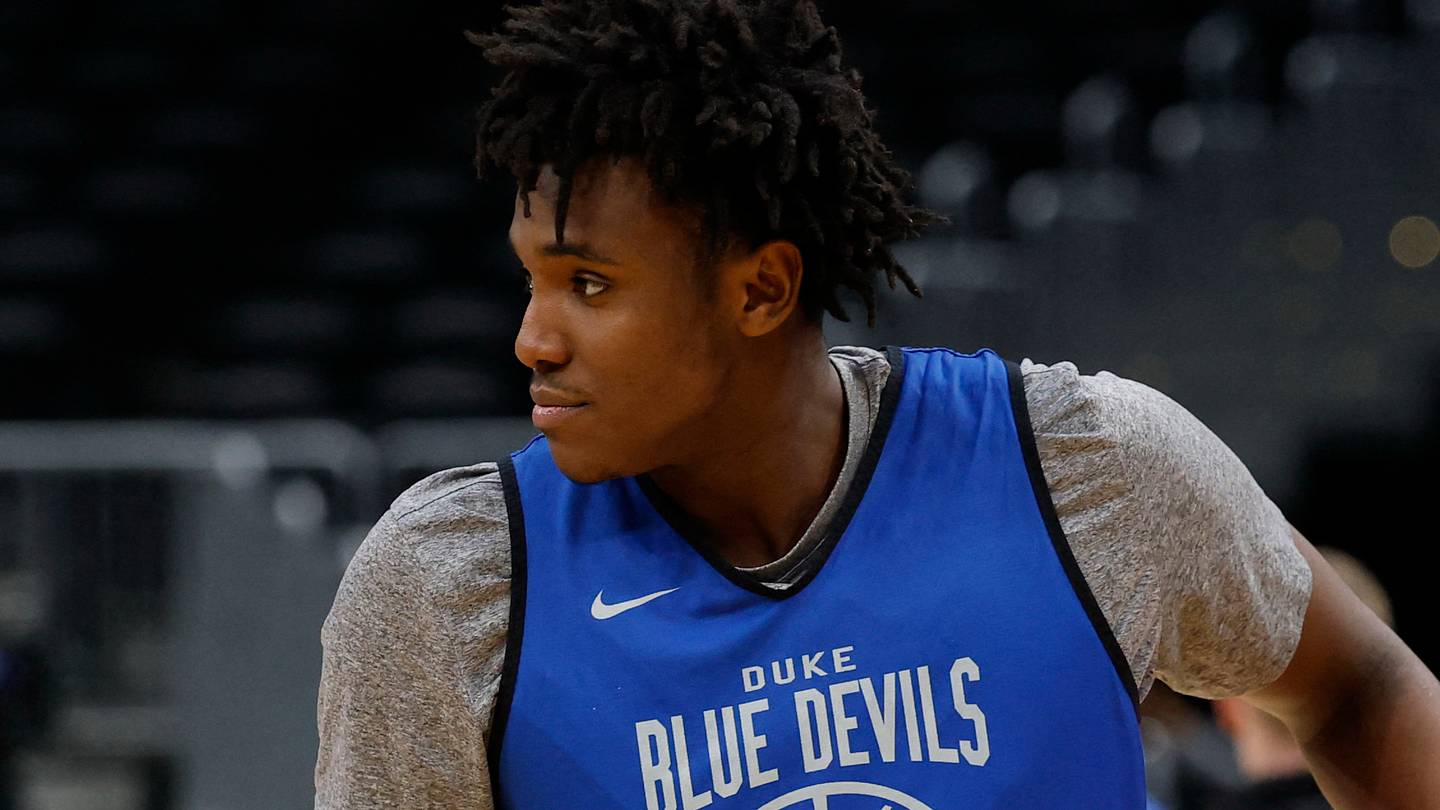
Patrick Ngongba II was on the borderline of first-round consideration last cycle, but chose to return to Duke for another season. He is already a well-known commodity in the frontcourt, offering scoring around the rim, rebounding, and exceptional passing for a big man. The key to elevating his draft stock is straightforward: he needs to become a reliable three-point shooter. As a sophomore, Ngongba attempted just 1.0 three-pointer per game and made only 26% of those attempts. The mechanics and touch are there, but the consistency was not. This coming season, he will either take a significant leap in perimeter shooting or remain a non-spacing threat. The former would dramatically improve his value, as a stretch-five who can also facilitate is a coveted archetype in the modern NBA. Duke's offense will likely feature him in more pick-and-pop situations, giving him the reps to prove his progress.
Tounde Yessoufou, St. John's
Tounde Yessoufou was one of the most productive freshmen in college basketball last season, averaging 17.8 points, 5.9 rebounds, and 2.0 steals per game. Despite those numbers, questions about his decision-making and shot selection caused many scouts to hesitate on him as a first-round pick. Rather than enter the draft, he transferred to St. John's, seeking a fresh start and a chance to refine his game. For Yessoufou, the path to a higher draft position lies in restraint and efficiency. He needs to cut out ill-advised shots and poor decisions, focusing instead on the skills that will translate to the NBA: attacking the rim, playing within the flow of the offense, and using his defensive instincts without gambling. If he can demonstrate that discipline, he could convince decision-makers that he is a valuable two-way contributor. If not, his stock may stagnate, as the concerns that plagued him at his previous school will follow him to New York.
Each of these three players stands at a crossroads. The upcoming season offers a finite window to prove they can add transformational skills, much like Lendeborg did before them. For Allen, it is about handling the ball under pressure; for Ngongba, it is about stretching the floor; for Yessoufou, it is about playing under control. The 2027 draft class will be watching closely, and so will NBA teams.
Article commentary
The trend of college returnees is often framed as a sign of the times: players opting for more development time rather than chasing the draft. But the reality is more nuanced. For every prospect who returns and improves his stock, there are others who stagnate or even decline. The key is whether the player is in a position to add a genuinely new skill, not just polish existing ones. Yaxel Lendeborg's transformation from a role player to a lottery pick is the exception, not the rule, yet it provides a compelling blueprint for the three returnees highlighted here. Amari Allen's situation is perhaps the most promising. He already has a well-rounded game, and the volume increase in on-ball responsibilities is a natural progression. The risk is that he may not be ready for the spotlight, but Alabama's system has a track record of developing guards. If Allen can handle the ball and create for others at a high level, he could jump from a late first-round projection into the lottery. His ceiling is higher than the other two because he is being asked to play a position of premium value. Patrick Ngongba II's challenge is more about specific skill acquisition. Becoming a consistent three-point shooter is notoriously difficult, especially for big men who have not grown up with that emphasis. The 26% he shot as a sophomore is concerning, but the low volume suggests he was not yet comfortable. If he can push that percentage to 35% or higher on increased attempts, he becomes a modern stretch-five with passing chops. That combination is rare and highly sought after. However, many big men have tried and failed to make that leap. The odds are against him, but the payoff is enormous. Tounde Yessoufou's path is the most behavioral. His poor decision-making and shot selection are not just mechanical issues; they reflect ingrained habits. Changing those takes time and strong coaching. Rick Pitino at St. John's is known for demanding discipline, which could be the perfect environment for Yessoufou to mature. But there is a risk that he reverts to old patterns under pressure. If he can play within himself, his raw production suggests he has NBA talent. If not, he may fall into the second round or even out of the draft. From a broader perspective, the 2027 draft class is already deep, and these returnees add another layer of intrigue. Teams will be watching closely to see which players can replicate Lendeborg's metamorphosis. The draft is as much about projection as it is about production, and a single season of transformed play can completely alter a player's trajectory. For Allen, Ngongba, and Yessoufou, the next few months will define their professional futures. The stakes are high, but the rewards are even higher.