Shai Gilgeous-Alexander: Time to Fire More Threes?
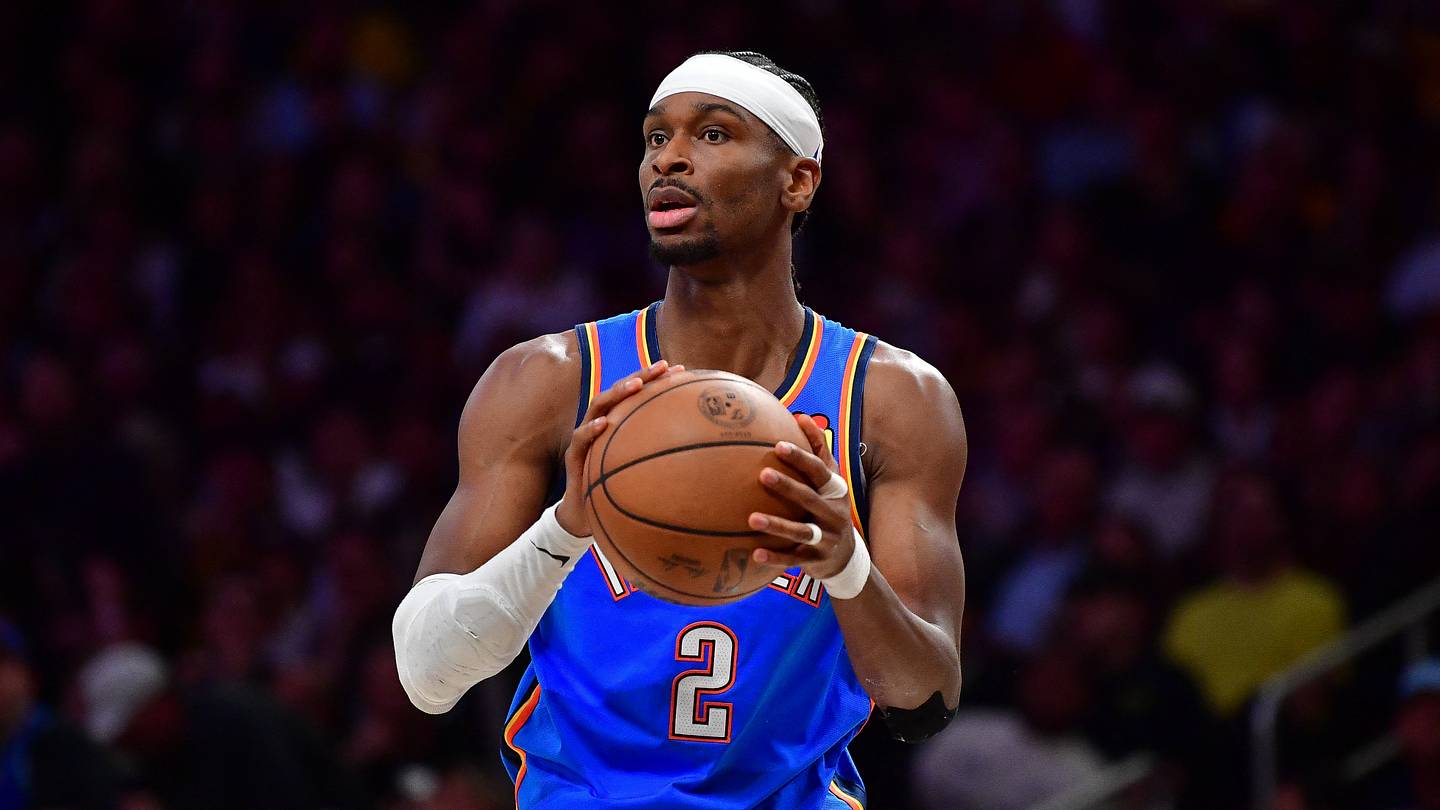
Source: SI NBA. Casualplayhub News adds summary, context, and editorial framing while linking back to the original report.
The Oklahoma City Thunder enter the 2026-27 season with a clear goal: reclaim the NBA title after falling short in the previous postseason. The team’s core remains intact, and once again, Shai Gilgeous-Alexander will be the engine driving their offense. The two-time MVP has established himself as one of the most prolific scorers in the league, combining silky handles, mid-range mastery, and a knack for drawing fouls. Yet even for a player who posted a career-best 38.6% from three-point range last season, his volume from deep dropped to just 4.4 attempts per game—the lowest among the league’s top eight scorers by points per game.
This decline in three-point volume is striking considering Gilgeous-Alexander’s first MVP campaign saw him launch 5.7 threes per night at a 37.5% clip. Last season, his outside shot looked more natural, flowing within the rhythm of the offense rather than feeling forced. He no longer hesitated or seemed to be checking a box; the shots came when defenders sagged off or when he stepped into catch-and-shoot opportunities. That comfort level suggests he could handle a heavier workload from deep without sacrificing efficiency.
Yet the postseason told a different story. In each of the past two playoffs, Gilgeous-Alexander’s three-point percentage has fallen off a cliff. Defenses packed the paint, dared him to shoot, and often succeeded in slowing him down. More regular-season volume—and variability in his shot selection—could help him prepare for those playoff adjustments. The Thunder’s offseason moves didn’t drastically alter the roster, but they added more shooting around him, which might create cleaner looks from beyond the arc.
Jalen Williams and Isaiah Hartenstein were the only Thunder players with a lower three-point attempt rate than Gilgeous-Alexander’s 22.6% last season. For a guard who averaged over 30 points per game, that rate is an outlier. In the modern NBA, elite scorers like Stephen Curry, Luka Dončić, and Damian Lillard take far more threes relative to their total shots. Gilgeous-Alexander’s reluctance to launch from deep is partly a product of his mid-range dominance, but it also makes him predictable.
Increasing his three-point volume doesn’t mean abandoning his patented pull-up jumpers or drives to the rim. It means taking a few more early-clock threes, stepping into shots when the defense backs off, and using the threat of the deep ball to open up his driving lanes. The Thunder’s offense, already among the league’s best, could become even more lethal if defenses have to respect Gilgeous-Alexander as a high-volume shooter from distance.
There is a risk, of course. Shooting more threes could lower his overall efficiency, especially if he forces attempts. But Gilgeous-Alexander’s shot mechanics and improved confidence suggest he can handle the increase. The Thunder don’t need him to change—his scoring is already elite—but the marginal gains from a few extra threes per game could be the difference between another early playoff exit and a championship parade.
As the Thunder prepare for the grind of a long season, Gilgeous-Alexander’s shot diet will be a key subplot. If he can blend his mid-range mastery with a higher volume of efficient three-pointers, Oklahoma City might just have the most unstoppable offense in the league.
Article commentary
Shai Gilgeous-Alexander’s three-point volume is a curious case study in the tension between efficiency and versatility. On one hand, he is already the NBA’s most efficient high-volume scorer, posting true shooting percentages that rival the greats. His mid-range game is almost automatic, and his ability to get to the free-throw line is unmatched for a guard. So why fix what isn’t broken? The answer lies in the postseason, where defenses tighten and space becomes a premium. In the playoffs, every possession matters, and a lack of three-point threats can clutter the paint. Gilgeous-Alexander’s drop in three-point percentage during the last two postseasons isn’t just a fluke—it’s a pattern. Opponents have scouted him well, forcing him into contested mid-rangers or packing the lane to stop his drives. A few more three-point attempts per game, even if they lower his regular-season efficiency slightly, could force defenses to spread out, making his drives more effective and his teammates’ lives easier. From a strategic standpoint, the Thunder’s roster construction supports this shift. They added shooters in the offseason, and Jalen Williams is developing into a reliable secondary scorer. But the offense still runs through Gilgeous-Alexander. If he can become a 7-to-8 three-point attempt per game player at a 37% clip, the Thunder would essentially have a guard who combines elite efficiency with high volume from deep—a rare combination. The modern NBA values spacing above almost everything else, and the best teams often have multiple players who can shoot off the dribble. Gilgeous-Alexander’s current shot profile is more reminiscent of a 1990s scoring guard, which works in the regular season but can be exploited in the playoffs. Critics might argue that asking him to change his game could disrupt his rhythm. But the data suggests he is ready. His three-point percentage improved last season, and his shot selection became more natural. The volume drop was likely a result of the Thunder’s offensive system, not a personal limitation. Head coach Mark Daigneault could easily design more actions that get Gilgeous-Alexander open looks from deep, especially in transition or off screens. The key is not to force it but to integrate it into his existing repertoire. Ultimately, this is a marginal gain debate. The Thunder are already a championship contender, and Gilgeous-Alexander is already a top-three player in the league. But championships are won on the margins. A slight increase in three-point volume could be the difference between a second-round exit and a title. It’s a low-risk, high-reward adjustment that could elevate his game to an even higher level. The real question is whether the Thunder’s coaching staff will push him to take those shots, or if they’ll let him continue to dominate in his own way. Given the team’s ambitions, the smart bet is on change.