Coyote vs. Acme Finally Hits Theaters After Tax Write-Off Drama
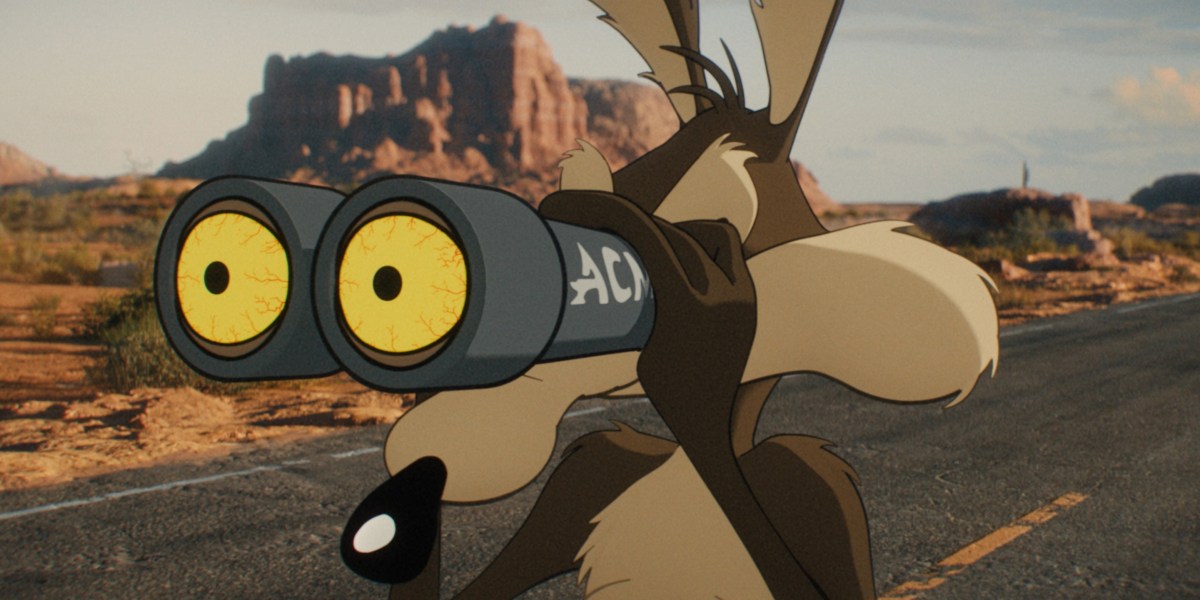
Source: Fortune. Casualplayhub News adds summary, context, and editorial framing while linking back to the original report.
Three years after Warner Bros. abruptly pulled the plug on "Coyote vs. Acme," the Looney Tunes feature film has finally made its way to the big screen. Indie distributor Ketchup Entertainment picked up the project and released it this weekend, where it earned an estimated $15.5 million in U.S. and Canadian theaters. That put it in second place, behind the unstoppable "Spider-Man: Brand New Day," which topped the box office for the fifth weekend in a row with $22.2 million. The Spider-Man sequel has now grossed $2.33 billion worldwide, making it the fourth highest-grossing film of all time.
"Coyote vs. Acme" had been left for dead in 2023 when Warner Bros. decided to scrap the completed film and take a tax write-off instead of releasing it—originally intended for its streaming service, HBO Max. The studio had previously done the same with "Batgirl" and "Scoob! Holiday Haunt," both of which remain unreleased. But after a public outcry from fans, filmmakers, and industry insiders, Warner Bros. agreed to sell the distribution rights. Ketchup Entertainment acquired worldwide rights for about $50 million early last year.
The film, directed by Dave Green, blends live-action and animation. It stars Will Forte, John Cena, Lana Condor, and Eric Bauza as the voice of Wile E. Coyote. The story is based on a 1990 New Yorker column by Ian Frazier, in which the perpetually frustrated coyote sues the Acme Corporation for its faulty products. The production budget was $70 million, and despite strong test screenings, Warner Bros. initially chose to shelve it.
For the filmmakers, getting the movie into theaters was a triumph. "Coyote vs. Acme is finally, gloriously, in theaters now," Green wrote on social media Friday. "Which means one thing. WE WON." The audience reception matched that enthusiasm. Moviegoers gave it an A CinemaScore, and critics were equally impressed, with the film earning a 95% fresh rating on Rotten Tomatoes.
While $15.5 million might be a modest opening for a $70 million movie, for Ketchup Entertainment it was a milestone. The indie distributor's previous best was 2024's "The Day the Earth Blew Up," another Warner Bros. Looney Tunes castoff that opened with $3.1 million. David A. Gross, who publishes the box office newsletter FranchiseRe, noted that the numbers are fair but the reception is excellent. He added that strong ancillary business, especially for kids' viewing, should help the film recoup its investment.
Other new releases struggled this weekend. The Ridley Scott action drama "The Dog Stars," starring Jacob Elordi, opened in fifth place with just $8 million domestically and $11.3 million overseas. The film, about a pilot and his German Shepherd surviving a global pandemic, cost between $70 million and $100 million to produce, making its performance a clear disappointment for 20th Century Studios.
In the rest of the top ten, "The Odyssey" slid to third place in its seventh weekend with $14.3 million, though it remains a powerhouse overseas, adding $48.6 million internationally and pushing its global total to $1.55 billion. The horror sequel "Insidious: Out of the Further" took fourth place with $10.1 million. Rounding out the list were "Buddy" ($5.4 million), "The End of Oak Street" ($5 million), "PAW Patrol: The Dino Movie" ($4.9 million), "Mutiny" ($2.8 million), and "Tony" ($2.2 million).
The journey of "Coyote vs. Acme" from corporate tax write-off to theatrical release is a rare success story in an era where studios increasingly treat completed films as disposable assets. It also highlights the growing role of independent distributors willing to take risks on projects that major studios abandon.
Article commentary
The release of "Coyote vs. Acme" after a three-year hibernation is more than just a feel-good Hollywood story. It exposes a troubling trend in the film industry: studios treating completed movies as financial instruments rather than creative works. Warner Bros. originally canceled the film—along with "Batgirl" and "Scoob! Holiday Haunt"—to claim a tax write-off, a practice that has drawn sharp criticism from filmmakers and audiences alike. The logic is purely economic: if a studio believes a film will generate more savings through tax benefits than through box office revenue, it may choose to bury it. This approach prioritizes quarterly earnings reports over artistic integrity and audience demand. The public outcry over "Coyote vs. Acme" was not just about one movie. It reflected a broader frustration with how conglomerates manage their intellectual property. Fans and creators rallied behind the film, arguing that a completed work deserves to be seen—especially one with strong test scores and a beloved franchise. The eventual sale to Ketchup Entertainment, a small indie distributor, showed that there is a market for these "orphaned" films, even if the major studios no longer see value in them. From a box office perspective, the $15.5 million opening is a modest win. For a $70 million production, that number would typically be considered disappointing. But context matters. The film was not marketed by a major studio with a massive promotional budget. Ketchup Entertainment had to work with limited resources, and the movie's release was largely driven by word-of-mouth and the controversy surrounding its initial cancellation. The strong critical reception and A CinemaScore suggest that the film has real staying power, particularly in home entertainment and streaming. This case also raises questions about the future of mid-budget movies. "Coyote vs. Acme" is a hybrid live-action/animation comedy—a genre that has become increasingly rare as studios focus on big-budget franchises and low-risk streaming content. The film's success, however modest, could encourage other indie distributors to acquire similar projects that major studios abandon. It also puts pressure on Warner Bros. and other studios to reconsider their policies. If a movie can find an audience through a different distributor, why not sell it rather than scrap it? Another angle is the enduring appeal of Looney Tunes. The characters have been around for decades, and while they may not command the same box office power as Marvel or DC, they still have a loyal fan base. The success of "The Day the Earth Blew Up" and now "Coyote vs. Acme" suggests that there is a steady demand for family-friendly animation rooted in classic comedy. Studios that ignore this audience may be leaving money on the table. Looking ahead, the film's performance will be watched closely. If it can hold well in the coming weeks and generate strong digital sales, it could become a profitable venture for Ketchup Entertainment and a blueprint for other rescued projects. The industry is at a crossroads: either continue to treat films as disposable tax write-offs, or recognize that even abandoned projects have value—both cultural and financial. "Coyote vs. Acme" is a small but significant step toward the latter.