Bobby Kennedy's Chosen Family Shapes Griz Football Philosophy
Source: Montana Sports. Casualplayhub News adds summary, context, and editorial framing while linking back to the original report.
MISSOULA — The phrase "the family you choose" has become a defining mantra for the Montana Grizzlies football program, but for the man who brought it to Big Sky Country, it springs from a deeply personal origin story. Bobby Kennedy, the Grizzlies' first Black head coach, learned the meaning of chosen family long before he stepped onto a football field.
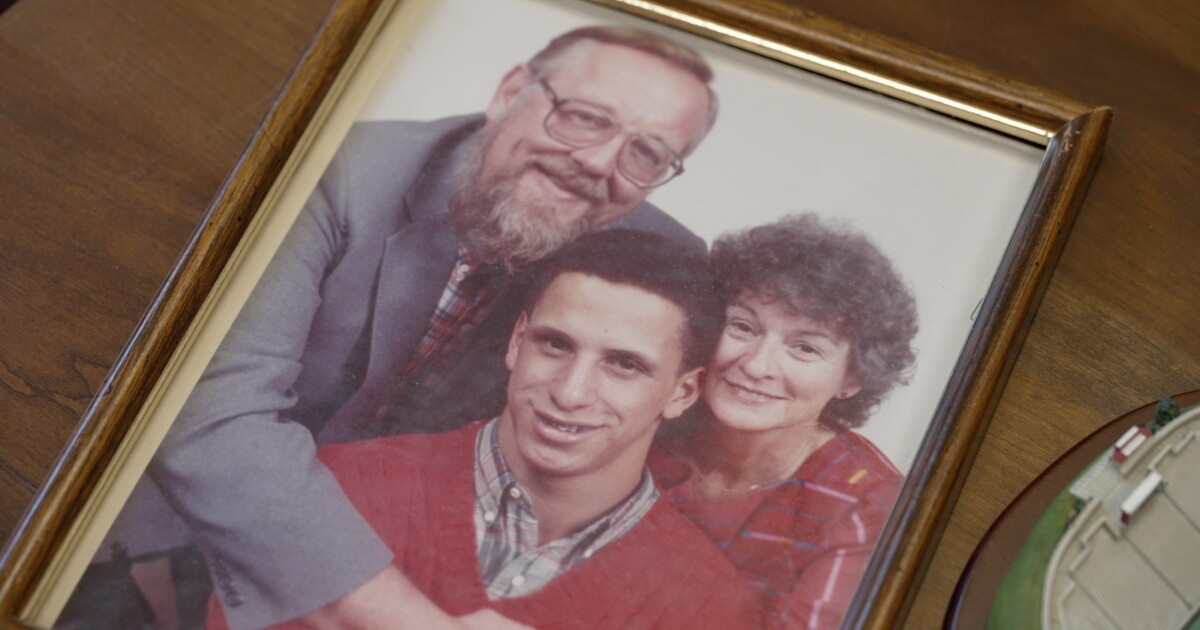
Born in Denver, Kennedy spent the first year of his life in an orphanage. In the mid-1960s, when interracial adoption was rare, a family in Boulder, Colorado, made the decision to bring him home. "Not a lot of people were adopting biracial babies," Kennedy recalled in a recent interview with MTN Sports. "I was really fortunate to end up with a good family and seven really good brothers and sisters. My parents were tremendous. They took me in when I needed a home."
The youngest of eight children, Kennedy grew up in a white family where he was acutely aware of being different. Yet his parents and siblings never made him feel like an outsider. "The family you choose, right? They chose me and integrated me into their family," he said. "That was special and I was very blessed."
That sense of belonging translated into a love for football. Kennedy played quarterback at the University of Northern Colorado from 1985 to 1988, though he admits he was a career backup who lacked maturity and commitment. That experience later shaped his coaching philosophy. "Understanding the commitment it takes and trying to help guys with their commitment level became important," he said.
After stints with Northern Colorado, the University of Colorado, and the Denver Broncos, Kennedy began his coaching career at Illinois as a graduate assistant. A grueling road trip to Arizona nearly broke him. "We got beat badly, flew back, couldn't land due to fog, bused three hours, worked all day and all night on scouting reports," he said. "I thought, 'This is different than I thought it would be.' But after that first year, things smoothed out."
From there, Kennedy climbed the ranks at some of college football's biggest programs: Penn State, Washington, Texas, Iowa, and Stanford. At Texas, he served as wide receivers coach under Mack Brown during the 2005 national championship run. Brown praised Kennedy's ability to build relationships. "Coaching is about relationships. You've got to take a guy from where he is to where he wants to go. Bobby did that," Brown told MTN Sports. "He's a happy person who wants to get to know you. I would want my son to play for him."
Childhood friend Bruce Lipien noted Kennedy's authentic connection with people. "He can walk into a room of strangers and talk to everyone, get their story, connect on their level. It's all genuine, not forced," Lipien said.
Kennedy's journey has been anchored by his wife LaShonda, married for 28 years. "She never wanted to marry someone in the military because they moved too much, but she's been willing to pick up and move even when it wasn't best for her," Kennedy said. The couple has no children, but Kennedy treats his players like family.
That philosophy resonated immediately when he joined the Griz as wide receivers coach last season. Wide receiver Brooks Davis said, "I love BK. He brought our receiver group super close. He chose us, we chose him. He truly loves us like we're his kids."
As Montana's first Black head coach, Kennedy follows in the footsteps of three Black mentors: Jon Embree, David Shaw, and Jim Caldwell. "They paved the path for me. It's an honor, and hopefully other kids—Black, white, Hispanic—will see me and think they can do it too," Kennedy said.
His goals are clear: win championships, but also provide a transformative experience. "If I leave my mark, I want to win a lot of games, a national championship. But also for guys to look back and say, 'I played for Coach Kennedy, I enjoyed that, we won, I got my education.' What a great way to start life."
Article commentary
Bobby Kennedy's appointment as head coach of the Montana Grizzlies represents more than a coaching change; it's a narrative about identity, resilience, and the power of chosen relationships. The motto "the family you choose" is not a marketing slogan but a lived philosophy that Kennedy has carried from his own adoption story into a career spanning some of the most prestigious programs in college football. What makes Kennedy's story compelling is its authenticity. In an era where sports figures often craft carefully managed public personas, Kennedy's background as an adopted biracial child raised in a white family during the 1960s provides a genuine foundation for his coaching ethos. He doesn't just talk about building a family culture; he embodies it. His willingness to share his vulnerabilities—the orphanage, the feeling of being different, the career backup status—makes him relatable to players who may have their own struggles with identity or belonging. The significance of Kennedy being Montana's first Black head coach cannot be overstated. The University of Montana, located in a predominantly white state, has historically struggled with diversity in its athletic leadership. Kennedy's arrival signals a shift, but he is careful to frame it as part of a broader movement. By crediting his Black mentors—Embree, Shaw, Caldwell—he acknowledges the trailblazers who preceded him while also positioning himself as a role model for future generations. This is not about tokenism; it's about demonstrating that opportunities exist for all backgrounds. Kennedy's coaching journey is instructive. He worked his way up through major programs, learning from the likes of Mack Brown and others. His time at Texas during the Vince Young era exposed him to high-pressure championship environments. Yet he never lost the personal touch that defines his coaching style. The fact that a childhood friend and a former player both describe him as genuinely caring suggests that his approach is not a facade but a core part of his character. From a strategic standpoint, Kennedy inherits a Montana program with a strong tradition but recent challenges. The Grizzlies have a passionate fan base and a history of success in the FCS. Kennedy's challenge will be to translate his relationship-building skills into on-field results. His experience as a wide receivers coach at elite programs should help develop Montana's passing game, but he must also recruit effectively in a competitive landscape. Perhaps the most interesting aspect of Kennedy's story is his emphasis on the experience over wins. While he clearly wants to win championships, he prioritizes the holistic development of his players. This approach may resonate with recruits who are looking for more than just football. In an age of transfer portals and NIL deals, building genuine bonds can be a differentiator for a program like Montana. Critics might argue that Kennedy's lack of head coaching experience is a risk. He has spent decades as an assistant, and the leap to leading a program is significant. But his mentors, including Mack Brown, have vouched for his readiness. Moreover, his ability to learn from past mistakes—his own words about his immaturity as a player—suggests a reflective mindset that can adapt to the demands of a head coach. Ultimately, Bobby Kennedy's story is one of belonging. His personal history of being chosen by a family, and his career of being chosen by great programs, culminates in him now choosing to lead the Grizzlies. The family you choose is not just a motto; it's the through line of his life. If he can instill that same sense of belonging in his players, Montana may well find itself back in the national championship conversation.