Miami Heat's Five Biggest Disappointments
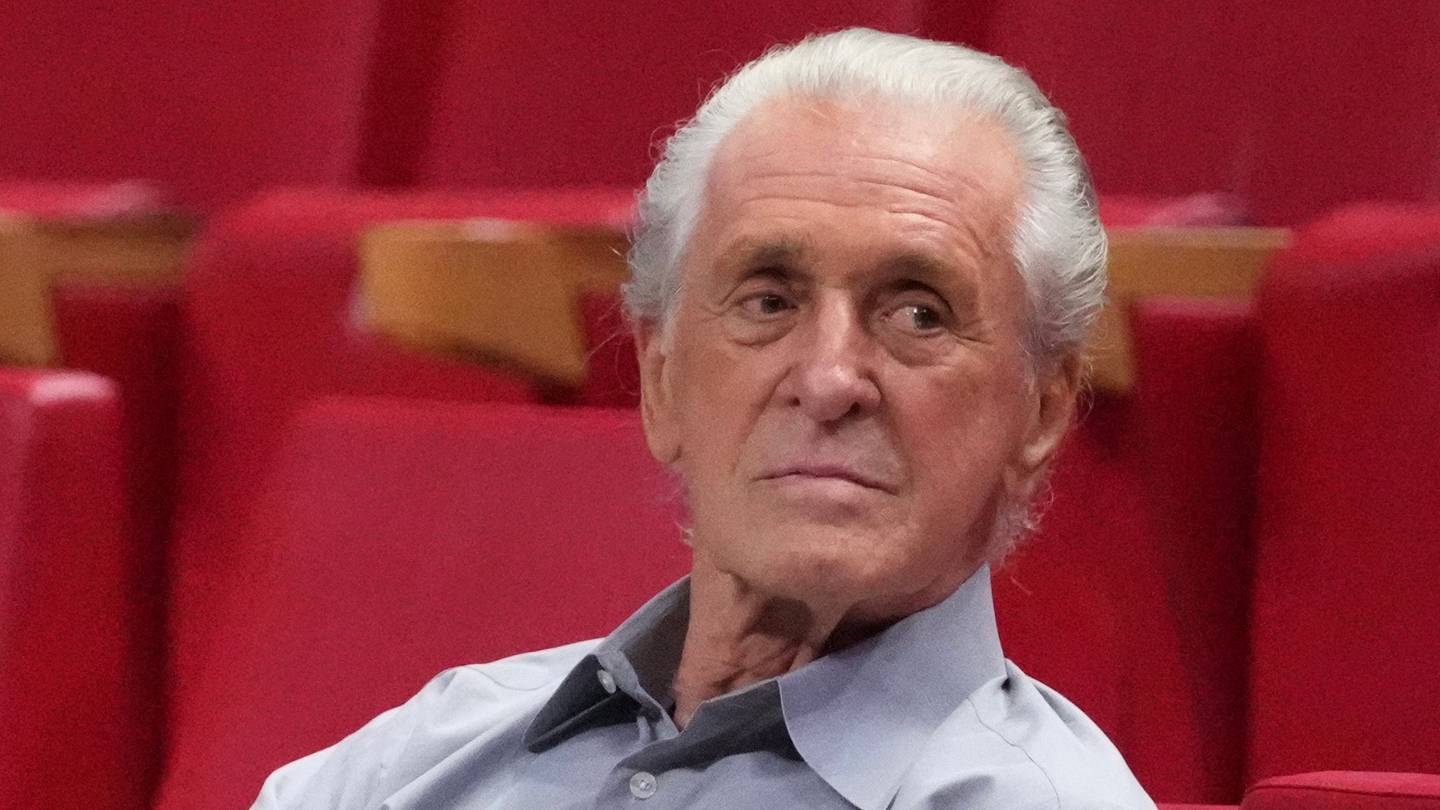
Source: SI NBA. Casualplayhub News adds summary, context, and editorial framing while linking back to the original report.
Pat Riley once told those nearby that the NBA could bring a person to his knees. That sentiment surely echoed through his early years in Miami, when he once leaned against the tunnel wall, looking as if he might faint, while the team's security chief stood guard. In his 1988 memoir "Show Time," Riley admitted he doubted whether he could succeed without Magic Johnson. After leaving the Lakers, he endured three straight playoff eliminations by Michael Jordan's Bulls and then the New York Knicks. Those losses ate at him. Eventually, his teams broke through, setting a standard that has left many fans spoiled. Now, the minimum expectation is a legitimate contender. So when a season falls apart after a previous high, it stings the most. Here are five that still hurt.
**2006-07** Some players arrived at training camp out of shape. The late-season rhythm Dwyane Wade found before his shoulder injury proved illusory once he returned. Shaquille O'Neal showed his age. The season ended with Riley clapping sarcastically at an arrogant squad as they left the floor. The humbling began on Halloween, when the young Chicago Bulls crushed Miami by 42 points at home, then swept them in the first round of the playoffs.
**2020-21** Goran Dragic never regained his bubble playoff form after a foot injury. COVID-19 complications lingered. Tyler Herro failed to build on his impressive rookie year. Many players were still exhausted from the shortened 72-day offseason. The camaraderie from the bubble run evaporated. The Heat traded for Victor Oladipo, whose speed added a missing dimension, but he injured his leg in his fourth game and didn't return until the following season. Miami also wore those ugly yellow jerseys intended to be gold, and the Milwaukee Bucks humiliated them in a first-round sweep.
**2014-15** After LeBron James left, Riley released a video declaring the Heat still contenders. That message must have hit diehard fans like a shot of adrenaline, but it quickly became clear that Dwyane Wade would never again be Flash, and Chris Bosh was not good enough to be the top option before he fell ill. The defining moment came in Milwaukee: the Heat led by two points but failed to grab a defensive rebound, allowing Khris Middleton to sink a game-winning second-chance three-pointer. That loss dropped Miami to six games under .500. They finished the season 5-7 and missed the eighth seed, falling to the Brooklyn Nets.
**1998-99** Those close to the team believed this was their year. Michael Jordan had retired again, and the Heat had their best unit around Alonzo Mourning and Tim Hardaway. But two words haunt Heat fans: Allan Houston. His floater in Game 5 of the first round eliminated Miami for the second straight year at the hands of the Knicks. Worse, the Heat were the top seed, and the Knicks—without Patrick Ewing from Game 2 of the Eastern Conference Finals—advanced to the NBA Finals, losing in five to the San Antonio Spurs.
**2010-11** LeBron James atoned in later years with two championships, but this loss to the Dallas Mavericks remains a stain. James played with a mental fragility that made him seem scared, as if he had seen a ghost. The lasting image: Chris Bosh walking down the tunnel, overcome with sadness. A Heat victory would have been a defiant gesture toward the haters who vilified them for acquiring free agents. Remember that Dirk Nowitzki's second-best player was a 33-year-old Jason Terry. Wade once said in the 2006 Finals huddle, when they were down double-digits and 2-0, that he would not go out like that. The 2011 Finals is exactly what that would have looked like. It ranks not only as Miami's worst year but as one of the most embarrassing in NBA history.
Article commentary
The Miami Heat franchise, under Pat Riley's stewardship, has cultivated a culture of relentless ambition and accountability. Yet these five seasons reveal a recurring theme: the gap between expectation and reality can be brutal. What makes them so disappointing is not just the losses, but the context of high hopes crushed by a combination of injuries, roster flaws, and mental fragility. The 2006-07 season stands out as a classic case of a champion's complacency. Winning a title often breeds a sense of entitlement, and the Heat's lack of preparation—players showing up out of shape—was a direct reflection of that. Riley's sarcastic clap at the end symbolized his frustration with a team that believed talent alone would suffice. The 42-point loss on Halloween was a warning they ignored, and the Bulls' sweep was a humbling reminder that the NBA rewards discipline, not pedigree. The 2020-21 season, on the other hand, was a victim of circumstance. The bubble run had drained the team physically and emotionally, and the shortened offseason left no time for recovery. The Heat's front office tried to inject energy by trading for Victor Oladipo, but his immediate injury underscored the thin line between reinforcement and setback. The ugly yellow jerseys became a metaphor for a season that looked good on paper but turned out to be a misfire. The 2014-15 season was perhaps the most emotionally charged. LeBron's departure left a void that Riley tried to fill with bravado, but the reality of an aging Wade and a sick Bosh was unavoidable. The failed defensive rebound against the Bucks was a microcosm of a team that had lost its edge. The 1998-99 season, though, is the most painful for fans who believed in the Mourning-Hardaway core. The Knicks' Cinderella run, without Ewing, made the Heat's first-round exit even more galling. Allan Houston's shot remains a dagger that still twists. Finally, the 2010-11 Finals loss to the Mavericks is a case study in psychological collapse. LeBron James's performance—averaging just 17.8 points in the series, with a detached demeanor—was baffling for a player of his caliber. The narrative of the Heat as villains made the loss even more satisfying for their detractors. Wade's 2006 heroics served as a cruel contrast: where he once refused to lose, his team collectively surrendered. These seasons are not just failures; they are lessons. They remind us that even the most meticulously constructed roster can unravel, and that the NBA's unforgiving nature demands both talent and resilience. For the Heat faithful, these disappointments are part of the price of high expectations. As Riley himself said, the league can bring you to your knees—and these five seasons are proof.