Red Wings Cling to Faint Hope as Larkin Stands Firm
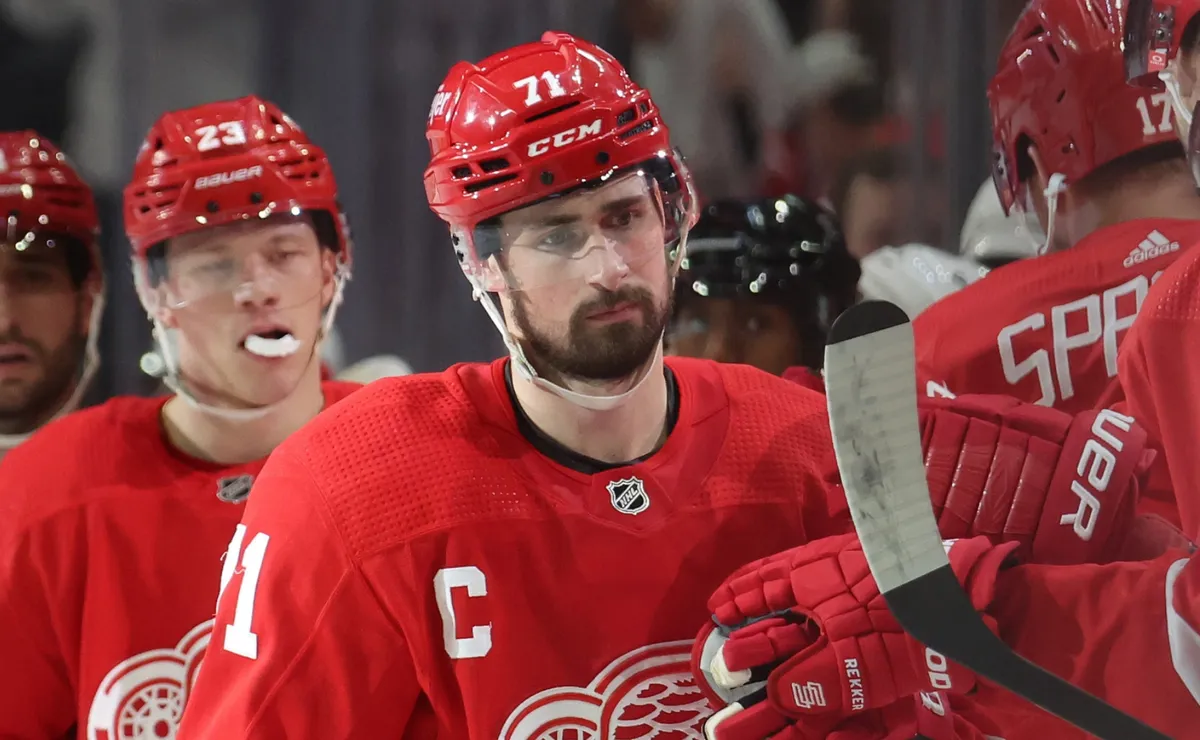
Source: Bolavip. Casualplayhub News adds summary, context, and editorial framing while linking back to the original report.
As the NHL’s 2026-27 season approaches, the Detroit Red Wings are navigating one of the most awkward and uncertain situations in the league. Training camp is just weeks away, yet the team’s captain, Dylan Larkin, remains on the roster despite having formally requested a trade earlier this summer. The complicating factor? The Red Wings do not have a general manager—not even an acting one—following Steve Yzerman’s departure. That leadership vacuum has left the organization frozen, unable to engage in meaningful trade discussions or provide Larkin with any clarity about his future.
According to sources around the league, the Red Wings still hold a sliver of hope that Larkin might reconsider. The thinking is that the removal of Yzerman, whom Larkin had clashed with, could open the door for reconciliation. “Dylan Larkin has not rescinded his trade request, but I think there is at least a little bit more optimism that maybe the new GM comes in, has a meeting with Larkin, and is able to maybe patch up the differences. Really his main issue was Steve Yzerman,” Ansar Khan said during an appearance on Oilers NOW with Bob Stauffer. That sentiment suggests that the front office believes a fresh face in the GM role might repair the fractured relationship.
Yet Larkin himself has given no indication that he is softening his stance. He has not publicly hinted at staying in Detroit, nor has he engaged in any behind-the-scenes gestures to signal a change of heart. He remains steadfast in his desire to move on. The only leverage the Red Wings have is his contract, which runs for several more seasons, and his no-trade clause, which allows him to control his destination. Larkin has made it clear he will only waive that clause for a short list of teams: the Minnesota Wild, Florida Panthers, and Vegas Golden Knights. Reports also suggest the Dallas Stars could be a fourth option, but that is the extent of his willingness to cooperate.
This standoff leaves the Red Wings in a bind. Without a general manager, no one can authorize a trade, even if a suitable offer emerged. The lack of leadership means that training camp, which typically serves as a time for team-building and preparation, could instead become a stage for drama. Social media has already buzzed with frustration from fans, some of whom want Larkin gone, while others hope he stays. But the organization’s ability to act is paralyzed.
From a hockey perspective, keeping Larkin would be beneficial. He is a top-line center, a leader on the ice, and a player whose value in trade conversations is significant. But moving him would also bring back a substantial return. The dilemma is that without a GM, the Red Wings cannot even begin to explore the market seriously. And Larkin, for his part, is not helping—he has dug in his heels, refusing to expand his list of preferred destinations.
As the start of training camp looms, the likeliest scenario is that Larkin will report as a Red Wing, but the tension will be palpable. The organization’s hope rests on a new general manager being hired quickly, someone who can sit down with Larkin and attempt to mend what was broken under Yzerman. Whether that effort can succeed remains uncertain. Larkin’s trade request was not a fleeting whim; it was a calculated decision rooted in frustration with the direction of the team and his relationship with the former GM. The new hire will have to be persuasive, and the team’s performance on the ice will need to improve dramatically for Larkin to entertain staying.
For now, the Red Wings are stuck in neutral. The clock is ticking toward training camp, and the silence from the front office is deafening. Larkin remains a Red Wing, even if his heart is elsewhere. The coming weeks will determine whether Detroit can salvage the situation or whether the standoff will deepen, potentially derailing the season before it even begins.
Article commentary
The standoff between Dylan Larkin and the Detroit Red Wings is a textbook case of how a leadership vacuum can paralyze a franchise. The absence of a general manager—not even an interim appointment—has left the team unable to act on one of the most critical roster decisions in recent memory. This is not just a minor hiccup; it is a structural failure that exposes deeper organizational issues. First, consider the timing. Training camps are about to open, and the Red Wings are entering a season with their captain effectively a lame duck. Larkin’s trade request was made public months ago, and his refusal to expand his list of preferred teams—limited to three or four clubs—severely restricts Detroit’s leverage. The Wild, Panthers, Golden Knights, and potentially the Stars are all competitive teams, but none are desperate for a center of Larkin’s caliber. That means Detroit would likely have to accept a less-than-premium return, or wait for one of those teams to experience an injury or a need mid-season. The longer this drags on, the more Larkin’s trade value diminishes, especially if he becomes a distraction in the locker room. The hope that a new GM can patch things up is not entirely unfounded. Larkin’s primary issue was with Steve Yzerman, and the removal of that figure could theoretically reset the relationship. But the notion that a new executive can waltz in, have a conversation, and convince Larkin to drop his trade request is overly optimistic. Larkin has been consistent in his desire to leave, and his public silence suggests he is not open to persuasion. The Red Wings would need to show a dramatic turnaround in their competitive trajectory—something that is unlikely to happen overnight, especially without a GM to shape the roster. Another layer here is the organizational dysfunction. How does a team reach the brink of training camp without a GM? This speaks to a broader lack of planning and succession strategy. The Wings have been in a rebuilding phase for years, and the departure of Yzerman, a franchise legend, should have prompted a swift transition. Instead, the team appears adrift, with no one empowered to make even interim decisions. This vacuum is not only hurting Larkin’s situation but also affecting the rest of the roster, free agent negotiations, and the team’s ability to prepare for the season. From Larkin’s perspective, he is exercising his contractual rights. He has a no-trade clause, and he is using it exactly as intended—to control his own destiny. The criticism that he should “help” the Red Wings by expanding his list is misguided. Players are not obligated to facilitate trades that benefit the team at their own expense. Larkin wants to go to a contender, and he has identified a handful of teams that fit that criteria. If the Red Wings cannot make a deal with one of those teams, that is their problem, not his. Looking ahead, the most likely outcome is that Larkin starts the season in Detroit, playing under a cloud of uncertainty. The new GM, once hired, will face an immediate test: either mend fences or execute a trade. Neither option is easy. The Red Wings risk alienating their fan base by keeping an unhappy captain, but they also risk selling low on a star player. The best course might be to hire a respected, experienced GM quickly, one who can have a frank conversation with Larkin and assess whether reconciliation is possible. If not, the team should focus on finding a trade that maximizes value, even if it means waiting until the trade deadline. Ultimately, this saga highlights the fragility of player-team relationships in the modern NHL. Loyalty has limits, and when a player like Larkin—who grew up a Red Wings fan and served as captain—decides he wants out, it signals deeper problems. The organization must address those problems, not just hope for a quick fix. The next few weeks will be telling, but one thing is clear: the Red Wings are in a mess of their own making, and only decisive leadership can get them out.