Agent Declares Kuminga Hawks' Best Player Last Season
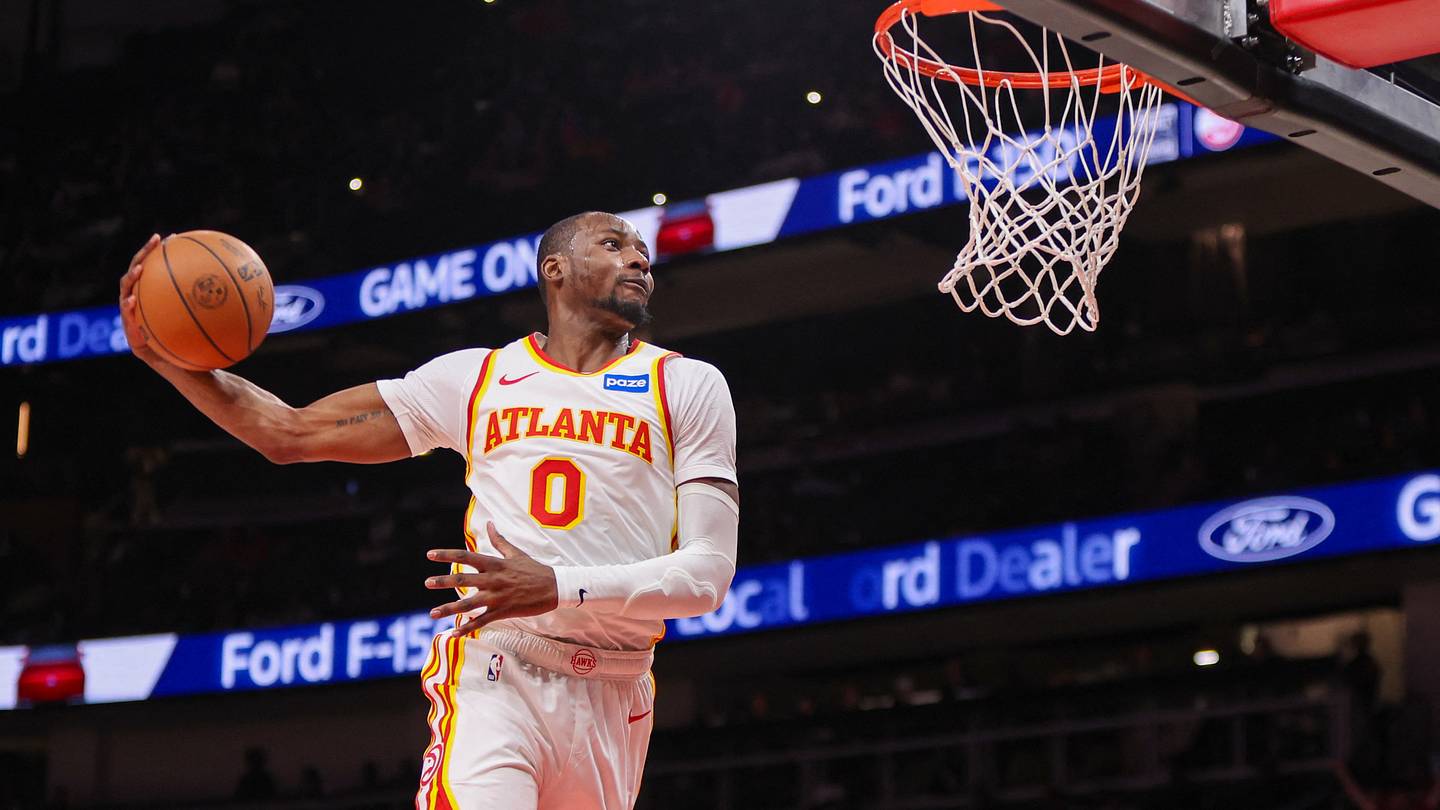
Source: SI NBA. Casualplayhub News adds summary, context, and editorial framing while linking back to the original report.
Jonathan Kuminga's agent, Aaron Turner, has stirred up fresh conversation around the forward's short stint with the Atlanta Hawks. On a recent episode of the Kevin O'Connor Show, Turner did not hold back, asserting that Kuminga was the Hawks' most impactful player from the moment he arrived via trade at the February deadline. The Hawks sent Kristaps Porzingis to the Golden State Warriors to acquire Kuminga, a move that raised eyebrows at the time. Kuminga quickly justified the gamble with a 27-point debut and carved out a role as the team's primary scoring option off the bench. Over 16 regular-season games, he averaged solid numbers while addressing Atlanta's rebounding needs and exceeding expectations on defense. Turner argued that the impact went beyond the box score. "He was their best player from the moment that he showed up in terms of winning impact," Turner said. "He had the best on/off net rating, in the regular season and in the playoffs. In their two wins against the Knicks, who had the best net rating? These are not opinions, these are facts." He credited Kuminga and CJ McCollum for stepping up in those playoff victories. Turner also elaborated on why Kuminga did not return to Atlanta. The Hawks had committed to Dyson Daniels and Jalen Johnson long-term, and team president Onsi Saleh communicated that the organization valued those players. "Where was the growth for JK?" Turner asked. "Then you are sitting on an expiring deal and not able to put your best foot forward and you might get traded out to someplace that you don't know. The reality is that Jonathan Kuminga being in this situation is actually to be more productive than being in a $24 million expiring." Kuminga eventually signed a two-year, $13 million contract with the Minnesota Timberwolves last week, ending a free agency saga that dragged on for nearly two months. While Turner's net rating claim is statistically true, context matters. Kuminga's sample size in Atlanta was limited to 16 games, and he missed time early due to injury. Several of those games came against teams tanking at the end of the regular season, which likely inflated his advanced numbers. In the playoffs, Kuminga appeared in six games against the New York Knicks, and the Hawks did win two contests — both of which he played a key role in. Still, labeling him the team's best player over established stars like Trae Young or Dejounte Murray is a stretch. The Hawks clearly saw limitations. They declined Kuminga's team option and, rather than re-sign him, used the offseason to trade for Aaron Wiggins and Lu Dort, adding depth on the wing. Rookies Mouhamed Gueye, Asa Newell, and Zuby Ejiofor also join the frontcourt rotation. Wiggins has not been a top bench contributor before, and Dort's offensive game is inconsistent, though he is a superior defender compared to Kuminga. The Hawks' front office evidently determined that the combination of those players, along with their existing core, would be more valuable than bringing Kuminga back on a larger deal. The decision may prove wise or costly, but it underscores that the organization did not view Kuminga as irreplaceable. As Jackson Caudell notes, Kuminga was undeniably talented and helped the Hawks, but the assertion that he was their best player does not hold up to scrutiny. The Hawks bet on their system and their younger players, while Kuminga now looks to establish himself in Minnesota.
Article commentary
The debate over Jonathan Kuminga's value to the Atlanta Hawks offers a fascinating case study in how agents, teams, and analysts interpret performance data. Aaron Turner's claim that Kuminga was the Hawks' best player is a classic example of selective storytelling. He points to net rating, a metric that can be heavily influenced by small sample sizes and opponent quality, to make a definitive argument. But net rating alone does not capture the full picture of a player's impact over a season. Kuminga played just 16 games for Atlanta, and many of those came against lottery-bound teams resting starters. That context cannot be ignored. Furthermore, the Hawks' decision to decline Kuminga's team option and instead invest in a collection of wing players — Aaron Wiggins, Lu Dort, and promising rookies — suggests the front office did not share Turner's assessment. Teams often prioritize fit, defensive versatility, and long-term salary flexibility over a single breakout half-season. The Hawks' commitment to Dyson Daniels and Jalen Johnson as core pieces also indicates they valued development and continuity over a player who might have demanded a larger role. From a broader perspective, Turner's comments are a savvy negotiation tactic. By publicly positioning Kuminga as a star-level contributor, he reinforces his client's value to future teams, especially after a drawn-out free agency. The two-year, $13 million deal with the Timberwolves is a prove-it contract, and Turner wants the league to know that Kuminga can thrive in the right situation. However, the narrative that Kuminga was the Hawks' best player overlooks the contributions of Trae Young, who remains the engine of Atlanta's offense, and Dejounte Murray, who provides two-way stability. Young's playmaking and scoring draw defensive attention that creates opportunities for others. Without him, Kuminga's efficiency might dip. The playoff wins against the Knicks were a team effort, and while Kuminga played well, singling him out as the primary reason minimizes the work of McCollum and the rest of the roster. Another layer is the timing of Turner's comments. They come just after Kuminga signed with Minnesota, a team that already has a crowded frontcourt with Karl-Anthony Towns, Rudy Gobert, and Jaden McDaniels. Kuminga will need to carve out minutes and prove he can be a consistent contributor in a structured system. The pressure is on him to validate Turner's words. In the end, the Hawks may or may not miss Kuminga. Their offseason moves suggest they are building for a different style — one that emphasizes defense and shooting around their stars. Kuminga's talent is undeniable, but calling him the best player on a team that made the playoffs is a stretch. The truth likely lies somewhere between Turner's hype and the critics' skepticism. What remains clear is that Kuminga has a chance to prove himself in Minnesota, and the NBA will be watching closely.