Alex Karaban: The Kings' Forgotten Rookie with a Game-Changing Frame
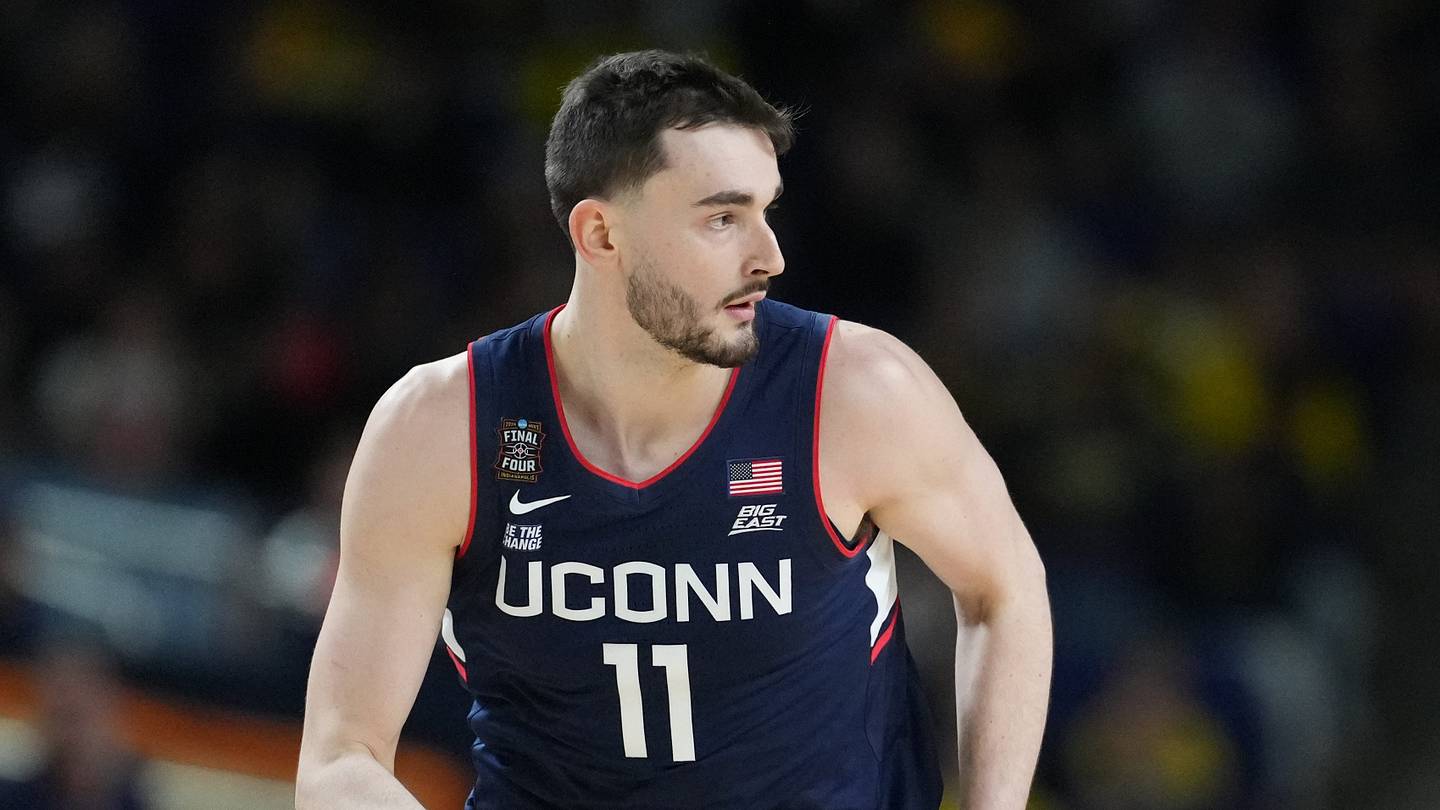
Source: SI NBA. Casualplayhub News adds summary, context, and editorial framing while linking back to the original report.
The Sacramento Kings enter the 2026-27 season balancing uncertainty with cautious optimism. After drafting Darius Acuff Jr. with the seventh overall pick, a player who already looks like a franchise cornerstone, and securing Emanuel Sharp as a second-round draft-day steal, the franchise has a jolt of young talent. The return of sophomores Nique Clifford, Maxime Raynaud, and Dylan Cardwell adds depth, giving Sacramento a wave of hope unseen in years. But buried in the excitement is Alex Karaban, the rookie the Kings traded back into the late first round to snag at pick 29. Once praised after the draft, Karaban has become the forgotten man due to a slow Summer League showing. Sharp’s standout exhibition performances have earned him deserved attention, but Karaban possesses a trait neither Sharp nor Acuff can offer: size.
Standing 6-foot-8 with a 6-foot-11 wingspan, Karaban is a true wing, ideally a switchable combo forward capable of defending both small and power forward spots. His athletic limitations are a concern, likely slotting him into a power forward role, but he brings badly needed perimeter size to a Kings team still constructing its future wing rotation. Of the six players in their first or second year—Clifford, Raynaud, Cardwell, Acuff, Sharp, and Karaban—he is the only one with that kind of length on the perimeter. Clifford comes close but is more of a 2/3 combo guard, not a 3/4 like Karaban.
In a summer league game on July 16, 2026, Karaban led the Kings in scoring with 21 points, eight rebounds, and five three-pointers, a performance that highlighted his potential. If he can evolve into a starting-caliber player or even a high-level bench contributor, Sacramento could lock down a critical position for years. The modern NBA prizes versatile wings who can shoot, and Karaban’s college numbers—37.4% from three on 5.2 attempts per game over four seasons—suggest his shooting is no fluke. He provides a legitimate stretch-four threat, something the Kings have lacked since Trey Lyles departed. Keegan Murray could theoretically fill that role, but questions remain about whether he is a three or a four, and his three-point consistency needs proof.
Karaban’s development could reshape the Kings’ trajectory. If he proves himself as a rotational mainstay, the front office might avoid throwing a max contract at Jonathan Kuminga or pursuing another high-priced wing. Instead, they could allocate resources elsewhere, knowing their wing depth is secure. As the season approaches, many X-factors hover over Sacramento, but Karaban’s growth deserves a spot on the watch list. His size and positional rarity make him a potential game-changer for a franchise desperate for a sustainable future. The Kings’ young core is taking shape, and Karaban might be the piece that ties it all together.
Article commentary
The Sacramento Kings have long been a franchise searching for identity, cycling through rebuilds and roster experiments. This latest iteration, headlined by rookie Darius Acuff Jr. and second-round find Emanuel Sharp, offers genuine excitement. Yet the overlooked value of Alex Karaban speaks to a deeper strategic truth: in the modern NBA, size and shooting on the wing are irreplaceable commodities. The Kings have struggled to find a consistent stretch-four since Trey Lyles, and Keegan Murray’s positional ambiguity hasn’t helped. Karaban’s 37.4% three-point shooting over four college seasons, on decent volume, suggests he can fill that gap without demanding the ball. His 6-foot-8 frame and 6-foot-11 wingspan give him the defensive versatility to guard multiple positions, even if his athleticism caps his upside. What makes Karaban’s development so critical is the roster construction puzzle. The Kings already have a promising young backcourt with Acuff and Sharp, along with emerging sophomores. But the wing rotation remains thin. Nique Clifford is more of a guard, and the other youngsters lack length. If Karaban can become a reliable rotation player, Sacramento can avoid overpaying in free agency for a Jonathan Kuminga or another high-priced wing. That financial flexibility could be redirected toward retaining their own young core or adding a star elsewhere. The team’s decision to trade back into the late first round for Karaban shows they identified this need early. However, skepticism is warranted. Karaban’s slow Summer League raised eyebrows, and his lack of elite athleticism may limit him to a power forward role, where he’ll face stronger, quicker defenders. His college shooting numbers are encouraging, but the NBA three-point line is deeper, and he’ll face tighter contests. The Kings must be patient; expecting immediate contributions from a late-first-round pick is risky. Yet the upside is clear: a 6-foot-8 shooter who can stretch the floor and defend multiple positions is a rare archetype. If he develops, Sacramento could have a long-term solution at a position that often breaks team budgets. The Kings’ future ceiling might not be determined by their lottery pick, but by the forgotten rookie who brings size to the perimeter. That’s a narrative worth watching as the season unfolds.