Curry Vows to Finish Career with Warriors, Contract Talks on Hold
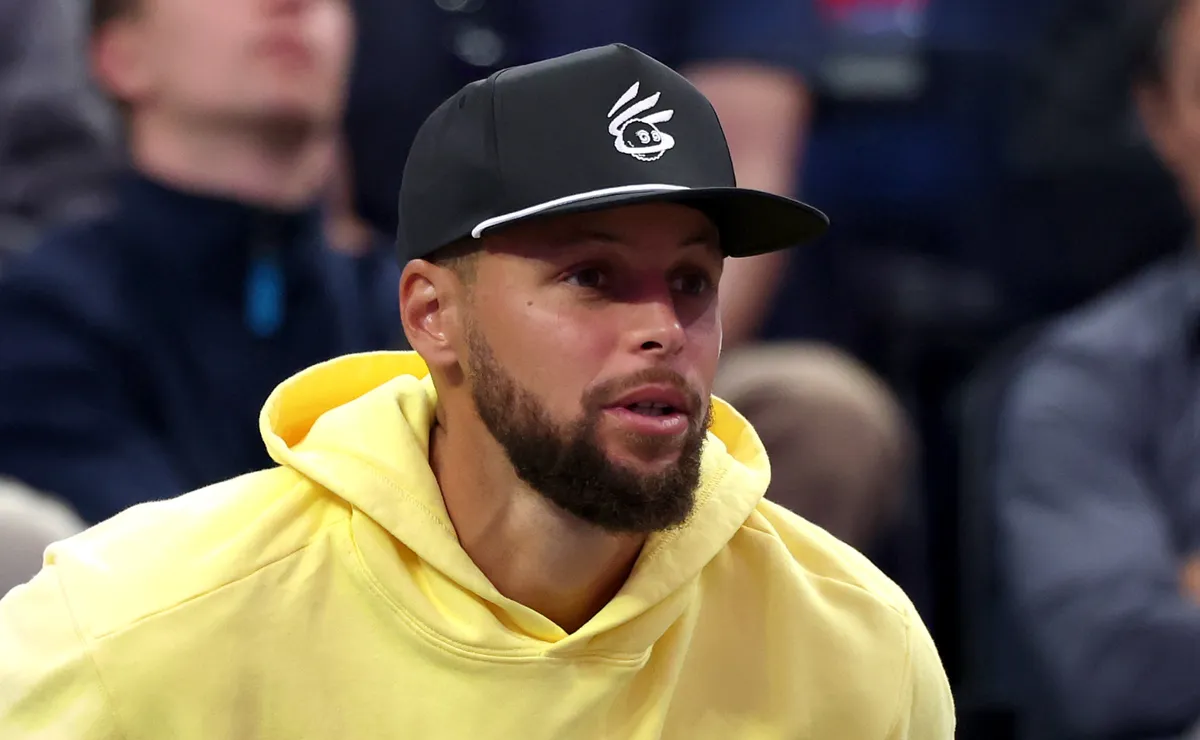
Source: Bolavip. Casualplayhub News adds summary, context, and editorial framing while linking back to the original report.
The Golden State Warriors are gearing up for the 2026-27 NBA season, aware that both internal expectations and those of the Bay Area fan base have been lowered after a relatively quiet offseason. Yet there is one constant that anchors the franchise’s hopes: Stephen Curry, the 38-year-old guard who has defined the team’s golden era. Curry, showing no signs of slowing down, has made his intentions clear—he wants to remain with the Warriors for the rest of his career, and he fully expects to sign a contract extension.
During a recent interview, Curry addressed the ongoing contract talks with characteristic calm. “There’s no question I want to be here the rest of my career, and I’m pretty sure that’s going to happen,” he said. “The deal and the contract stuff will happen at the right time, and we’re not letting it be a distraction from our preparation for the season, and the fact that the team we’re coming back with has a lot of familiarity.” His words underscore a deliberate effort to shield his teammates from any off-court noise, a leadership trait that has long defined his tenure.
According to Dalton Johnson of NBC Sports Bay Area, the Warriors and Curry’s camp are working toward a new agreement, but neither side is rushing. The franchise’s commitment to its superstar is equally unwavering. While the front office has faced criticism for failing to assemble a championship-caliber supporting cast since the surprise 2022 title run, the bond between Curry and the organization remains the strongest pillar of the team.
Brett Siegel of ClutchPoints reported that team sources have consistently dismissed any suggestion that Curry might leave. “Many have questioned whether the Warriors’ inability to surround Curry with championship-level talent in recent years since their miraculous 2022 title run would result in him wanting to finish his career elsewhere,” Siegel wrote. “All of that talk is ‘nothing but nonsense,’ as one team source said while laughing when asked about whether Steph could leave.”
Siegel drew a striking parallel between Curry and other NBA legends who became synonymous with a single franchise. “The Warriors are Steph’s organization, just like how Dirk Nowitzki will always be remembered in the same sentence as the Dallas Mavericks, Tim Duncan with the San Antonio Spurs, and Kobe Bryant with the Los Angeles Lakers. Curry will be on Golden State’s roster to begin the 2026-27 season, he will be on the roster to end the season, and he will retire in a Dubs uniform,” he wrote.
This assessment resonates deeply. Curry has been the heartbeat of the Warriors since his arrival in 2009, leading them to four championships and revolutionizing the game with his three-point shooting. His loyalty has been tested at times—especially during periods when roster construction faltered—but he has never wavered. The front office, for its part, has consistently prioritized Curry’s happiness and competitive window, even as salary cap constraints and the aging core have made roster upgrades difficult.
As the 2026-27 season approaches, the Warriors find themselves in a familiar position: relying on Curry to defy age and expectations. The team’s quiet offseason means they will largely run it back with a roster that many analysts consider a step below the elite contenders. But Curry’s presence alone gives the Warriors a fighting chance. His ability to elevate those around him, coupled with his unmatched work ethic, suggests that talk of a decline may be premature.
Beyond the immediate season, the contract extension talks carry symbolic weight. Curry’s decision to finish his career with Golden State would cement his legacy as one of the most loyal superstars in NBA history. In an era of player movement and super teams, his steadfast commitment to the franchise that drafted him stands out. The Warriors, in turn, have shown they are willing to invest in that loyalty, ensuring that the number 30 jersey will hang in the rafters of Chase Center as a testament to a generation-defining career.
For now, Curry is focused on the task at hand: preparing for the grind of an 82-game season and proving that the Warriors can still compete at the highest level. The contract will take care of itself, he insists, and the championship pursuit remains the ultimate goal. Whether or not the Warriors can recapture the magic of their 2022 title run remains to be seen, but one thing is certain—Stephen Curry will be a Warrior until the very end.
Article commentary
Stephen Curry’s reaffirmation of his desire to end his career with the Golden State Warriors is more than just a feel-good story—it is a rare and valuable commodity in today’s NBA landscape. Player loyalty has become increasingly transactional, with stars frequently changing teams in pursuit of championships or larger markets. Curry’s unwavering commitment to the Warriors, a franchise he has elevated from obscurity to global prominence, offers a counter-narrative: that loyalty can still coexist with competitive ambition. The comparison to Dirk Nowitzki, Tim Duncan, and Kobe Bryant is apt. These players are not just remembered for their statistics but for their unbreakable ties to a single city. Curry has already earned his place in that pantheon. However, the context of his loyalty deserves scrutiny. The Warriors, unlike some other franchises, have consistently shown a willingness to pay the luxury tax and make roster moves to keep their core intact. That support has made it easier for Curry to stay. Yet it still takes a special kind of player to resist the allure of a new challenge or a bigger market when the team’s competitive window appears to be closing. From a basketball perspective, Curry’s decision to stay raises questions about the Warriors’ long-term planning. The team has an aging core, with Curry, Draymond Green, and Klay Thompson (if he remains) all past their prime. The front office has struggled to develop young talent or acquire star-level reinforcements. The 2022 championship was a testament to clever roster construction and career-defining performances, but replicating that success seems increasingly difficult. Curry’s presence alone keeps the Warriors relevant, but it may also delay necessary rebuilding steps. There is also the financial dimension. Curry’s next contract, likely a lucrative extension, will consume a significant portion of the salary cap. This could limit the team’s flexibility to add complementary pieces. The Warriors’ ownership has shown a willingness to spend, but eventually, the tax bills become prohibitive. Balancing loyalty to a legend with the need to build a competitive roster is a delicate act. Off the court, Curry’s commitment holds symbolic power. In an era where players are often criticized for being mercenaries, his stance reinforces the idea that a player can be both a winner and a one-franchise icon. It also provides stability for the Warriors’ fan base, which has grown accustomed to success. The narrative of Curry finishing his career in Golden State is a powerful marketing tool and a source of pride for the organization. Ultimately, the likelihood of Curry leaving was always low. The mutual admiration between him and the franchise is genuine. But the real test lies ahead: Can the Warriors build a team around Curry that can compete for another title? If they cannot, his loyalty might be romanticized but remembered as a missed opportunity. For now, the story is one of devotion—a refreshing relic in a league defined by constant change. Curry’s journey with the Warriors is far from over, and the final chapters promise to be as compelling as the ones that came before.