Torani's No-Layoff Legacy: CEO on AI, Trust, and Growth
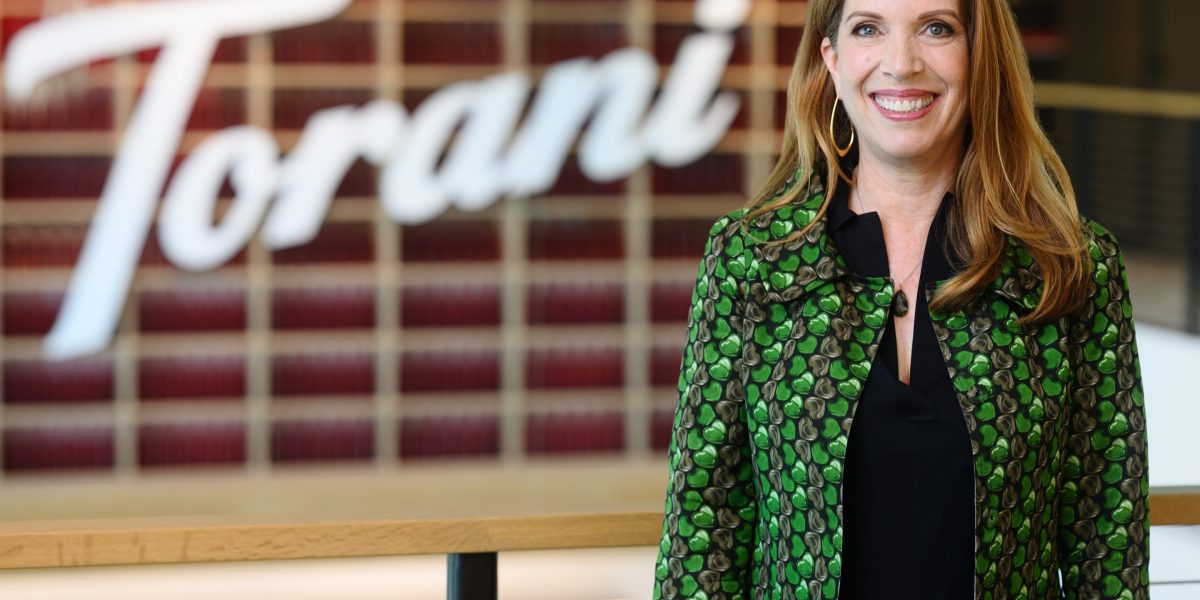
Source: Fortune. Casualplayhub News adds summary, context, and editorial framing while linking back to the original report.
For more than nine decades, the beverage and syrup company Torani has maintained a remarkable record: zero layoffs since the Great Depression. That streak survived the 2008 recession, the waves of globalization and automation that hollowed out manufacturing towns across America, and even the pandemic, which shuttered the cafes that buy most of its flavored syrups. Now, as generative and agentic AI begin to reshape entry-level work across corporate America, CEO Melanie Dulbecco faces a familiar question—how to adopt technology that could theoretically replace employees without sacrificing the company's core commitment.
Dulbecco, who has led the 101-year-old Torani for 35 years, insists the approach remains unchanged. "It is going to dramatically change things, and we're all going to live through this together, but our approach is going to be the same as it has been," she told Fortune. "How do we create great jobs through this for everyone?"
Torani's story begins in 1925, when Italian immigrants in San Francisco began selling hand-crafted syrups to flavor drinks. After Prohibition ended in 1933, the company shifted to producing liqueurs. It wasn't until 1982 that Torani entered the coffee-flavoring business, the syrups it is best known for today. From a modest lineup of five syrups, the company has expanded to over 150 varieties, used in coffee, cocktails, and sodas. Dulbecco even claims Torani "invented the flavored latte" with its vanilla syrup. Under her leadership, the company has grown from a nine-employee operation generating $700,000 annually to a firm expected to bring in more than $800 million this year with just 500 staff, averaging 20% annual revenue growth over 35 years.
Dulbecco's philosophy flips the typical corporate hierarchy. "Most companies focus on their financials, and then people are the tools," she said. "We look at it the other way around, and it works really well for us."
A pivotal moment came early in her tenure, when a then-small Seattle chain called Starbucks approached Torani about becoming its private-label syrup manufacturer. Torani already supplied syrups to the company, but the decision divided Dulbecco's team so deeply that they brought in students from Stanford Business School—her alma mater—to analyze the options. The students concluded that Torani could succeed either way, but private labeling would force the company to become a low-cost producer, cutting corners on ingredients like swapping high-fructose corn syrup for cane sugar. "It made the decision easy because then all of us who were here could say, what's the business we want to build?" Dulbecco recalled. Torani chose to remain a premium brand.
That same instinct to preserve the company's legacy guided a major relocation in 2020. As Torani outgrew its San Francisco facility, Dulbecco's team mapped out every employee's zip code to find a commutable site, settling on the current San Leandro campus. The move took two and a half years of planning. But in March 2020, California's Covid-19 shutdown order hit, and cafes and restaurants began closing. Dulbecco said the company ran financial scenarios to keep the business afloat without letting anyone go. "The only way" was to move as quickly as possible and get new equipment running. "We made it—everyone, safely—and then when things picked up again—because business did go down in April—it picked up because e-commerce took off, retail took off, some other things filled the gaps. We could help our cafe customers reopen their doors and our team was here," she said. "Being committed to our team, whom we care so much about, ends up really being to our benefit to continue to create the momentum and to be resilient in the hard times."
When it comes to AI, Dulbecco applies the same people-first logic. Rather than viewing AI purely as a way to slash costs, she asks: "What are those 500 people, or 200 people, or 20 people doing to add more value?" Because Torani has never laid off employees as new technology arrives, there is a deep reservoir of trust between Dulbecco and her team. "What we find is our team is more likely to embrace new technologies also because there's confidence and an openness to learning new things because they know we've got their backs and they've got ours," she added.
That trust extends to compensation. Torani offers a unique wealth-sharing plan on top of 401(k) matching and salaries. Every employee receives bonuses tied to both top-line revenue and bottom-line profits, plus an employee stock ownership plan that vests after a year. "Every year people get a new tranche of shares, and every year we do a new valuation, so there's nothing that makes me happier than when we, in a town hall meeting, share, 'Hey, we just did our valuation, here's been the increase,' and then afterwards, I see a forklift driver ask our CFO questions," Dulbecco said.
Dulbecco also emphasizes what she calls "career mixology." Entry-level hiring hasn't changed because the company expects employees to move across roles. She pointed to a procurement staffer named Carlos, who started in an entry-level supply-chain job and worked through several positions to his current post. "He's mixing up his career," said Dulbecco, "building a broader perspective of the business, which makes him a more valuable team member as well." Torani also runs a summer internship program for employees' college-age children and "first job programs" for newcomers. "In a market where people say it's hard to hire, we have not had the same challenge, and I think it's because we look at roles differently," Dulbecco said. "We appreciate people in every role."
Article commentary
Torani's no-layoff record is a striking anomaly in a corporate landscape where downsizing has become a standard response to economic pressure and technological disruption. The company's approach, rooted in a philosophy that prioritizes people over short-term profits, raises important questions about the sustainability of such a model in an era of rapid AI adoption. First, the trust factor is central. By never using layoffs as a cost-cutting measure, Torani has built a culture of psychological safety. Employees are more willing to embrace new technologies—including AI—because they do not fear for their jobs. This contrasts sharply with many companies where automation announcements trigger anxiety and resistance. Dulbecco's claim that her team is "more likely to embrace new technologies" because they know the company has their backs is not just feel-good rhetoric; it reflects a strategic advantage. When workers trust that their employer will invest in their retraining rather than replace them, they are more open to innovation, potentially increasing productivity and morale. However, this model is not without risks. Torani's ability to maintain zero layoffs hinges on consistent growth—annual revenue increases of 20% over 35 years. Such a trajectory is exceptional and may not be replicable for most companies. Economic downturns, market saturation, or a major shift in consumer preferences could strain the company's ability to keep everyone employed. Dulbecco's decision to move the facility during the pandemic, which she described as the "only way" to avoid layoffs, shows the lengths to which the company is willing to go. But not every business has the financial cushion or the agility to make such moves. Another notable aspect is the wealth-sharing mechanism. Torani's bonus structure tied to revenue and profits, along with employee stock ownership, aligns incentives across the organization. When a forklift driver feels empowered to ask the CFO about valuation, it signals a level of transparency and engagement that is rare. This could be a key driver of the company's low turnover and high commitment. Yet, such generous profit-sharing requires sustained profitability. If margins shrink, the bonuses may diminish, potentially eroding the very trust the company has cultivated. The concept of "career mixology" is also intriguing. By encouraging employees to move across roles, Torani builds a versatile workforce that can adapt to changing needs. This is a smart hedge against technological disruption: instead of laying off people whose jobs become obsolete, the company retrains them for new functions. The example of Carlos, who started in supply chain and moved to procurement, illustrates how internal mobility can create valuable, cross-functional expertise. But this approach requires a deliberate investment in training and a willingness to accept temporary productivity dips as employees learn new skills. In the broader context of AI, Torani's strategy offers a counterpoint to the prevailing narrative of automation as a job-killer. The company is not rejecting AI; it is integrating it gradually, with a focus on augmenting human work rather than replacing it. Dulbecco's question—"What are those people doing to add more value?"—suggests a view of technology as a tool for upskilling, not downsizing. This is aligned with emerging research showing that firms that invest in human capital alongside technology tend to outperform those that simply automate. Ultimately, Torani's model is a case study in long-term thinking. It demonstrates that a no-layoff policy, combined with transparent communication and shared financial rewards, can foster resilience and innovation. But it also highlights the conditions required for such a policy to work: sustained growth, a strong balance sheet, and a leadership team willing to prioritize people over short-term financial metrics. For other companies, the lesson may not be to copy Torani's approach wholesale, but to ask the same fundamental question: how can we create great jobs through this change, for everyone?