Can OKC's Young Core Handle the Weight of Expectations?
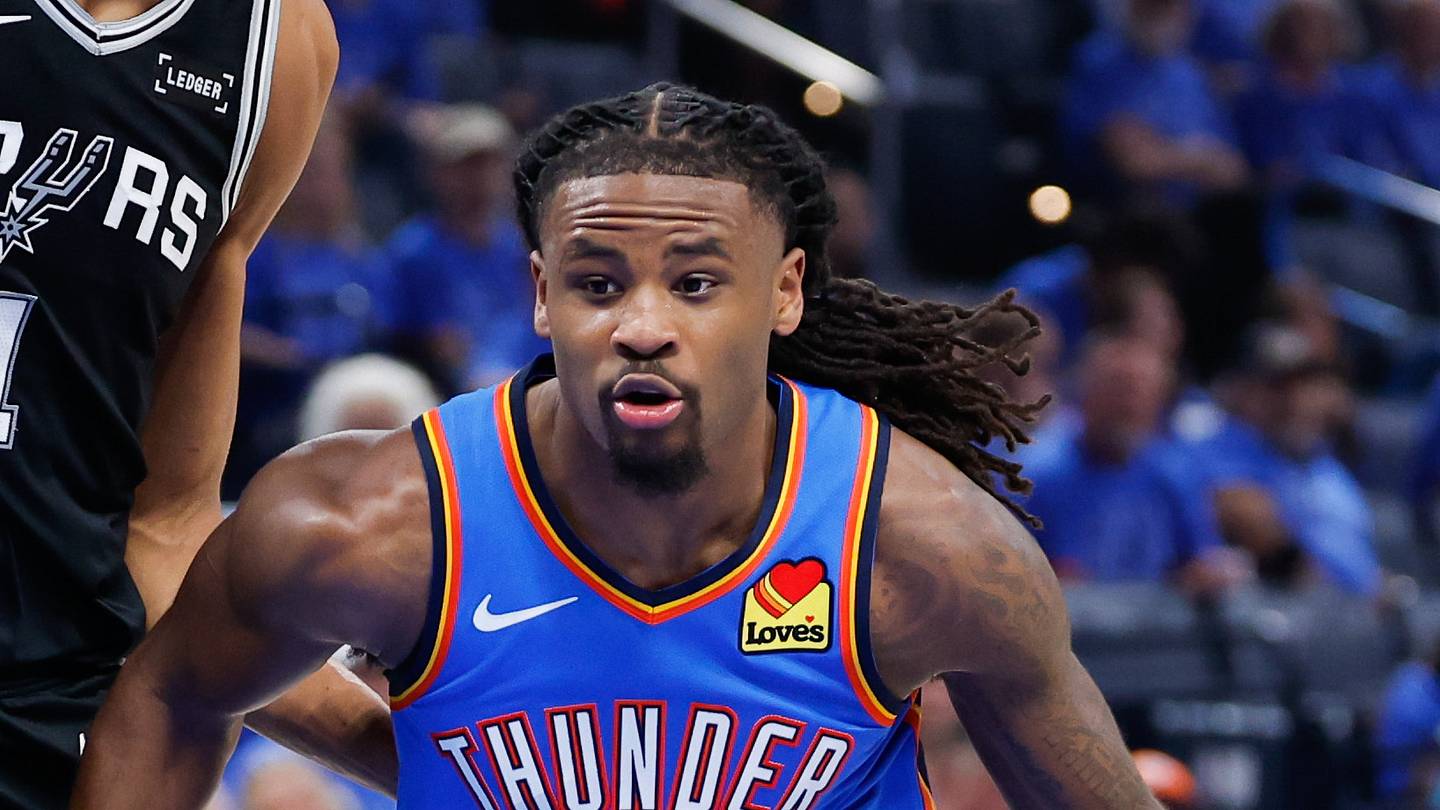
Source: SI NBA. Casualplayhub News adds summary, context, and editorial framing while linking back to the original report.
Ad eligibility review: sensitive-topic
The Oklahoma City Thunder are walking a tightrope as they head into the upcoming season, balancing a veteran core with a wave of unproven talent. After a summer of roster churn, the team has emerged with a distinct identity: youthful, hungry, and dangerously thin on experience beyond its three pillars. Shai Gilgeous-Alexander, Jalen Williams, and Chet Holmgren form the backbone, but the supporting cast has been overhauled, leaving the front office to bet heavily on players still carving out their NBA footprints.
Cason Wallace becomes the most immediate test. With Lu Dort departing in free agency, the fourth-year guard inherits the starting spot. Defensively, Wallace is a menace—his lateral quickness and instincts are already elite. But the offensive expectations are a different story. Last season, he averaged a career-high 8.6 points per game, a number that won't cut it for a team eyeing a deep playoff run. Wallace did flash an improved jumper in the postseason, knocking down shots under duress, but sustaining that over 82 games is a monumental ask. The Thunder need him to be a reliable third or fourth option, not just a stopper.
Ajay Mitchell represents another high-stakes gamble. The young guard emerged from relative obscurity last season, turning heads with his scoring burst and crafty playmaking. Now, with a larger role on the horizon, Oklahoma City expects him to lead the second unit with authority. The buzz around the league is that Mitchell could be a legitimate Sixth Man of the Year candidate—a leap that would require him to average around 15-18 points off the bench while maintaining efficiency. That's a steep climb for a player who has only one season of consistent rotation minutes under his belt.
Beyond the two guards, the Thunder are asking several other young players to expand their games. Jared McCain, known for his shooting, will be tasked with more ball-handling and initiating offense, a role he hasn't fully embraced at the professional level. Rookies Aday Mara and Bennett Stirtz could see meaningful minutes from day one, particularly if the team's injury history repeats itself. The Thunder have been plagued by untimely absences in recent years, and a similar scenario would thrust these raw prospects into the fire with no safety net.
The front office's philosophy is clear: develop through opportunity. But there is a fine line between nurturing talent and overloading it. The team's young stars—Wallace, Mitchell, McCain, and the rookies—are being asked to contribute immediately, not just as role players but as focal points. The expectation is not merely to fill minutes but to produce at a level that elevates the team's ceiling. If they falter, the Thunder's playoff aspirations could dwindle. If they rise, Oklahoma City could emerge as a dark horse in the Western Conference.
History offers mixed signals. Some young cores have thrived under pressure, using the challenge as a springboard. Others have cracked, their development stunted by expectations that arrived too early. The Thunder are betting on the former, leaning on their culture and player development staff to fast-track these players. But the season is a grueling marathon, and the margin for error is thin. For now, all eyes are on whether these rising stars can handle the weight—or if the organization is asking too much, too soon.
Article commentary
The Oklahoma City Thunder's strategy of leaning heavily on young players is both a strength and a vulnerability. On one hand, the organization has a proven track record of developing talent, with Shai Gilgeous-Alexander, Jalen Williams, and Chet Holmgren serving as prime examples. The front office has built a culture of accountability and growth, where players are given the freedom to learn through mistakes. This approach has yielded dividends in the past, and it's tempting to assume it will work again with the next wave. However, the current situation carries distinct risks. The Thunder are not in a rebuilding phase—they are a playoff contender with serious aspirations. The margin for error is much smaller than during a traditional rebuild. When Cason Wallace is asked to step into a starting role after averaging fewer than nine points per game, the team is essentially betting that his offensive game will catch up to his defensive prowess. If it doesn't, the starting lineup could become a liability, especially in high-stakes playoff matchups. Ajay Mitchell's case is even more precarious. Sixth Man of the Year buzz is flattering, but it also sets a bar that may be unrealistic for a player with limited sample size. The Thunder's bench unit will rely heavily on his scoring creation, and any inconsistency could derail their second-unit effectiveness. The pressure to perform at an award-winning level from day one is immense, and it's worth asking whether the organization is setting him up for success or failure. Injuries remain the wild card. The Thunder have struggled with health in recent seasons, and a single injury to a key player could cascade into a crisis. If Gilgeous-Alexander or Holmgren misses time, the young players would be thrust into roles they are not ready for, potentially stunting their development and harming the team's season. The lack of a proven veteran safety net is a calculated gamble, but it's a gamble nonetheless. Comparisons to other teams' young cores are instructive. The Golden State Warriors in the early 2010s allowed their young players to grow organically, but they also had veterans like David Lee and Andre Iguodala to absorb pressure. The Thunder's current roster lacks that kind of experienced depth. The Boston Celtics, by contrast, have always surrounded their young stars with a mix of savvy veterans, ensuring a smoother transition. Oklahoma City is taking a more aggressive approach, betting that the rising stars can learn on the fly. Ultimately, the success of this strategy will depend on the players' mental fortitude and the coaching staff's ability to manage expectations. If the young core can handle the pressure and deliver consistent performances, the Thunder could emerge as a powerhouse. But if the weight proves too heavy, the team risks not only a disappointing season but also the long-term development of its most promising assets. The next few months will provide the first real test of whether this high-risk, high-reward philosophy pays off.