2026 Premier League Summer Transfers: Ranking the Most Notable Deals
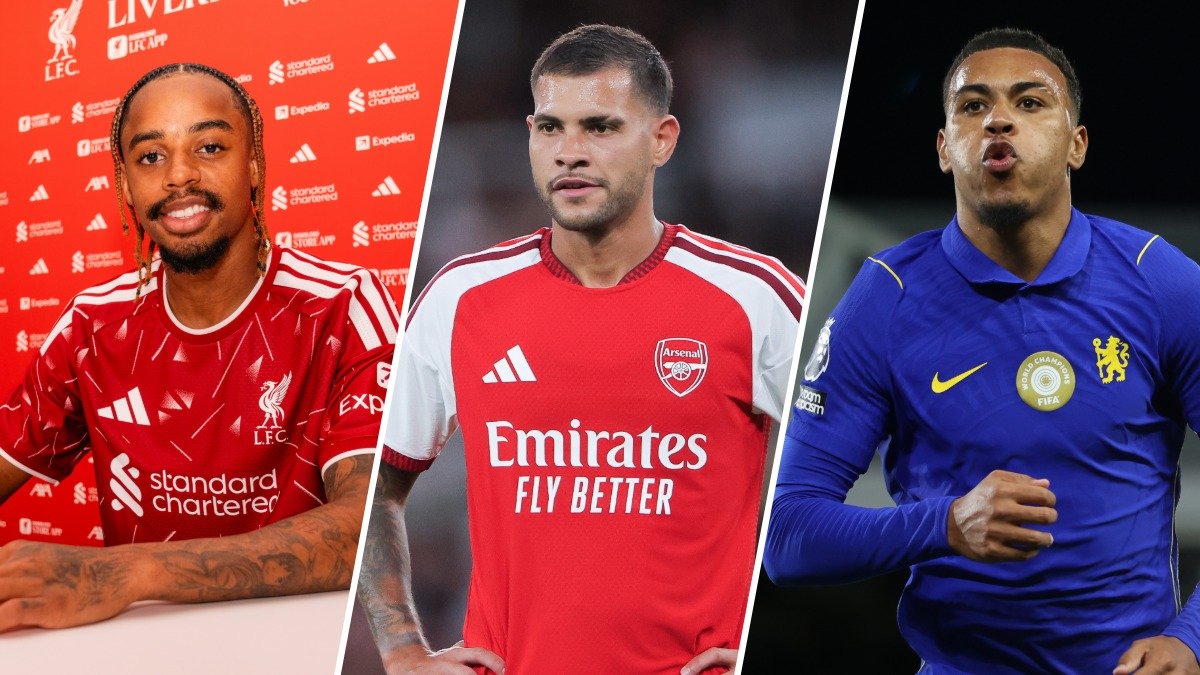
Source: NBC Bay Area Sports. Casualplayhub News adds summary, context, and editorial framing while linking back to the original report.
Ad eligibility review: sensitive-topic
The Premier League's summer transfer window has slammed shut, with clubs scrambling until the final hours to secure their targets. The 2026-27 season promises dramatic shifts as teams spent heavily—some wisely, others perhaps not. Let's dive into the most notable signings, ranked by a mix of fee, fit, and anticipated impact.
Starting with the least convincing triple-digit move, Tottenham Hotspur went all in after two consecutive 17th-place finishes. Head coach Roberto De Zerbi still faces serious questions. Their biggest catch was Sandro Tonali from Newcastle United, but this midfielder, while solid, lacks the game-dominating quality expected for such a price. A fair valuation would have been in the £50-60 million range. Worse, they splashed £85 million on Savio from Manchester City—a winger with flair but inconsistent end product. That deal feels like a stretch.
Manchester City, under new boss Enzo Maresca, underwent a midfield overhaul. First, they broke the British transfer record for Enzo Fernandez, a player Maresca coached at Chelsea. Like Tonali, Fernandez is a fine midfielder but not a one-man engine; he does score timely goals, but that alone doesn't justify the fee. Next, they spent another nine-figure sum on Elliot Anderson from Nottingham Forest. Anderson excels at winning duels and providing steel, yet his value maxes out around £70-80 million. Still, he keeps City's midfield base solid.
Liverpool abandoned their long-standing reluctance to spend big on attackers. After last year's expensive acquisitions of Alexander Isak and Florian Wirtz (who have yet to fully deliver), they now paid a huge fee for Bradley Barcola from Paris Saint-Germain—a player who was mainly a backup in France. With Mohamed Salah gone, the right-wing slot remains unclear. Barcola thrives running in behind from the left, but his finishing is erratic. Another overpay that could backfire.
Chelsea, despite a 10th-place finish and no European football, splashed cash thanks to player sales. Their record signing, Morgan Rogers from Aston Villa, fits Xabi Alonso's 3-4-3 system as a left-sided attacker. At 6-foot-2, Rogers combines elite ball-carrying and striking power, though his inconsistency is a concern. Still, he's a difference-maker who should help a Chelsea side playing one game a week climb the table.
Ironically, the most impactful Manchester City midfield signing might be their cheapest: Ayyoub Bouaddi, an 18-year-old from Lille. He embodies the Rodri profile—a tall defensive midfielder who sets tempo and passes with range. He needs time to develop box-crashing skills, but he already influences games at a high level. If he develops, this fee will look like a bargain.
Across town, Manchester United also revamped their midfield. Youri Tielemans arrived from Aston Villa, and Andrey Santos from Chelsea, but the standout is Carlos Baleba from Brighton. At 22, the left-footer lacks Tielemans' final-third quality but offers rare recovery speed, ball-carrying, and passing range. United needed running power in midfield, and Baleba provides it; he can also fill in at left-back.
Reigning champions Arsenal had a quiet attacking window but struck gold with Ezri Konsa from Aston Villa and Bruno Guimaraes from Newcastle. The Brazilian turns 29 in November, making the fee steep, but he elevates Arsenal's midfield to the league's best, adding creative passing and goal contributions. If Arsenal repeat as champions, Guimaraes will be a key reason.
Honorable mentions: Mamadou Sangare to Brentford for over £40 million—the next £100-million midfielder? Caleb Yirenkyi to Coventry City for £23 million (plus add-ons) gives the newly promoted side a dynamic box-to-box option. And Greek goalkeeper Konstantinos Tzolakis, 23, joined Hull City, bringing bright potential to their survival hopes.
Article commentary
The 2026 Premier League summer window was a spectacle of financial recklessness, strategic gambles, and a few genuine bargains. The rankings above highlight a recurring theme: top clubs are willing to pay premium prices for players who may not be elite. Tottenham's spending spree after two disastrous seasons feels desperate; signing Tonali and Savio for over £85 million each suggests a scattergun approach rather than a coherent rebuild. De Zerbi's track record at Brighton was impressive, but he now faces the pressure of making these expensive pieces fit together. Savio, in particular, is a gamble—a winger with flair but limited end product rarely justifies such a fee unless he develops rapidly. Manchester City's midfield overhaul under Maresca is intriguing. Enzo Fernandez and Elliot Anderson are both quality players, but breaking the British record for Fernandez, who is not a dominant midfielder, mirrors the same overpayment that plagued Chelsea. Anderson's physicality is valuable, but City already had Rodri—now replaced by the cheaper Bouaddi. The 18-year-old Frenchman could be the steal of the window, but asking him to immediately fill Rodri's shoes is unrealistic. City's approach seems to be buying quantity over perfect fit, which could backfire if Bouaddi takes time to adapt. Liverpool's persistent pursuit of high-priced attackers is a departure from their data-driven philosophy. Barcola, like Isak and Wirtz before him, carries a hefty price tag without a proven track record of delivering in the Premier League. The exit of Salah leaves a void that Barcola, a left-sided player, doesn't naturally fill. This signals a lack of long-term planning on the right wing, which could haunt Liverpool if they don't invest further. Chelsea's strategy, while chaotic, has a logic: they sold well to fund Rogers, a player with the physical tools to dominate. His inconsistency is a risk, but in a one-game-a-week season, he can be a match-winner. Xabi Alonso's system might unlock his potential. The Blues' rebound from 10th place to potential top-four challengers hinges on Rogers' consistency. Manchester United's midfield rebuild looks promising. Baleba's athleticism and versatility address a key weakness, and Tielemans brings experience. However, the lack of a top-tier striker remains a glaring hole. United's reliance on Baleba to also cover left-back shows defensive depth issues. Arsenal's quiet window may be their smartest. Guimaraes is a proven Premier League star who adds leadership and creativity. Alongside Konsa, they've strengthened both the midfield and defense. Repeating as champions requires more than just star power, and Arsenal's measured approach could pay off. Finally, the smaller clubs' astute buys—Sangare, Yirenkyi, Tzolakis—show that smart scouting can still yield bargains. Brentford, Coventry, and Hull are betting on young talent, hoping to develop or sell for profit. This window reflects a league where the rich get richer but also run the risk of paying for potential over proven performance. The 2026-27 season will reveal which clubs spent wisely and which are left with expensive regrets.