Trump: Reject Data Centers, Be 'Backwards and Poor'
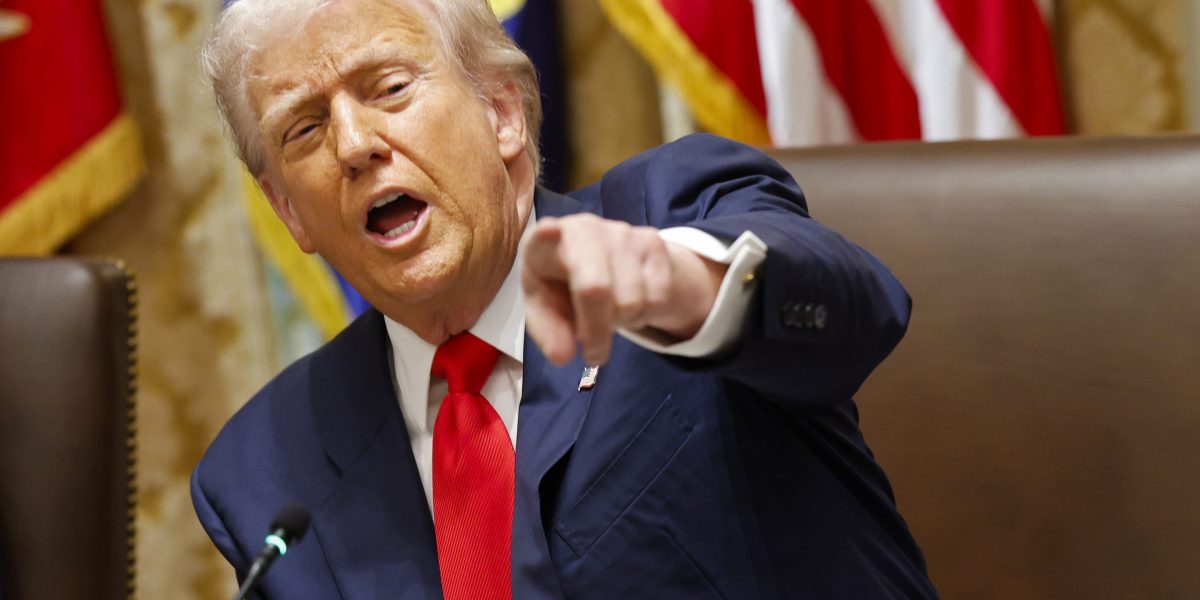
Source: Fortune. Casualplayhub News adds summary, context, and editorial framing while linking back to the original report.
President Trump this week used his Truth Social platform to deliver a blunt warning to any American town still considering whether to resist a data center development. Communities that turn the projects away, he wrote, are choosing to be "backwards and poor." Those that welcome them, he promised, would receive lower taxes and jobs "all over the place." He dubbed the industry the "Golden Goose," asserted that plenty of other places would eagerly accept the investment, and cautioned that China "could not be happier" watching U.S. towns reject such opportunities.
Trump's outburst underscores a growing tension in the American economy. Data center spending has become one of the most powerful forces sustaining U.S. economic growth this year. In the first quarter of 2026, AI-related computing infrastructure investment hit roughly 1.4% of U.S. GDP, doubling from 0.7% a year earlier. It now represents the largest driver of growth in private investment, according to Epoch AI. The St. Louis Federal Reserve found that information-processing equipment accounted for 39% of total GDP growth through the third quarter of 2025—a share that surpasses even the dot-com boom. Remarkably, data centers' dollar contribution to GDP growth has overtaken consumer spending for the first time, despite consumer spending typically representing about two-thirds of the economy.
Yet the national economic benefits clash with local realities. A single data center can draw as much electricity as a mid-sized city, reshaping a town's tax base within months while neighboring households bear the costs of increased demand and infrastructure strain. Conservatives who normally champion deregulation find themselves at town meetings questioning property rights and distrusting distant tech billionaires. Progressives who support technological progress object on environmental grounds. A CNN analysis confirms that the backlash is bipartisan because the fight is hyperlocal, bypassing national ideology.
The jobs picture is equally complicated. Construction of a $10 billion campus in Lebanon, Indiana, employs more than 4,000 workers at its peak. But once servers are running, the facility keeps only around 300 permanent employees—a ratio of 13 construction jobs for every one that lasts. The U.S. Chamber of Commerce reports that a typical data center supports fewer than 200 local jobs long-term. Research from Virginia, the nation's largest data center market, found that projects there create one permanent job for every $54 million invested. Across the broader economy, $1 million in investment supports 17 jobs on average. This discrepancy helps explain why tax breaks used to attract these facilities have drawn bipartisan scrutiny: at least 10 states are losing more than $100 million annually in revenue from data center tax incentives alone.
Political dynamics are shifting rapidly. In Pennsylvania, Governor Josh Shapiro was once the industry's biggest booster, touting a $20 billion Amazon commitment. But by August, he signed an order stripping fast-track permits and requiring local approval. His Republican opponent, Stacy Garrity, now attacks the Amazon deal in her first TV ad, accusing Shapiro of trying to "gaslight" voters. Similar fights are playing out in Ohio, where Democrats target Senator Jon Husted over his record courting the industry, and the National Republican Senatorial Committee warns the issue could cost him his special election. In Wisconsin, Republican Tom Tiffany calls his Democratic opponent "Data Center David Crowley." In Georgia, data center opposition and rising electricity rates helped Democrats flip two Public Service Commission seats last year; the party hopes the same anger carries into the gubernatorial race, where Democrat Keisha Lance Bottoms backs a moratorium and Republican nominee Rick Jackson opposes one. Senator Raphael Warnock has called for a statewide pause, while Governor Brian Kemp insists the decision belongs to local communities.
The electricity cost issue is central. Utilities requested more than $30 billion in rate increases last year, affecting 81 million Americans. Power bills have risen 40% since 2021—the fastest stretch on record. Data centers drove about half of all U.S. electricity demand growth last year, and PJM's independent market monitor has tied data center demand to $23 billion in customer price increases through 2028. A July Pew survey found that the cost of living is the top issue voters want candidates to address, and electricity is the cost they can trace directly to an unpopular neighbor.
Nearly 200 economists and researchers warned in July that AI could cause large-scale job displacement over the next decade, calling it a transformation on the scale of the Industrial Revolution but compressed into a much shorter span. The same companies pouring billions into data centers have continued cutting jobs elsewhere: Microsoft laid off nearly 5,000 people in early July even as it invested heavily in AI data centers. For many voters, this looks like an industry taking jobs away with one hand while promising them with the other. The industry points to construction spikes, but the long-term employment math remains thin. As the physical footprint of data centers grows, so does the backlash—and the political challenge for candidates who must navigate a conflict between national economic vitality and local discontent.
Article commentary
Trump's forceful defense of data centers highlights a profound paradox in the American economy. The industry has become a rare bright spot for GDP growth, yet its local reception is overwhelmingly hostile, cutting across partisan lines in ways that few issues do. The president's rhetoric—labeling opponents 'backwards and poor'—reflects a top-down view that prioritizes macro-level economic gains over community-level costs. But the reality on the ground is more nuanced, and the political consequences are already rippling through state and local races. At the heart of the tension is a mismatch between the industry's national economic contribution and its local impact. Data centers are undeniably powering the AI revolution and bolstering investment figures that would make any administration proud. The 1.4% of GDP from AI infrastructure is a staggering number, and the fact that data center spending has surpassed consumer spending as a growth driver is historically significant. Yet these benefits are diffuse and abstract to the average voter, while the drawbacks—higher electricity bills, noise, water usage, and a fleeting construction boom followed by minimal permanent jobs—are immediate and tangible. The job creation argument is particularly weak. The ratio of 13 construction jobs to one permanent job is unsustainable for communities hoping for long-term economic transformation. The $54 million investment per permanent job in Virginia is a stark contrast to the broader economy's 17 jobs per $1 million. This creates a credibility gap that both parties are exploiting. Tax incentives, which cost states over $100 million annually, are increasingly scrutinized as giveaways that yield little enduring benefit. The bipartisan nature of the backlash is telling: it's not about ideology but about local self-interest. Politically, the issue is a minefield. Candidates in swing states like Pennsylvania, Ohio, and Georgia must balance the need to attract investment with the anger of constituents facing rising utility costs. The data center controversy is reshaping traditional alliances: pro-business Republicans find themselves opposing development, while Democrats who champion green energy are wary of the environmental footprint. The race in Pennsylvania is a perfect example—Governor Shapiro flip-flopped amid public pressure, and his opponent now uses the issue against him. The same dynamic is playing out in Ohio, where the National Republican Senatorial Committee is worried about a special election. Looking ahead, the problem is only likely to intensify. Electricity demand is projected to surge as AI and cloud computing expand, and the infrastructure needed to support it—new power plants, transmission lines, and water cooling systems—will face increasing local opposition. The $23 billion in price increases tied to data center demand through 2028 is a political time bomb. Meanwhile, the threat of job displacement from AI adds another layer of anxiety: voters see the same companies cutting white-collar jobs while building data centers that promise fewer blue-collar positions. Trump's 'Golden Goose' metaphor may be apt, but it overlooks the fact that geese can be noisy, messy, and disruptive. The question for American policymakers is whether they can harness the economic benefits while mitigating the local costs. So far, the political system is struggling to find a middle ground. The midterm elections will test whether candidates can craft a message that acknowledges both the value of data centers and the valid concerns of communities. If they fail, the backlash could slow the very infrastructure that is propping up the economy—a lose-lose scenario that no one, not even the president, can simply wish away.