Chicago Fed's Goolsbee: Old-School Economics, Consumer Focus, Inflation Watch
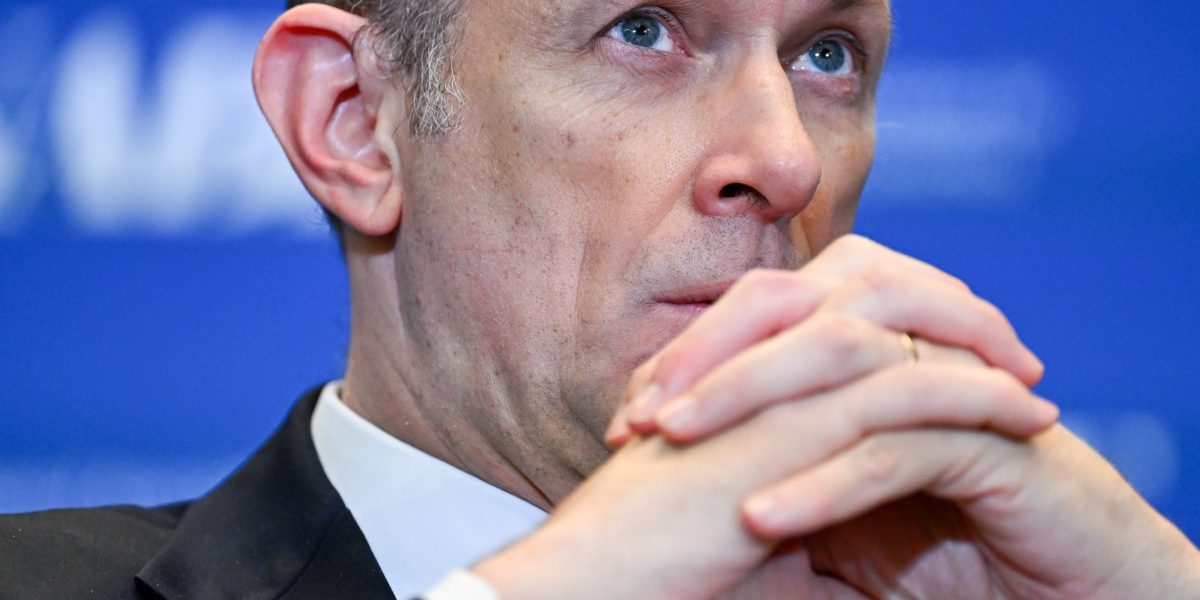
Source: Fortune. Casualplayhub News adds summary, context, and editorial framing while linking back to the original report.
Extreme views on the economy are everywhere these days. Tech billionaires, Wall Street titans, politicians, and economists all agree that artificial intelligence will be transformative, but they clash over whether it will bring salvation or ruin. Policy debates on trade, immigration, interest rates, and national debt have become equally polarized. In the midst of this noise, Chicago Federal Reserve Bank President and CEO Austan Goolsbee is taking a different path. He is less concerned with grand prophecies and more focused on the everyday reality of American consumers and the businesses they support.
At the Jackson Hole symposium last week, new Fed Chairman Kevin Warsh delivered a landmark speech, emphasizing that inflation remains the sharpest concern for the Federal Open Market Committee, which includes Goolsbee. Price increases have consistently stayed above the central bank's 2% target, fueled by supply-side disruptions such as turmoil in the Middle East and new tariffs. Speaking exclusively to Fortune, Goolsbee agreed with Warsh's assessment: "On the real side, we've been stable, now inching toward dangers of overheat, and on the inflation side, after a couple of years of strong progress, it stalled out and started getting worse. But we've had one encouraging report, one OK report, and now our challenge is… the inflation."
When it comes to employment, Goolsbee sees a relatively stable picture across metrics like unemployment, vacancies, hiring, and layoffs. He attributes this stability not to the much-touted AI data centers, but to the American consumer. "Broad-based consumer spending growth is the thing that has kept the economy solid and stable," he explained.
While the market watches AI's impact on jobs—from layoffs to productivity gains to demand for new skills—Goolsbee is particularly wary of the risk of economic overheating. He described the current expansion of data centers as "very hot, but largely shoving other parts of the economy down." These centers are competing for resources, driving up costs for construction workers and HVAC equipment. "That implies a sector rebalance, that is different from an aggregate overheating, but we're not far from that turning into aggregate overheating," he said. If the data center boom spreads into services inflation, Goolsbee added, "that would make me more nervous."
The Chicago Fed president explained that he was comfortable holding the base rate at the July FOMC meeting because recent inflation data showed improvement—the all-items CPI fell 0.4% in June and was flat in July. "It makes sense to wait and see if this has legs, or is just a blip," he noted.
AI has inspired glowing forecasts. Nvidia's Jensen Huang believes the technology will create jobs at an unprecedented scale, despite some disruption. Tesla's Elon Musk has said AI will render money irrelevant and turn work into a hobby. Meta's Mark Zuckerberg predicts that in a balanced economy, AI will boost productivity and innovation while keeping employment high. But Goolsbee is focused on the "grubby day job" of the Fed. He argues that AI's impact on monetary policy depends on how expected those outcomes are. "If the productivity lands on us in an unexpected way, inflation goes down, and rates can go down," he explained. "But the more expected it is, and the bigger the hype… it leads to just old-fashioned overheating in the short run, because equity values go up and so businesses launch massive capital investment in the here and now, people start spending out of their equity-well in the here and now, before the productivity bounty has arrived."
Goolsbee acknowledges the academic appeal of dreaming about AI's long-term effects, but for the FOMC's daily work, "it's not at all clear." He also recalls the Solow Productivity Paradox—Nobel laureate Robert Solow's 1987 observation that the computer age was visible everywhere except in productivity statistics. A July Fed study found that while AI-exposed sectors show higher productivity growth, the trends across low, medium, and high exposure levels remain consistent over time, suggesting micro-level gains don't add up in aggregate. Goolsbee is mindful of this lag and warns against rushing to apply AI to the current outlook. "It strikes me it's a bunch of great technologists who are coming up with this, and they're wanting to declare themselves economists, and you've already seen it not play out the way that they said," he added. He pointed to past hype cycles: autonomous vehicles, NFTs, blockchain—all promised to transform the world and displace millions of jobs, yet we're still waiting. "It's not to make light, it's clear that in some sectors the adoption has been so rapid that they're feeling the pinch, but I don't believe that the low hiring rate is predominantly caused from AI."
Another unexpected delay between theory and reality is emerging from supply shocks. Under former Fed Chair Jerome Powell, the FOMC was repeatedly urged to "look through" inflationary pressures that seemed to stem from one-off events like tariffs or Middle East conflicts. But Goolsbee argues that since the pandemic, supply shocks have become substantially more persistent than theoretical models suggest. One reason: current shocks aren't "one and done"—they arise from ongoing geopolitical issues. Another: fixing global supply chains takes longer than before. The FOMC must balance the risk of reacting to transitory supply shocks (which Goolsbee jokingly calls "traaaaansitory" shocks that drag on) against the risk of enduring above-target inflation.
Ultimately, Goolsbee's biggest concern is not data centers or AI hype. "In terms of public attention, it has shifted to data centers, and it feels like that's all anyone wants to talk about, but I would like to shift it back," he said. "The thing in my mind that has made the economy stable and growing—despite a series of pretty intense shocks—… is the unrelenting, continued consumer spending." He warned that if consumer spending falters, the economy would shake. "If we hit a hiccup on consumer spending, to me, that is the biggest risk to continued stability and growth." His prescription: return to "old school" economic barometers—watch what consumers are spending and whether they can keep up the pace.
Article commentary
Austan Goolsbee's call for a return to "old school" economics is a refreshing antidote to the breathless narratives that often dominate financial headlines. In a world where tech moguls and pundits paint AI as either a utopian miracle or a dystopian threat, the Chicago Fed president is deliberately grounding the conversation in tangible, real-world data. His emphasis on consumer spending as the bedrock of economic stability—rather than the speculative froth around data centers—offers a sobering check on the hype cycle. What makes Goolsbee's perspective particularly compelling is his nuanced view of inflation and supply shocks. The Fed's traditional toolkit assumes that supply-driven price spikes are temporary and can be "looked through." Yet Goolsbee points out that the post-pandemic environment has shattered that assumption. Geopolitical tensions, fractured supply chains, and persistent disruptions have turned what were once one-off events into recurring shocks. His wry addition of "traaaaansitory" underscores the frustration central bankers face: the theoretical models that guided policy for decades are proving inadequate. His critique of AI hype is equally sharp. Goolsbee does not dismiss the technology's potential, but he demands evidence over proclamation. By invoking the Solow Productivity Paradox and pointing to failed predictions from the past—autonomous vehicles, blockchain, NFTs—he forces a necessary humility. The rapid adoption of AI in certain sectors is real, but its macroeconomic impact remains uncertain. For the Fed, the danger is that heightened expectations drive immediate investment and consumption, creating an overheating risk before any productivity gains materialize. This is a classic pattern of boom-and-bust expectations, and Goolsbee is wise to flag it. The most insightful part of his analysis, however, is the focus on the consumer. While the market obsesses over data center construction and AI job displacement, Goolsbee reminds us that the U.S. economy's resilience has been built on the back of sustained consumer spending. That spending has weathered inflation, higher interest rates, and global shocks. But it is not invincible. If consumers become spooked—by rising prices, job insecurity, or a pullback in credit—the entire foundation could crack. His warning is a timely reminder that the real economy is not Silicon Valley; it is Main Street. Goolsbee's approach also highlights a deeper tension within the Fed: the balance between forward-looking policy and empirical patience. His willingness to hold rates steady while waiting for inflation data to confirm a trend is a classic example of "data-dependent" decision-making. In a period of radical uncertainty, that prudence may be the most valuable asset the Fed has. The commentary from other officials, like the new Chairman Kevin Warsh, suggests a similar hawkish tilt, but Goolsbee's voice adds a layer of granularity—he is not just watching inflation numbers; he is watching how they interact with real people's spending habits. Perhaps the most provocative element is his challenge to the tech elite. Goolsbee essentially tells them: prove it. The same people who promised that autonomous vehicles would reshape cities are now selling AI as the next revolution. He is not dismissing the possibility, but he is demanding that the economic evidence catch up to the rhetoric. That is a healthy skepticism for a central bank that must avoid being swayed by fashionable narratives. In the end, Goolsbee's "old school" economics is not a rejection of innovation. It is a call for rigor, for focusing on the fundamentals that have always driven prosperity: the consumer, the worker, the small business owner. As the AI hype intensifies and policy debates grow more polarized, his grounded voice is a necessary anchor. The biggest risk, he says, is a consumer shock. And he is right—because without the consumer, no amount of data center investment will save the economy.