Djokovic Ousted in First Round, Banks $140,000 and Lucrative Off-Court Income
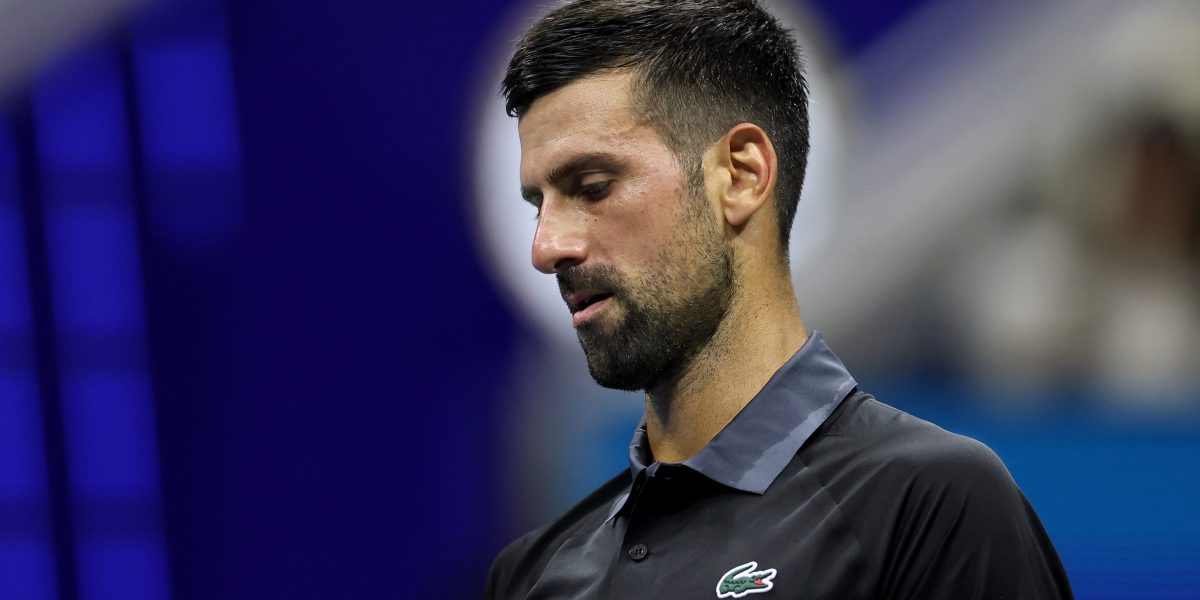
Source: Fortune. Casualplayhub News adds summary, context, and editorial framing while linking back to the original report.
The U.S. Open kicked off in New York City with the sport's biggest names vying for silverware and life-changing prize money. Among them was Novak Djokovic, a 24-time Grand Slam champion who entered the tournament as a perennial favorite. But on Sunday night, the Serbian icon fell in a shocking upset to Mariano Navone, a 25-year-old unseeded Argentine, after a marathon match that stretched nearly five hours and ended just before midnight.
Djokovic, who at 39 is older than most tennis stars when they retire, struggled physically throughout the contest. He was seen limping, cramping, and vomiting on court as his body began to break down. After the match, he described how his back and shoulder gave out, causing his body to "collapse" under the weight of ongoing health issues. The loss marked the first time in two decades that Djokovic failed to advance past the first round of a Grand Slam—his last such defeat came at the 2006 Australian Open. His remarkable streak of 78 first-round wins at majors came to an abrupt end.
Navone, an underdog with much to prove, outlasted the legend in five grueling sets. The victory was a career highlight for the young Argentine, who clinched the win against one of the most decorated players in tennis history. For Djokovic, the defeat was a bitter pill, but financially, the sting is softened by the U.S. Open's generous pay structure.
Every player who reaches the main draw of the singles tournament is guaranteed at least $140,000, win or lose. That means Djokovic will walk away with a six-figure check despite his early exit. And that is just a fraction of his overall earnings. According to Forbes, Djokovic earned $5.2 million on-court last year, but a staggering $25 million off the court through endorsements and business ventures. His sponsor portfolio includes Lacoste, Qatar Airways, Hublot, and General Atlantic, making him the sixth highest-paid player in tennis.
The U.S. Open is not just about glory; it is a financial powerhouse. The tournament has boosted total player compensation to a record $108 million this year, a 20% increase from $90 million in 2025. The majority of that goes to singles players, with $37.84 million allocated for singles rounds and $13 million for doubles. The top prize for the men's and women's singles champions is $5.5 million, with the runner-up taking home $2.8 million. Semifinalists earn $1.45 million, quarterfinalists $780,000, and players eliminated in the round of 16 receive $480,000. Even those falling in the first round of qualifying can earn between $32,000 and $66,000.
Other top players are also in the hunt for the massive payday. Carlos Alcaraz, the 2025 U.S. Open men's singles champion, commands $53.7 million annually, with $38 million from off-court deals. Coco Gauff and Aryna Sabalenka are among the women's stars competing for the $5.5 million winner's check. Italian Jannik Sinner, currently the highest-paid tennis player according to Forbes, earns about $58 million per year, with $35 million coming from partnerships with Allianz, Gucci, and Lavazza. Serena Williams, though retired, still makes $40 million annually through investments and brand partnerships.
For Djokovic, the $140,000 first-round prize is a drop in the ocean compared to his off-court empire. But the loss serves as a reminder that even the greatest champions are not immune to the passage of time. As the U.S. Open continues, the spotlight shifts to the next generation of stars who are chasing both the trophy and the millions that come with it.
Article commentary
Novak Djokovic's first-round exit at the U.S. Open is a seismic event in the tennis world, not just for its shock value but for what it reveals about the sport's evolving landscape. At 39, Djokovic remains a formidable competitor, but his physical struggles this season—back and shoulder issues, cramping, and vomiting on court—suggest that even his legendary resilience has limits. The loss to Mariano Navone, a relatively unknown 25-year-old, ended a 78-match winning streak in Grand Slam first rounds, a record that underscores just how dominant Djokovic has been for two decades. Yet this defeat also highlights the increasing depth of men's tennis, where unseeded players can topple icons on the biggest stage. Financially, Djokovic's situation reflects a broader trend in professional tennis: the growing gap between on-court prize money and off-court earnings. The $140,000 he receives for losing in the first round is a substantial sum for most players, but for Djokovic, it represents less than 0.6% of his annual off-court income. This disparity underscores how top-tier athletes have become global brands, leveraging their fame into lucrative sponsorships and business ventures that far exceed tournament winnings. Djokovic's portfolio—Lacoste, Qatar Airways, Hublot, General Atlantic—is a testament to his marketability, even as his on-court performance begins to show signs of decline. The U.S. Open's decision to raise total player compensation to $108 million, a 20% increase, is a strategic move to attract and retain talent. It also reflects the tournament's financial health and its role as a premier event in the sports calendar. However, the lion's share of this money goes to the top players, with the champion earning $5.5 million while first-round losers get $140,000. This structure creates a steep pyramid, where the difference between winning and losing a single match can mean hundreds of thousands of dollars. For lower-ranked players, the financial pressure is immense, and the increased prize money helps, but the gap between the elite and the rest remains wide. Djokovic's defeat also raises questions about his future. With 24 Grand Slam titles, he is already the most successful male player in history. But the desire to break the all-time record—currently tied with Margaret Court at 24—may be fading as his body struggles to keep up. His comment that his body "collapsed" suggests that the physical toll is becoming unsustainable. The tennis world will watch closely to see if he can rebound, or if this marks the beginning of the end of an era. Meanwhile, the emergence of younger stars like Jannik Sinner and Carlos Alcaraz signals a changing of the guard. Both players command massive off-court earnings, indicating that the next generation is already building their brands. The business of tennis is thriving, but the sport's reliance on a few megastars for viewership and revenue may be a vulnerability. As Djokovic's star dims, the U.S. Open and other tournaments will need to cultivate new narratives to keep fans engaged. In the end, Djokovic's early exit is a reminder that even the greatest athletes are human. The $140,000 check is a consolation, but the real story is the transition underway in tennis—a shift from the dominance of the Big Three to a more open, competitive field. Whether Djokovic can adapt or will soon join the ranks of retired legends remains to be seen.