SF Democrats Defy Party on Billionaire Tax, Revealing Left Split
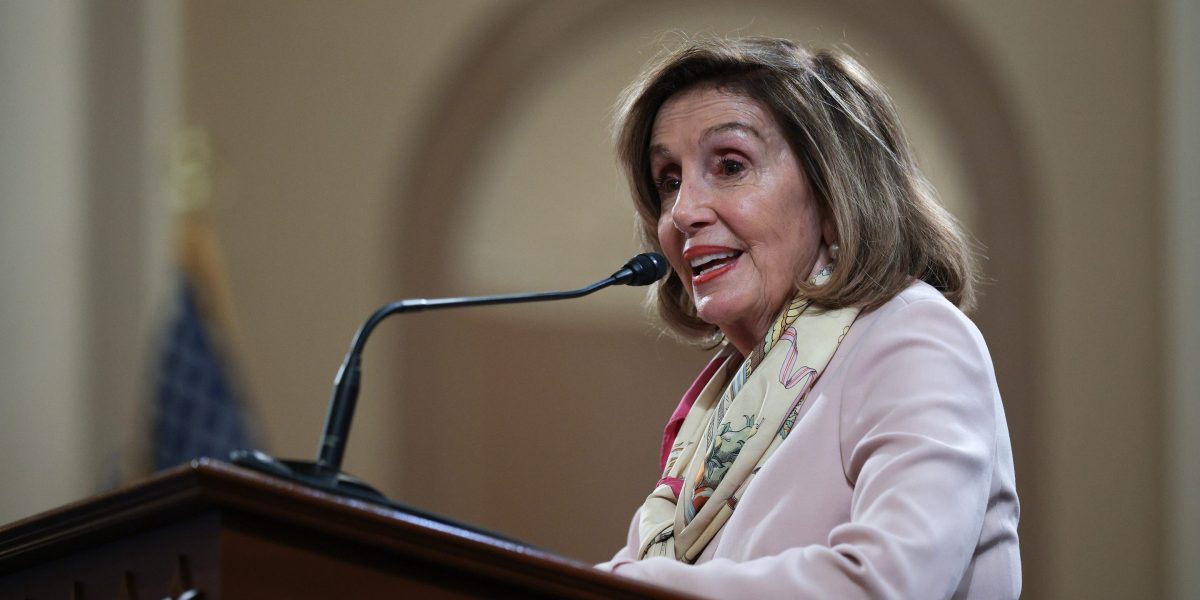
Source: Fortune. Casualplayhub News adds summary, context, and editorial framing while linking back to the original report.
The debate over California's Proposition 40 has exposed one of the most contentious fault lines within the Democratic Party: taxing the ultrawealthy. In a striking display of local dissent, San Francisco Democrats voted 17-4 to oppose the state-level billionaire wealth tax, with five members abstaining, five absent, and one declining to endorse. Nancy Pelosi also chose not to back the measure. This rebellion comes just weeks after the California Democratic Party endorsed Prop 40 in August, following a contentious vote that barely cleared the 60% threshold.
The proposition, set for the November ballot, would impose a one-time 5% tax on the net worth of individuals who were California residents on January 1, 2026, with assets exceeding $1 billion. Roughly 200 billionaires, holding over $2 trillion in combined assets, would be affected. Taxpayers could spread payments over five years, though that option carries added costs. Ninety percent of the revenue would go toward healthcare services. The state's Legislative Analyst's Office estimates the measure could generate tens of billions of dollars in temporary revenue over several years, but warns that predicting exact figures is difficult due to potential behavioral changes among billionaires and fluctuating stock prices.
Supporters argue the tax is a necessary step to address extreme inequality. The initiative was placed on the ballot by SEIU-United Healthcare Workers West, with backing from the California Labor Federation, the Teamsters, and progressive politicians like Representative Ro Khanna and Senator Bernie Sanders. A poll from the University of California, Berkeley's Institute of Governmental Studies shows 48% of potential voters support the measure, while 41% oppose it.
Yet the proposal has drawn sharp criticism from within the party. California Governor Gavin Newsom has openly opposed it, as has gubernatorial candidate Xavier Becerra. The San Francisco vote underscores a deeper worry: California already relies heavily on wealthy residents for tax revenue, and a tax that prompts billionaires to leave could erode that base. The state's Legislative Analyst's Office estimates that if billionaires respond by leaving or altering their behavior, ongoing income-tax revenue could drop by less than $1 billion annually, while administrative costs would run into tens of millions over several years. Six billionaires have already ended their California residency ahead of the January 1 deadline.
The tech industry's concentration in San Francisco magnifies these concerns. Many founders and investors hold vast wealth in stock rather than cash. Mark Cuban, the billionaire investor, weighed in on X, noting that startup founders are often "cash poor, stock rich"—a situation where a wealth tax could force them to sell shares or take on debt. In response, Khanna proposed a mechanism allowing founders to pledge shares to the state in exchange for a nonrecourse loan to pay the tax, a suggestion that drew backlash from Cuban and Anduril Industries founder Palmer Luckey.
Billionaires are not just talking about leaving; they are actively fighting the measure. Propositions 41 and 42, funded by the political organization Building a Better California, aim to nullify the wealth tax. Prop 41 would require state audits of programs funded by new special taxes, complicating revenue use. Prop 42 would outlaw retroactive taxation, directly countering Prop 40. High-profile backers include Ripple co-founder Chris Larsen, who contributed an extra $10 million, along with Google co-founder Sergey Brin and former Google CEO Eric Schmidt, whose combined contributions exceed $118 million.
The San Francisco Democratic Party's defiance is notable because, until this summer, its bylaws prevented it from endorsing state propositions. The party changed its rules to allow departures from the California Democratic Party's endorsements, and Prop 40 became the only statewide measure on its agenda. The party did not respond to a request for comment from Fortune.
This political split is not confined to San Francisco. It reflects a broader ideological struggle within the left: can the drive to tax extreme wealth be balanced against the risk of driving away the very people who generate much of the state's tax revenue? The coming months will test whether voters see Prop 40 as a bold step toward equity or a gamble with California's fiscal stability.
Article commentary
Proposition 40 has become a litmus test for the Democratic Party's internal tensions, revealing a fracture that goes beyond California's borders. The San Francisco Democratic Party's vote to oppose the measure, despite the state party's endorsement, illustrates how local economic realities can override ideological solidarity. In a region where tech wealth is concentrated in illiquid stock, the fear of a billionaire exodus is not abstract—six have already left. This real-world consequence challenges the progressive narrative that taxing the ultrawealthy is a straightforward remedy for inequality. At the heart of the debate is a fundamental question: can a state as dependent on high-income residents as California afford to alienate its wealthiest citizens? The state's tax structure already leans heavily on the top earners, and a one-time wealth tax, while promising temporary revenue for healthcare, risks long-term damage if billionaires relocate. The Legislative Analyst's Office's cautious estimates—highlighting uncertainty about behavioral responses and stock market fluctuations—underscore the gamble. The countermeasures, Propositions 41 and 42, backed by billionaires with deep pockets, show that the wealthy are not passive targets. They are leveraging the political system to protect their interests, raising questions about the efficacy of wealth taxes in a mobile economy. The split within the Democratic Party is not simply about policy; it reflects a deeper ideological rift. Progressive supporters like Bernie Sanders and Ro Khanna frame the tax as a moral imperative to address runaway inequality. Moderates, including Gavin Newsom, worry about the practical economic fallout. The San Francisco vote, where local Democrats broke with their state party, suggests that even in a progressive stronghold, there is a pragmatic understanding that taxing the source of the region's prosperity could backfire. The debate also highlights the challenge of taxing unrealized gains—a concept that is legally and administratively complex, as billionaire Mark Cuban's "cash poor, stock rich" comment illustrates. From a broader perspective, Proposition 40 is a microcosm of the national conversation around wealth taxes. While countries like Norway have seen billionaires flee in response to such levies, the U.S. has never implemented a federal wealth tax. California's experiment, if passed, could serve as a bellwether. The outcome will depend on whether voters prioritize the promise of new revenue for healthcare over the risk of losing a key economic engine. The involvement of high-profile billionaires in opposing the measure, along with the organized counter-campaign, suggests that the fight will be as much about political power as about policy. Ultimately, the San Francisco Democrats' rebellion is a reminder that party unity is fragile when local interests diverge. The left's split over Proposition 40 is not a temporary disagreement; it is a fundamental tension between the desire for redistributive justice and the need to sustain the economic base that makes such redistribution possible. As the November ballot approaches, the outcome will resonate far beyond California, shaping the national discourse on how—and whether—to tax the wealthiest.