Should Rockets Deal Durant to Celtics? A Conditional Analysis
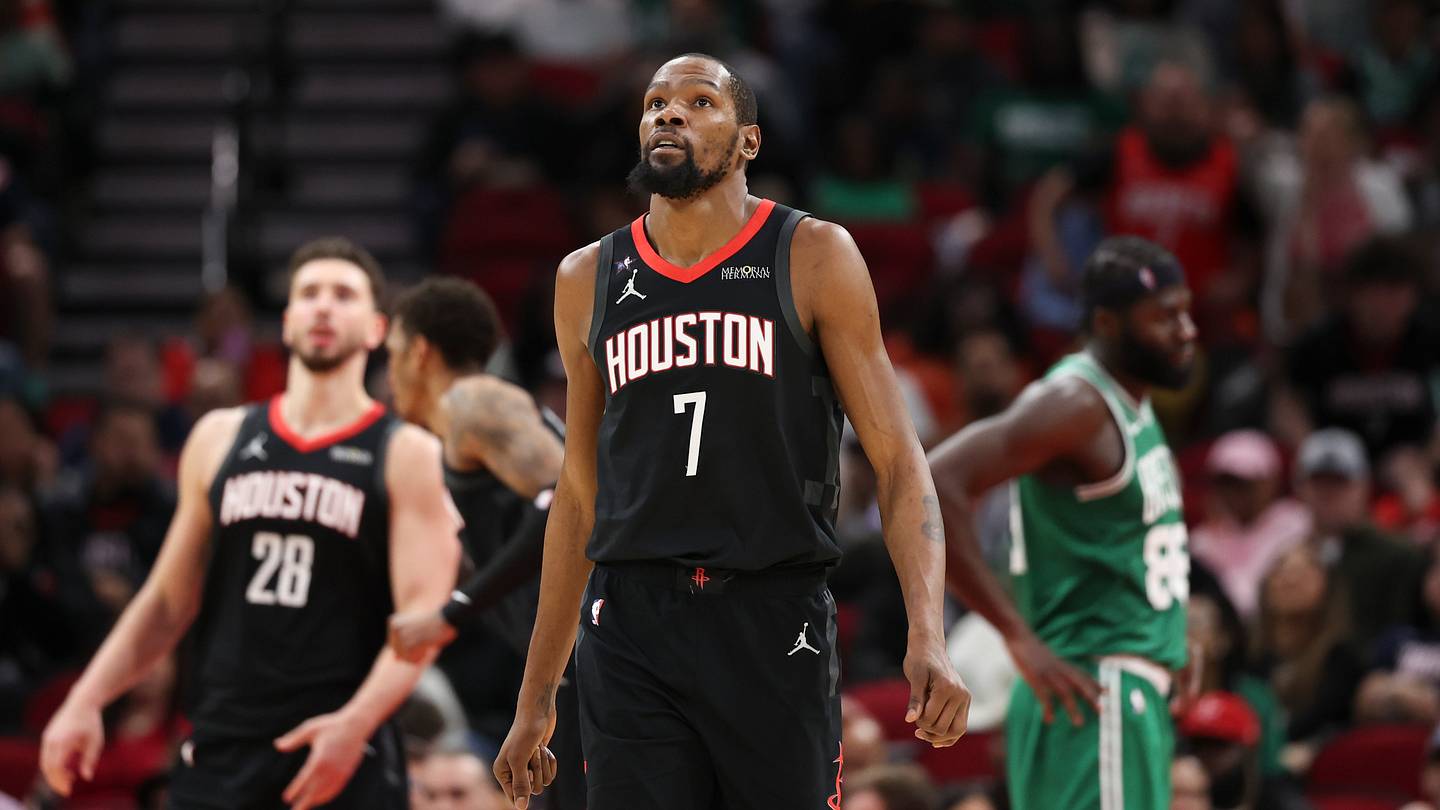
Source: SI NBA. Casualplayhub News adds summary, context, and editorial framing while linking back to the original report.
The NBA rumor mill is churning as training camp approaches, and the latest buzz centers on the Houston Rockets and the possibility of trading Kevin Durant. Durant, at 37, turned in a remarkable season: 26.0 points, 5.5 rebounds, and 4.8 assists across 78 games, earning him a spot on the All-NBA Second Team. Since his departure from the Oklahoma City Thunder in 2016, Durant has cycled through teams roughly every three years, a pattern that raises questions about his long-term commitment to any single franchise. With a player option for the 2027-2028 season looming, the Rockets’ front office faces a strategic dilemma: capitalize on Durant’s exceptional first year in Houston or risk losing him to free agency down the line.
The Celtics, a team that has undergone significant changes this offseason, could be a natural trade partner. The shocking departure of Jaylen Brown has left Jayson Tatum as the undisputed franchise leader in Boston, and the Celtics are reportedly open to reshaping their roster. This has led to speculation: should the Rockets consider sending Durant to Boston? The answer is nuanced.
Conditionally, yes. If the Rockets can pry Jayson Tatum away from the Celtics, the deal makes sense. Tatum, an elite combo-forward, averaged 21.8 points, 10.0 rebounds, and 5.3 assists over 16 games last season after returning from an Achilles rupture. He would be an ideal replacement for Durant, offering similar positional versatility while being younger and under team control. The Rockets’ projected starting lineup is already well-balanced, with Alperen Sengun and Amen Thompson expected to make significant leaps. Houston is coming off a 50-win season that included victories over serious contenders like the Oklahoma City Thunder and San Antonio Spurs. This is a win-now team, and adding a player of Tatum’s caliber could solidify their championship window.
However, the likelihood of Boston parting with Tatum is extremely low. Without him, the Rockets should not entertain any other offers from the Celtics. Boston’s next most impactful trade chips are Paul George and Derrick White. Paul George, while a talented scorer, has been plagued by injuries. He played roughly half of the regular season in each of his two years with the Philadelphia 76ers, a significant risk for a team with playoff aspirations. Durant, on the other hand, is a more efficient and durable offensive force. Derrick White is a near-All-Star guard, but Houston’s backcourt is already crowded with Fred VanVleet, Amen Thompson, Marcus Smart, and Reed Sheppard. There is simply no room for White, and the Rockets need to address their forward depth, not their guard rotation.
Head coach Ime Udoka will have to manage minutes carefully, especially with VanVleet’s return and Sheppard’s development. The last thing Houston needs is another guard eating into those minutes. The franchise’s best path forward is to keep Durant unless a significantly favorable offer materializes—one that brings back a star of Tatum’s caliber or a package that clearly improves the team’s long-term outlook.
Durant exceeded expectations in his first season with the Rockets, proving he can still perform at an elite level. The two-time NBA champion has the potential to lead a deep playoff run in 2027. Unless the Celtics are willing to deal Tatum, the Rockets should hold firm. The speculation may be fun, but the smart money is on Durant staying in Houston for at least another season.
Article commentary
The idea of the Houston Rockets trading Kevin Durant to the Boston Celtics is a fascinating thought experiment, but it runs into hard realities on both sides. From the Rockets’ perspective, the logic is clear: Durant is 37, holds a player option for 2027-2028, and has a history of moving teams every few years. If the Rockets can get a younger star like Jayson Tatum in return, they would be securing their future while remaining competitive now. That is the ideal scenario, but it’s also a fantasy. The Celtics just lost Jaylen Brown and are building around Tatum as their franchise cornerstone. They are not going to ship him out for an older player unless they are in a full rebuild, which they are not. What makes this trade rumor interesting is the conditional nature of the analysis. It’s not a simple yes or no. The Rockets are in a win-now window after a 50-win season, and they have a strong core of young players like Alperen Sengun and Amen Thompson. Adding Tatum would be a home run, but anything less than that—like Paul George or Derrick White—doesn’t move the needle. George’s injury history is a major red flag, especially for a team that needs consistency. White would be a nice piece, but he doesn’t solve Houston’s biggest need: a forward who can replace Durant’s production. From a broader perspective, this trade rumor highlights the tricky balancing act that NBA front offices face. The Rockets have to decide whether to ride with Durant for another year or two and risk losing him for nothing, or to trade him now and get value. The Celtics, meanwhile, are in a similar position with their own roster. The loss of Brown has created a void, and they need to find a way to remain competitive in the Eastern Conference. Durant would be a marquee addition, but the cost in terms of assets and roster fit is high. Another layer to consider is the chemistry aspect. The Rockets have a young, hungry team that overachieved last season. Adding a superstar like Durant worked well in year one, but there are always questions about how a veteran star fits with a developing core. The Celtics, on the other hand, have a proven culture under head coach Joe Mazzulla, but integrating Durant would require significant adjustments. Ultimately, the most likely outcome is that nothing happens. The Rockets will keep Durant, and the Celtics will look elsewhere to fill their roster needs. The speculation is fun, but it serves as a reminder that in the NBA, the grass isn’t always greener. Teams that try to force a trade often regret it later. The Rockets should be patient, see how the season unfolds, and only make a move if a truly irresistible offer comes along. For now, Kevin Durant remains a Rocket, and that’s probably the best move for all parties involved.