From Cancer to Center: Tulane's Gavin Marks to Start vs Duke
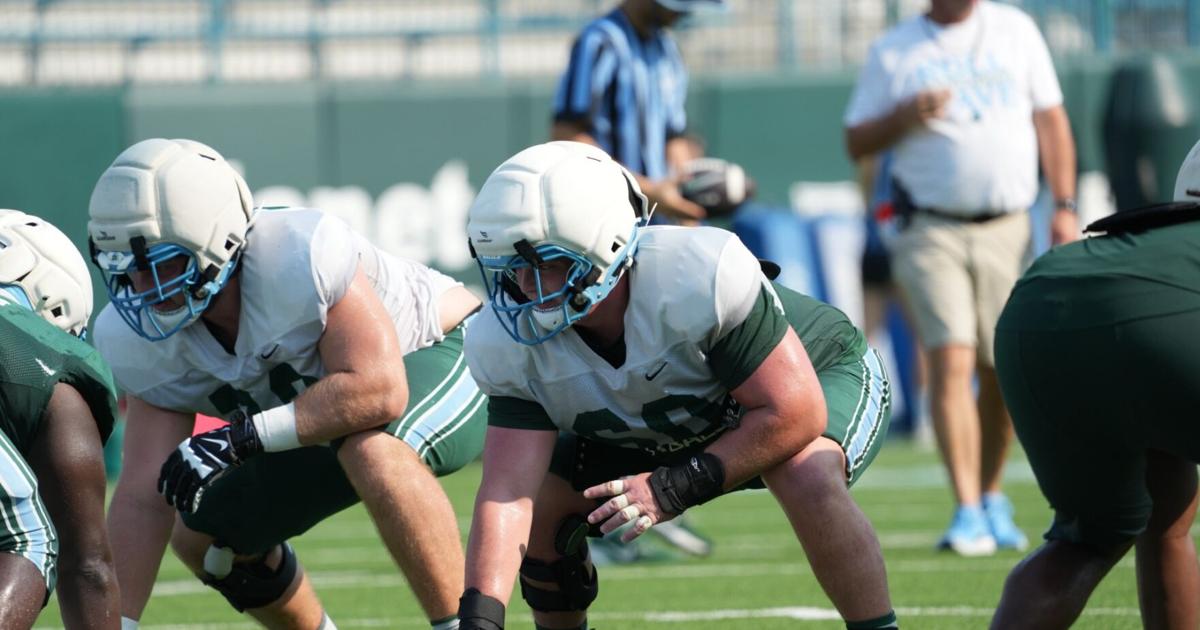
Source: Nola Sports. Casualplayhub News adds summary, context, and editorial framing while linking back to the original report.
Two years ago, Gavin Marks was a high school senior fighting for his life. Now, he is preparing to anchor Tulane's offensive line against Duke at center. The transformation is stunning, but for those who know him, it is simply the next chapter in a story defined by relentless determination.
Marks was diagnosed with Hodgkin lymphoma in November 2024, just after his final regular-season game for Rolesville High in Wendell, North Carolina. While his teammates chased a Class 4A state championship, he spent two weeks in the hospital before beginning six months of outpatient chemotherapy. The cancer had already reached its middle stage, with a tumor growing between his heart and lungs. Earlier that summer, he noticed rashes on his skin that he dismissed as poison ivy, and a persistent cough was misdiagnosed as pneumonia. Then one morning, he told his mother he felt like he was breathing through a straw. An X-ray led to a CT scan, and a phone call demanding he return to the hospital immediately.
"My mom broke down, but I was cool," Marks recalled. "It was chill."
That calmness never wavered. Two days after the diagnosis, Mercer officials assured his father that his scholarship would be honored. The chemo sessions were brutal, but Marks refused to stop working out. He posted videos on Instagram of himself bench pressing hours after treatment. "I would go to the gym right after," he said. "I'd feel like crap and go throw up in the bathroom, but I wouldn't miss a day."
He lost little weight, crediting his daily workouts. The mental toll was heavier. "Honestly, you want to quit, but I had so much support around me," Marks said. "It gave me a new perception on life like everything's not just going to be given to you. Everything can be taken away in a moment, and that's really stuck with me."
By May 2025, he was declared cancer-free. He arrived at Mercer 22 days later, determined to win the starting center job despite the program recruiting a player to replace him. He started 10 games, allowed zero sacks, and helped the Bears go undefeated in the Southern Conference, earning FCS freshman All-America honors.
When he entered the transfer portal, Tulane had a hidden advantage: offensive line coach Cody Kennedy. Marks' trainer in Wendell had played for Kennedy at UNC-Pembroke, and he vouched for the coach. "We loved him when we recruited him," Tulane coach Will Hall said. "He has unbelievable tenacity. He understands how to overcome adversity."
A foot injury to starting center John Bock in preseason camp opened the door. Marks, listed at 6-foot-3 and 297 pounds—about 20 pounds lighter than Bock—has been taking first-team reps ever since. Bock has not been ruled out, but he is unlikely to play Saturday. Marks feels ready. "I'm very comfortable," he said. "I have great coaching around me, and there's nothing I'm not ready for. I'm a smart player, pretty athletic. I try to be calm under pressure and keep everybody else under the same calmness."
His teammates see it every day. Right guard Reese Baker called him "a strong dude" and "a tough guy who keeps rolling," adding that Marks is knowledgeable and gets everyone on the same page. Marks rarely brings up his cancer battle, preferring to let his work speak.
Now, as he prepares to face Duke's defensive line, the stakes are clear. This is not just a game; it is a testament to survival, grit, and the refusal to let a diagnosis define a future. Marks has already won the hardest fight. Saturday is just another step.
Author email
Article commentary
Gavin Marks' story is more than a feel-good sports narrative; it is a case study in resilience, institutional support, and the often-overlooked role of community in athletic recovery. In a landscape where college football emphasizes physical dominance, Marks' journey from a stage 2 Hodgkin lymphoma diagnosis to starting center for Tulane underscores how mental fortitude can be as critical as raw strength. One striking aspect is the timing. Diagnosed in November 2024, he completed chemotherapy by May 2025 and immediately earned FCS All-America honors at Mercer. That rapid return to elite performance—while still undergoing treatment—challenges the assumption that cancer recovery necessitates a long hiatus. Marks' discipline, working out every day even after chemo, suggests a psychological strategy where routine becomes a shield against despair. Coaches and sports psychologists might study his approach as a model for athletes facing catastrophic health setbacks. The role of institutional commitment cannot be overstated. Mercer's decision to honor his scholarship within two days of diagnosis provided a safety net that allowed Marks to focus on treatment rather than financial uncertainty. This stands in contrast to the often-cited precariousness of athletic scholarships. Tulane's willingness to integrate him after a transfer further highlights a system that, at its best, values character over immediate stats. Coach Will Hall's praise for Marks' "unbelievable tenacity" reflects a recruitment philosophy that prizes adversity-tested athletes. Yet the narrative also raises questions about the culture of toughness in football. Marks' admission that he would "throw up in the bathroom" during workouts while hiding his discomfort from teammates mirrors a broader sports ethos where vulnerability is masked. While his personal resilience is admirable, it also points to a systemic pressure that can discourage athletes from seeking help or pacing themselves. The IVs and vomiting were signs of overexertion, yet he framed them as badges of honor. Balancing grit with health awareness remains a challenge for programs. From a competitive standpoint, Marks' transition to center for Tulane against Duke is a significant test. Duke's defensive line is known for speed and stunts, and a lighter center (297 pounds vs. Bock's 317) may struggle with bull rushes. However, Marks' quickness and intelligence—he prides himself on being "calm under pressure"—could be assets. His experience at Mercer, where he allowed zero sacks, suggests he can handle elite FCS competition; the jump to FBS will be a different measuring stick. Off the field, Marks' story offers a powerful counter-narrative to the cynicism often surrounding college sports. It reminds us that athletes are not just commodities but individuals whose lives extend beyond the gridiron. The calmness he displayed during his diagnosis and treatment—"It was chill," he said—offers a lesson in perspective that resonates far beyond football. For a sport that often glorifies invincibility, Marks' vulnerability and triumph humanize the game. In the end, whether Tulane wins or loses Saturday, Marks has already secured a victory that transcends the scoreboard. His journey is a reminder that the most important battles are not always fought on the field.