Alcaraz Overcomes First-Set Deficit to Reach US Open Third Round
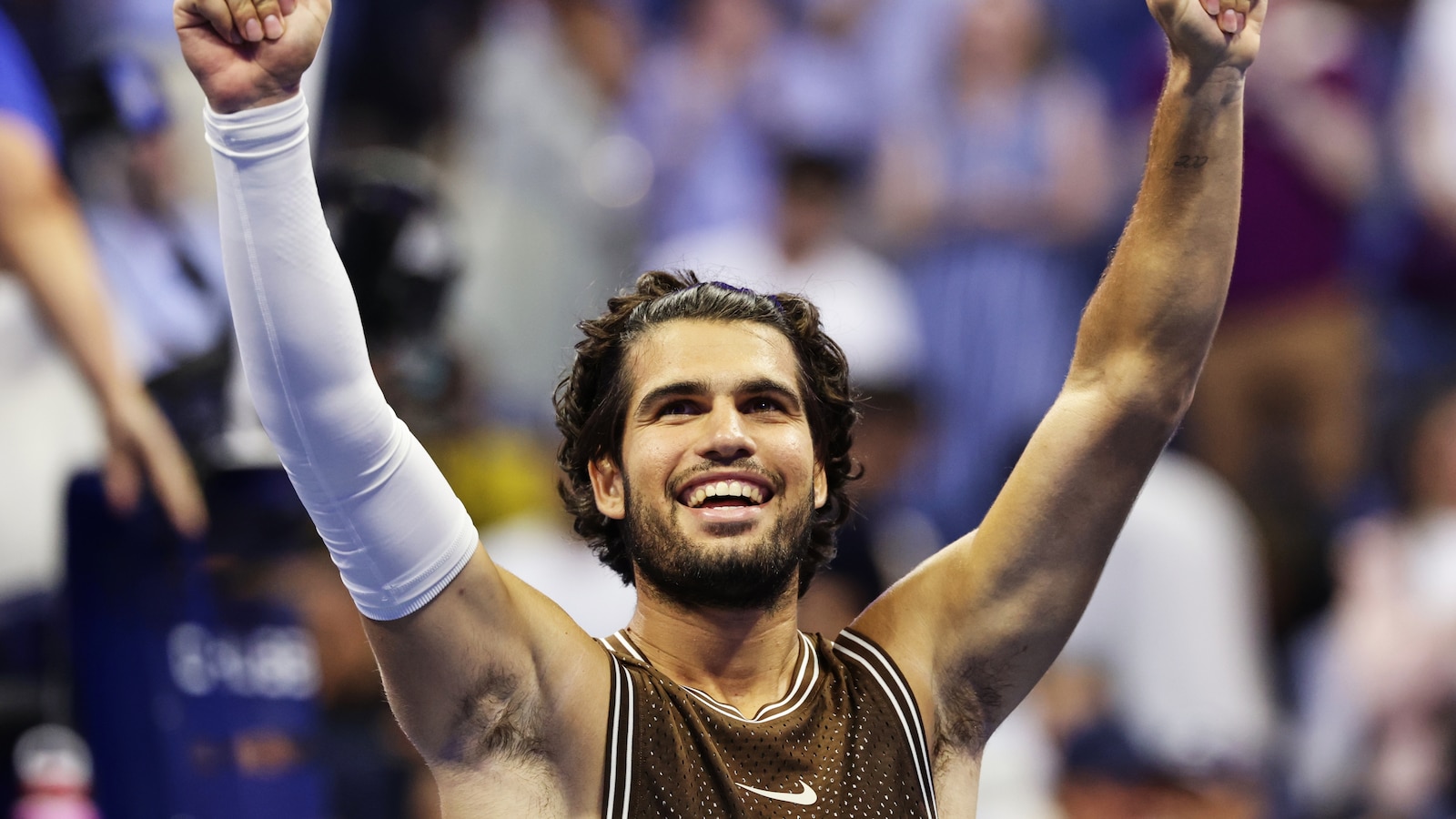
Source: ABC News Sports. Casualplayhub News adds summary, context, and editorial framing while linking back to the original report.
NEW YORK -- Carlos Alcaraz found himself in an unfamiliar position during his second-round match at the US Open on Wednesday night. The defending champion lost the first set to Jaime Faria, a Portuguese player three months his junior, marking the first time he had dropped a set this early in the tournament since 2022. Last year, Alcaraz did not lose a set until the final against Jannik Sinner, a run that mirrored Roger Federer's 2015 feat. This time, after a 4-6 opening set, Alcaraz needed to dig deep.
Faria broke Alcaraz's serve to take a 4-3 lead in the first set, leveraging a powerful serve to stay ahead. Alcaraz acknowledged that after being broken, he started rushing. "I wanted to be quick, to be honest. I'm not going to lie," Alcaraz said. "But at the end, I realized that just playing four sets, it was really good for me to test everything physically, to test my body, how I feel, and tomorrow how I'm going to feel after this match."
The Spaniard responded by winning eight consecutive games, storming through the second set 6-0 and taking control of the third. He closed out the match 6-3, 6-2, showcasing the form that has earned him seven major titles, including the Australian Open earlier this year. Alcaraz is currently on a 16-match winning streak in Grand Slam tournaments, a stretch that began after his 2023 US Open triumph.
Alcaraz's path to this year's US Open was complicated by a right wrist injury that sidelined him for four months, forcing him to miss the French Open and Wimbledon. Even he admitted uncertainty about his form entering Flushing Meadows, where he won his first major title at age 19 in 2022. "After that I just tried to be focused, tried to stay calm and I'm thinking that good things are going to happen again," he said.
Daniil Medvedev, the 2021 US Open champion, offered a vote of confidence. "We have no idea how Carlos' wrist is going to feel, body is going to feel going later into the tournament, but he's definitely a top favorite for the title," Medvedev said.
Alcaraz stressed that he is no longer in pain and has been hitting his forehand without restrictions in practice. "I know once I step on the court, I've just got to go for it every time. I've got to feel normal," he said. "I have to hit like I was hitting before the injury, and let's see what happens after that. I'm just feeling great. There is no reason to be afraid and not hitting normal."
Faria, ranked outside the top 100, fought hard in the first set and showed flashes of promise. But Alcaraz's experience and firepower proved too much as the match progressed. The defending champion now moves into the third round, where he will face an opponent yet to be determined. His next challenge will be to maintain his level while managing the physical demands of a tournament that he has already won twice.
Article commentary
Carlos Alcaraz's second-round victory at the US Open was far from routine, yet it may prove to be a valuable test for the defending champion. The early setback of losing the first set to Jaime Faria forced Alcaraz to confront uncertainties about his fitness and rhythm after a four-month injury layoff. His ability to recalibrate and dominate the next three sets underscores not only his resilience but also the depth of his game. The 16-match Grand Slam winning streak is remarkable, but it comes with heightened expectations. In 2023, Alcaraz cruised through the draw without dropping a set until the final, a feat that set a high bar. This year, he has already shown vulnerability, which could be either a weakness or a catalyst for growth. Alcaraz's wrist injury remains a lingering concern. While he asserts that he feels no pain and is hitting freely, the physical toll of a best-of-five match format cannot be underestimated. The extra court time he gained against Faria might be beneficial for testing his body's response, but it also exposes him to potential fatigue later in the tournament. Medvedev's comment that Alcaraz is a top favorite is valid, but the Russian's own experience shows that form can be unpredictable. The field is deep, with players like Jannik Sinner, Novak Djokovic, and Daniil Medvedev himself all capable of challenging Alcaraz. Another aspect worth examining is Alcaraz's mental approach. His admission of wanting quick points after being broken reveals a tactical flaw that he corrected by committing to longer rallies. This self-awareness is a hallmark of great champions. However, the pressure of defending a title, especially after missing two majors, adds a layer of complexity. Alcaraz's youth (23) and previous success at Flushing Meadows suggest he can handle it, but the road ahead will test his composure. The emergence of younger players like Faria, who pushed Alcaraz in the first set, signals that the next generation is hungry. Alcaraz is no longer the surprise package; he is the target. Every opponent will bring their best, and the margin for error shrinks. If Alcaraz can maintain his health and continue to adapt his game, he remains the player to beat. But the US Open is notorious for upsets, and a slow start could be a precursor to a deeper struggle. For now, Alcaraz has passed the first real test, but the tournament is only just beginning.