Toilet Paper Shortage Fears Return as Canada Tariffs Hit Home
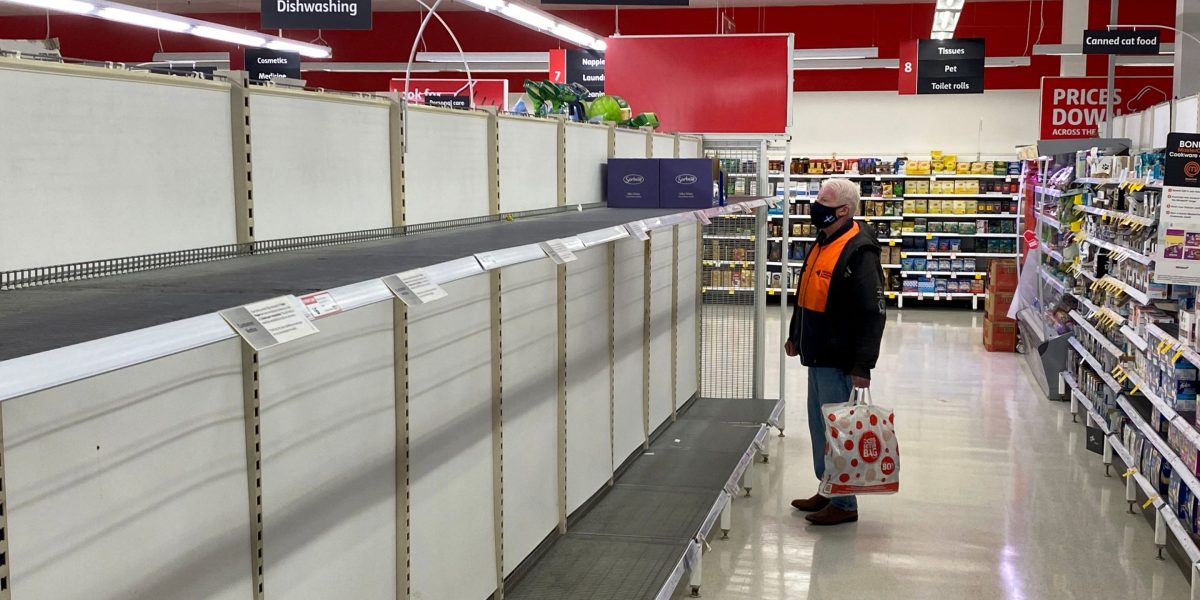
Source: Fortune. Casualplayhub News adds summary, context, and editorial framing while linking back to the original report.
Ad eligibility review: sensitive-topic
The memory of empty supermarket aisles and rationed rolls may feel like a distant nightmare, but an unlikely combination of trade policy and political brinkmanship is threatening to drag Americans back into a toilet paper crisis. Six years after the pandemic triggered a 734% spike in U.S. toilet paper sales on a single day in March 2020, the product has become a symbol of economic anxiety once again—this time tied to a trade war between the United States and Canada.
Trade talks between the two nations collapsed in late August 2026. Washington responded by invoking Section 338 of the Tariff Act of 1930, a Depression-era statute that allows the president to impose retaliatory tariffs on countries deemed discriminatory against U.S. commerce. The resulting 50% tariff applies to roughly $20 billion (C$27.6 billion) of Canadian goods. Canadian Prime Minister Mark Carney, vowing to match the U.S. "dollar for dollar," unveiled retaliatory duties on nearly 900 American products, set to take effect September 8.
Among the hardest-hit categories are paper goods. Canada is imposing a 25% tariff on U.S. toilet paper and facial tissue, and a 50% tariff on paper towels, napkins, and raw wood pulp. The dispute extends beyond the bathroom: Canada is also slapping 50% duties on American dairy products (excluding cheese, which gets 25%) and 25% on American fish and seafood, including frozen lobster—a move that drew sharp criticism from Maine Senator Susan Collins. The U.S. has placed a 25% tariff on Canadian cars and auto parts, with Trump threatening to double that to 50% if no deal is reached by January 1, 2027.
To cushion the blow for domestic businesses, Ottawa announced a C$7.5 billion relief package aimed at small and medium Canadian enterprises hurt by the standoff.
The numbers paint a stark picture of dependency. Americans make up just 4% of the global population but consume more than 20% of the world's tissue supply, averaging 141 rolls per person annually—the highest rate globally, ahead of Germany's 134. In 2024, Canada supplied $328 million worth of toilet paper to the United States, more than any other country. Retail giants like Costco source much of their private-label paper stock from Canadian mills. The supply chain is deeply integrated: U.S. factories rely on northern bleached softwood kraft pulp (NBSK), harvested from Canadian forests, which constitutes roughly 30% of a standard American toilet paper roll and close to half of U.S. paper towel production. American mills purchase about 2 million tons of Canadian NBSK each year.
Procter & Gamble, the maker of Charmin, has already warned that tariffs are creating a roughly $0.25-per-share earnings headwind and is raising prices on a significant portion of its product lineup. Federal Reserve research indicates that tariffs are now seeing "full pass-through" to consumer prices, meaning Americans are bearing 96% of the cost of Trump's trade measures.
The American Forest & Paper Association, which declined to comment for this article, has argued that any shortages would be localized rather than national. Still, the organization is urging consumers not to stockpile ahead of the September 8 deadline.
For President Trump, the timing is politically perilous. With midterm elections approaching, his economic approval ratings have slipped. Only 39% of Americans approve of his overall job performance, and just 30% approve of his handling of inflation. A 31% plurality named inflation and prices as their top concern—17 points ahead of jobs and the economy, the next most-cited issue. Even Marc Short, who served in Trump's first administration, has acknowledged that it is difficult to argue the tariffs are not contributing to the affordability problem. Goldman Sachs research shows that the cost of living is voters' top issue at a higher share than heading into the 2024 election.
Toilet paper, once a mundane household staple, has become a barometer of economic confidence. The 2020 panic, which researchers later concluded was driven almost entirely by hoarding rather than any actual production failure, saw shelves stripped bare for weeks. Bamboo-paper startups reported Amazon sales surges of more than 5,000% month over month as desperate shoppers sought alternatives. Now, with the same president facing a similar crisis of confidence, the question is whether history will repeat itself—or whether voters will flush the memory.
Article commentary
The return of toilet paper to the center of a political and economic storm is a striking reminder of how quickly trade policy can intersect with everyday life. What may seem like a trivial commodity—a roll of toilet paper—has become a powerful symbol of vulnerability in global supply chains and a potent political weapon. The current situation, triggered by the collapse of U.S.-Canada trade talks and the invocation of a Depression-era tariff law, is not simply a repeat of the 2020 pandemic panic. It is a fundamentally different crisis rooted in deliberate policy choices rather than an unforeseen viral outbreak. One key insight from the data is the sheer scale of American dependence on Canadian paper products. The U.S. imports $328 million worth of toilet paper from Canada annually, and American mills rely on Canadian NBSK pulp for a significant portion of production. This interdependence means that any tariff—whether applied by Washington or Ottawa—will ripple through the supply chain and ultimately hit consumers. The Federal Reserve's finding of "full pass-through" to consumer prices suggests that the cost of these tariffs is not being absorbed by corporations but passed directly to shoppers. Procter & Gamble's decision to raise prices highlights how quickly trade friction translates into household expenses. From a political perspective, the timing could not be worse for President Trump. The midterm elections are approaching, and his approval ratings on inflation are abysmal. The fact that even former administration officials like Marc Short are publicly questioning the wisdom of the tariffs underscores the political risk. The 2020 toilet paper shortage was a chaotic, once-in-a-century event linked to a global health emergency. The 2026 shortage—if it materializes—would be a self-inflicted wound, the result of a trade war that the president initiated. That distinction matters to voters, who are already listing the cost of living as their top concern at rates higher than before the 2024 election. Another layer of analysis involves the nature of the retaliatory tariffs. Canada's targeting of toilet paper, paper towels, and wood pulp is not random. It is a calculated move designed to maximize pain for American consumers in a way that is highly visible. Toilet paper is a non-discretionary item; people cannot simply stop buying it. By targeting this product, Ottawa is sending a clear message that trade wars have real consequences for everyday life. The inclusion of dairy and seafood broadens the impact, hitting agricultural sectors that are politically sensitive in key states like Maine. The response from industry groups—urging consumers not to stockpile—reflects an awareness of the psychological dynamics at play. The 2020 shortage was almost entirely driven by hoarding, not a breakdown in production. If consumers panic again, the shortage could become a self-fulfilling prophecy. The American Forest & Paper Association's plea may not be enough to prevent a repeat, especially given the heightened political tension and media coverage. Finally, this episode raises broader questions about the effectiveness of tariffs as a policy tool. The original justification for the U.S. tariffs—retaliation against Canadian trade practices—may be legally sound under Section 338, but the economic fallout is clearly being borne by American households. The relief package announced by Ottawa, while aimed at helping Canadian businesses, does nothing to ease the burden on U.S. consumers. As the midterms approach, the White House will need to weigh the political benefits of a tough stance on trade against the very real risk of alienating voters who are already feeling the pinch at the grocery store—and in the bathroom aisle.