Cartel Warfare: Drone Bombs and Car Bombs Fuel Mexico's Escalating Violence
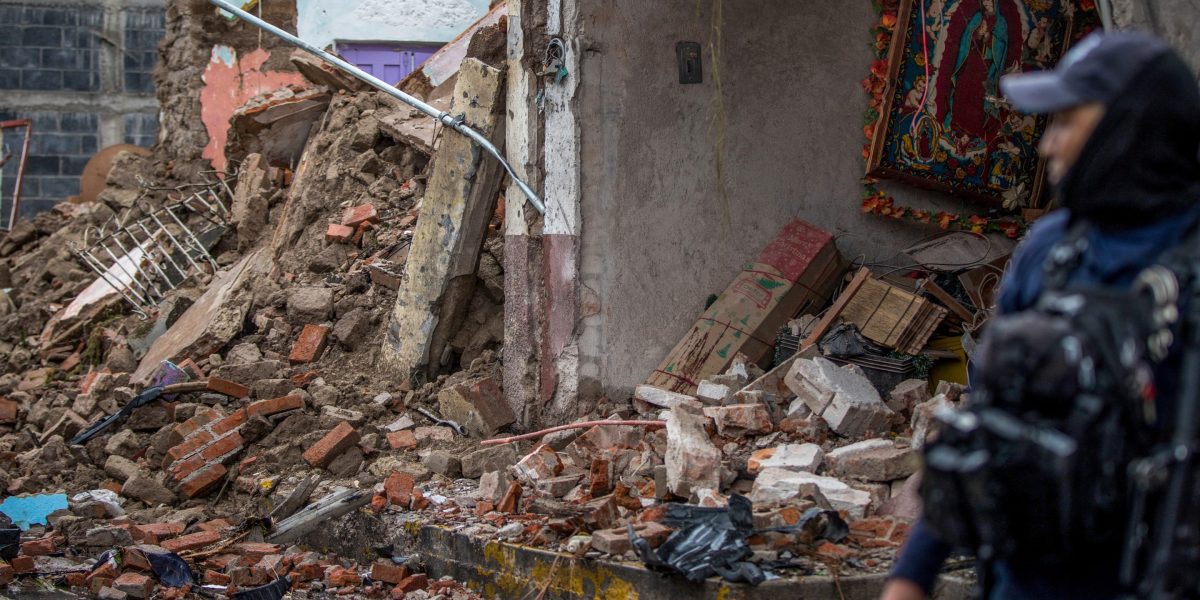
Source: Fortune. Casualplayhub News adds summary, context, and editorial framing while linking back to the original report.
Ad eligibility review: sensitive-topic
For years, Mexican drug cartels relied on firearms and brute force to control territory and eliminate rivals. That landscape is shifting. A growing arsenal of improvised explosive devices, car bombs, and drones rigged with explosives now marks a new chapter in the country's brutal drug war. The trend is raising alarms both in Mexico and across the border, where U.S. President Donald Trump has repeatedly threatened military action against the cartels. The latest episode unfolded on a Sunday night in Ojocaliente, a small town in Zacatecas, roughly 360 miles northwest of Mexico City. A bomb packed with 200 kilograms of explosives—about 440 pounds—detonated outside a police station. No one was killed, but the blast injured 11 people and shattered windows and walls of more than 60 homes in the city center. Mexico's security chief Omar García Harfuch confirmed the details during a visit to the state alongside President Claudia Sheinbaum on Friday. Ojocaliente sits in the heart of Zacatecas, a state that has become a battleground between the Jalisco New Generation Cartel (CJNG) and the Sinaloa Cartel. State Attorney General Cristian Paul Camacho reported that Zacatecas has recorded 23 attacks involving explosives this year alone, six of which involved cars or motorcycles rigged with bombs. The violence is not entirely new. Victor Manuel Sánchez, a University of Coahuila professor who has tracked car bombings in Mexico for decades, traces the origins back to 1994, when the Tijuana Cartel targeted Sinaloa Cartel co-founder Ismael "El Mayo" Zambada in Guadalajara. More recently, the CJNG has become the most prolific user of explosives, according to Sánchez. The group is believed to be behind two recent bombings in small city centers: one in Michoacán in December that killed five people, and the Ojocaliente attack. The CJNG is among the organizations designated as foreign terrorist organizations by the Trump administration. The broader use of explosives began about five years ago, when cartels started dropping bombs from drones to strike security forces or rival gangs. They also began burying explosive devices in the ground to control territory. In 2023, roadway bombs planted in western Jalisco killed six people and injured 14. A month later, the Mexican military released its first figures on the threat, reporting that it had seized roughly 2,800 explosive devices nationwide over the previous four and a half years. In 2024, authorities deactivated nearly 3,200 devices in Michoacán alone. This year, an explosive device in Michoacán killed eight soldiers, marking one of the deadliest such incidents in Mexico. Nationwide figures for 2025 have not been released. "It is all a bad development in Mexico," said Vanda Felbab-Brown, an organized crime expert at the Brookings Institution. "We are facing steady intensification of violence. This certainly greatly intensifies the atmosphere of fear and retaliation." President Sheinbaum, however, countered that nationwide killings have declined, calling it evidence that her government's strategy is working. Experts see the car bombs and drones as tools of intimidation. Carlos Pérez Ricart, an international studies professor at Mexico's CIDE university, explained that these attacks draw attention and can be used to pressure authorities into negotiations, especially when criminal groups feel threatened. "The answer to terrorism is the disappearance of the enemy," Pérez Ricart said, noting that in the drug trade, the adversary is not just an armed group but an entire illegal market. Mexico has long avoided labeling cartel violence as terrorism, partly out of fear that such a designation could invite foreign intervention and hurt tourism and investment. Another argument is that terrorism typically involves political or ideological motives, while cartels are driven by profit. Yet civilians have been deliberately targeted before. In 2008, grenades thrown into Independence Day crowds in Morelia killed eight people and wounded dozens. In 2011, gunmen set fire to a casino in northern Mexico, killing 52. The Trump administration's designation of eight Mexican cartels as foreign terrorist organizations—and its use of that framework to justify military action—has made the terminology more consequential. Legal challenges are mounting both in the United States and abroad. As the cartels continue to innovate, the line between organized crime and terrorism blurs, and the stakes for both Mexico and the United States grow ever higher.
Article commentary
The escalation of bomb-laden drones and improvised explosive devices in Mexico's drug war marks a significant tactical shift that carries profound implications for security, politics, and international relations. While car bombs and explosives are not new to the country—the 1994 Guadalajara attack and the 2008 Morelia grenade attack are grim reminders—the current scale and sophistication suggest a deliberate strategy by cartels to maximize psychological impact and operational control. The use of commercial drones to deliver explosives allows for precision strikes with minimal risk to the perpetrators, a tactic that has been employed in conflict zones like Syria and Iraq but is now being adapted to the criminal underworld. This evolution reflects a broader arms race between cartels and security forces, where innovation in weaponry outpaces traditional countermeasures. The fact that authorities in Michoacán alone deactivated nearly 3,200 devices in 2024 indicates that the threat is widespread and deeply embedded. The political context cannot be ignored. The Trump administration's designation of eight Mexican cartels as foreign terrorist organizations has already strained bilateral relations. While the U.S. government argues that this provides a legal framework for military action, critics warn that it could lead to unilateral operations on Mexican soil, violating national sovereignty. The Sheinbaum administration, for its part, has emphasized a decline in homicides as proof that its security strategy is effective. Yet the surge in explosive attacks suggests that the nature of violence is changing, not necessarily decreasing. Homicide rates may be down, but the brutality and destructiveness of individual incidents are rising. For civilians, the fear is tangible. The Ojocaliente bombing, which damaged over 60 homes, shows that cartels are willing to target densely populated areas to send a message. This blurs the line between cartel violence and terrorism, as the intent is to instill widespread terror and pressure the government. However, labeling cartels as terrorist organizations carries risks. Counterterrorism strategies are designed for ideological enemies, not profit-driven criminal networks. As Carlos Pérez Ricart pointed out, the drug trade is an illegal market, and eliminating the enemy does not eliminate the demand. The CJNG and Sinaloa Cartel are businesses at their core, and as long as the market exists, new players will emerge. The United States must also reflect on its role. American demand for drugs fuels the cartels' revenue, and the flow of weapons from the U.S. into Mexico exacerbates the violence. A purely militaristic approach, whether through drone strikes or special forces raids, is unlikely to address the root causes. Moreover, the use of drones and IEDs in Mexico creates a dangerous precedent. If these tactics become standard, security forces will face an increasingly asymmetric threat. The military's acknowledgment of the problem and the release of seizure figures indicate that the government is aware, but prevention and early detection remain challenging. The Ojocaliente attack also highlights the geographical concentration of this violence. Zacatecas, Jalisco, and Michoacán are hotspots, but the cartels' reach extends across the country. The Sheinbaum administration's focus on social programs and addressing corruption may yield long-term results, but in the short term, the cartels are adapting faster than the state. The international community has a stake in this outcome. A Mexico destabilized by cartel violence could lead to increased migration, disruption of trade, and a security vacuum that could be exploited by other criminal networks. The Brookings Institution's Vanda Felbab-Brown summed it up: "We are facing steady intensification of violence." The question is whether Mexico and the United States can find a cooperative strategy that addresses both the immediate threat and the underlying economic and social drivers. The answer will determine not just the future of Mexican security, but the stability of the entire region.