Snake Charmer to Opera Star: The Met's Unique Casting Process for a Boa
Source: Fortune. Casualplayhub News adds summary, context, and editorial framing while linking back to the original report.
The Metropolitan Opera is known for its rigorous audition process, but this season, the casting call extended to an unusual contender: a snake. In the upcoming adaptation of Mozart's 1790 opera 'Così fan tutte,' reimagined against the backdrop of a 1950s Coney Island carnival, a boa constrictor will briefly slither across the stage. And that snake had to earn its spot.
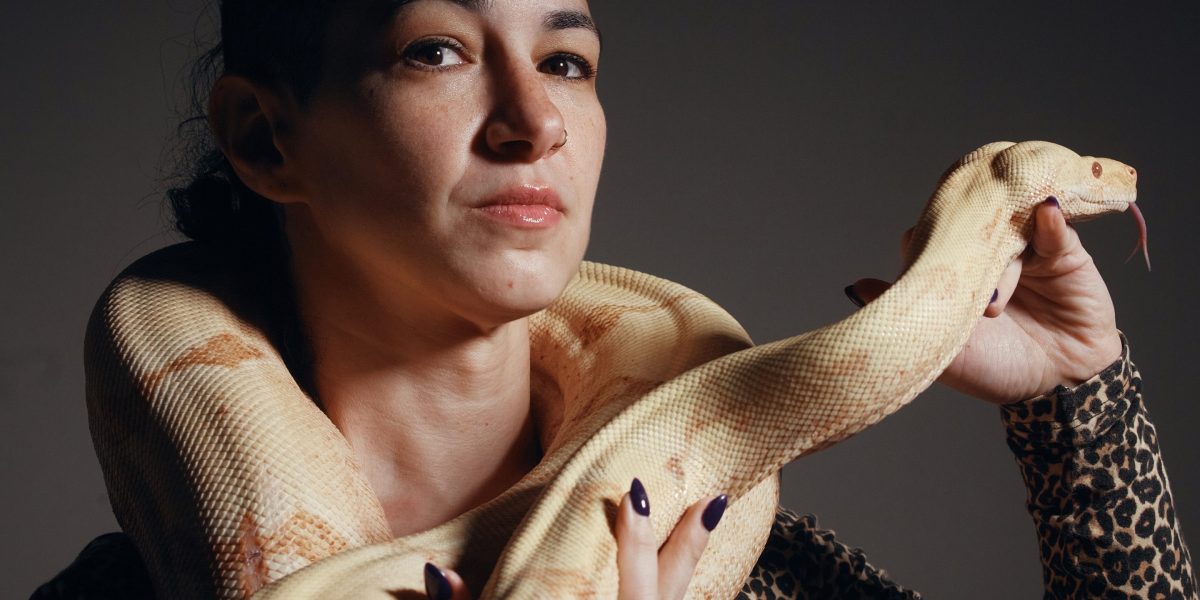
Zoe Ziegfeld, a performer who transitioned from carnival sideshows to opera, is the person responsible for this reptilian casting. Ziegfeld plays the role of the snake charmer in the production. Their career began at Coney Island, where they performed eight snake-charming shows daily for several seasons. When they first auditioned for the Met years ago, live snakes were not permitted in the audition room. So Ziegfeld brought a video of their snake-charming routine and sealed the deal with a Human Blockhead act—hammering a nail into their own nasal cavity to demonstrate their carnival credentials.
For this production, the search for the perfect snake involved multiple auditions. Ziegfeld would take each snake, let it slither and coil around them, then lift it overhead, mimicking the movements they would perform under the bright lights on stage. The key was assessing the animal's temperament. 'I need to know that the animal is comfortable with people and with what we are doing,' Ziegfeld explained.
Two snakes initially auditioned, but they were too small. One even clashed with Ziegfeld's costume. The finalists came from Nancy Novograd's company, All Tame Animals. Novograd has been supplying the Met with animals for decades, starting when her horse appeared in a production of 'Carmen.' Her company now provides everything from elephants to insects. For this role, she emphasized that personality matters. 'Animals have to perform as do human talent. Sometimes they have a set type of behaviors that they have to demonstrate. And sometimes they just have to get along with the talent,' Novograd said. 'So in this case, they have to be the right color, size, and Zoe has to like them.'
The standout was Princess, a larger sun-glow boa constrictor with a yellow-peach coloration that offered a strong visual presence on stage. 'We will be moving forward with Princess in rehearsals on a trial basis! She is a wonderful snake, and the trial is not about her, but rather about me and my strength,' Ziegfeld wrote in an email after the auditions concluded. A smaller brown boa named Nala from a second audition will serve as Princess's understudy.
This is the third time Ziegfeld has taken on the role of the snake charmer in this Met adaptation. The original Mozart plot remains largely intact: two Italian soldiers pretend to go to war to test their lovers' fidelity, then disguise themselves to seduce each other's girlfriends. But the setting shifts to a Coney Island carnival, complete with vibrant scenery and sideshow performers.
Ziegfeld finds surprising parallels between the opera house and the carnival. 'The music's different. The money is different. It's a pleasure to entertain. And with snakes, it's a delight to know that there are people watching who are in awe and people who are terrified. And those things happen at the Met and at Coney—so I would say they are more alike than different, to be honest,' they said.
The production offers a unique blend of high art and popular entertainment, with a snake handler who brings authentic carnival flair to Mozart's classical score. Princess the boa will have her moment in the spotlight, and Ziegfeld will be there to ensure everything goes smoothly, drawing on years of experience charming audiences—and reptiles.
Article commentary
The story of Zoe Ziegfeld and the snake auditions at the Metropolitan Opera is a fascinating intersection of high culture and lowbrow entertainment, revealing the porous boundaries that define contemporary opera. On one level, it's a charming human-interest piece: a former carnival performer bringing their unique skills to a prestigious institution. But it also raises deeper questions about authenticity, spectacle, and the evolving nature of opera as an art form. Opera has long been a space for grand gestures and dramatic flourishes, but the inclusion of a live animal—especially one as symbolically charged as a snake—adds a layer of unpredictability and raw sensation. The snake is not merely a prop; it's a performer with its own temperament, requiring a handler who understands both animal behavior and stagecraft. Ziegfeld's background in carnival sideshows, where they performed eight times a day, is not so different from the rigorous demands of an opera run. Both require stamina, showmanship, and the ability to connect with an audience that may be alternately awed or terrified. What makes this casting process particularly noteworthy is the transparency with which the Met has approached it. By allowing the public to see the behind-the-scenes auditions—through Ziegfeld's own social media posts and interviews—the opera house demystifies its own production process. This aligns with a broader trend in the arts toward authenticity and relatability. Audiences today crave stories that feel real, even when they are set in fantastical worlds. The narrative of a snake auditioning for a role, complete with an understudy, humanizes the opera and makes it accessible to those who might otherwise find it elitist. Yet there is also a tension here. The Met's choice to set 'Così fan tutte' in a 1950s Coney Island carnival is a deliberate attempt to inject popular culture into a classic work. But does this risk trivializing Mozart's original? The opera's themes of fidelity, deception, and human folly are universal, and the carnival setting can amplify those themes—the chaos of a sideshow mirrors the chaos of romantic entanglements. However, some purists might argue that the addition of a live snake is a gimmick, a distraction from the music. Ziegfeld's own comment that the trial is about 'my strength' rather than the snake's performance suggests that the human element remains central. The snake is a tool, not a co-star. From a broader perspective, this story underscores the changing economics of opera. Institutions like the Met are increasingly reliant on spectacle to draw crowds. A live snake, a Coney Island aesthetic, and a performer with a Human Blockhead act are all attention-grabbing elements that can sell tickets. But they also represent a shift from the traditional focus on vocal prowess and musical interpretation toward a more theatrical, immersive experience. This is not necessarily bad—opera has always been a multimedia art form—but it does reflect a tension between preserving tradition and innovating for modern audiences. Finally, the story highlights the role of animals in performance. Nancy Novograd's company, All Tame Animals, supplies a wide range of creatures, highlighting the ethical considerations of using animals on stage. While Ziegfeld emphasizes the snake's comfort and well-being, the very act of auditioning an animal for a role raises questions about consent and welfare. The Met's production is a delicate balance: it must entertain without exploiting. In this case, the snake's 'personality' is assessed, and the trial run is about the human's strength, not the animal's suitability. This careful framing suggests a thoughtful approach, but it also reminds us that the line between performance and exploitation can be thin. In the end, the story of Princess the boa is a microcosm of modern opera: a blend of tradition and novelty, high art and popular culture, human skill and animal instinct. It invites audiences to reconsider what opera can be, while also offering a moment of pure, unscripted wonder.