Ben Simmons Signing Could Make De'Andre Hunter a Trade Chip
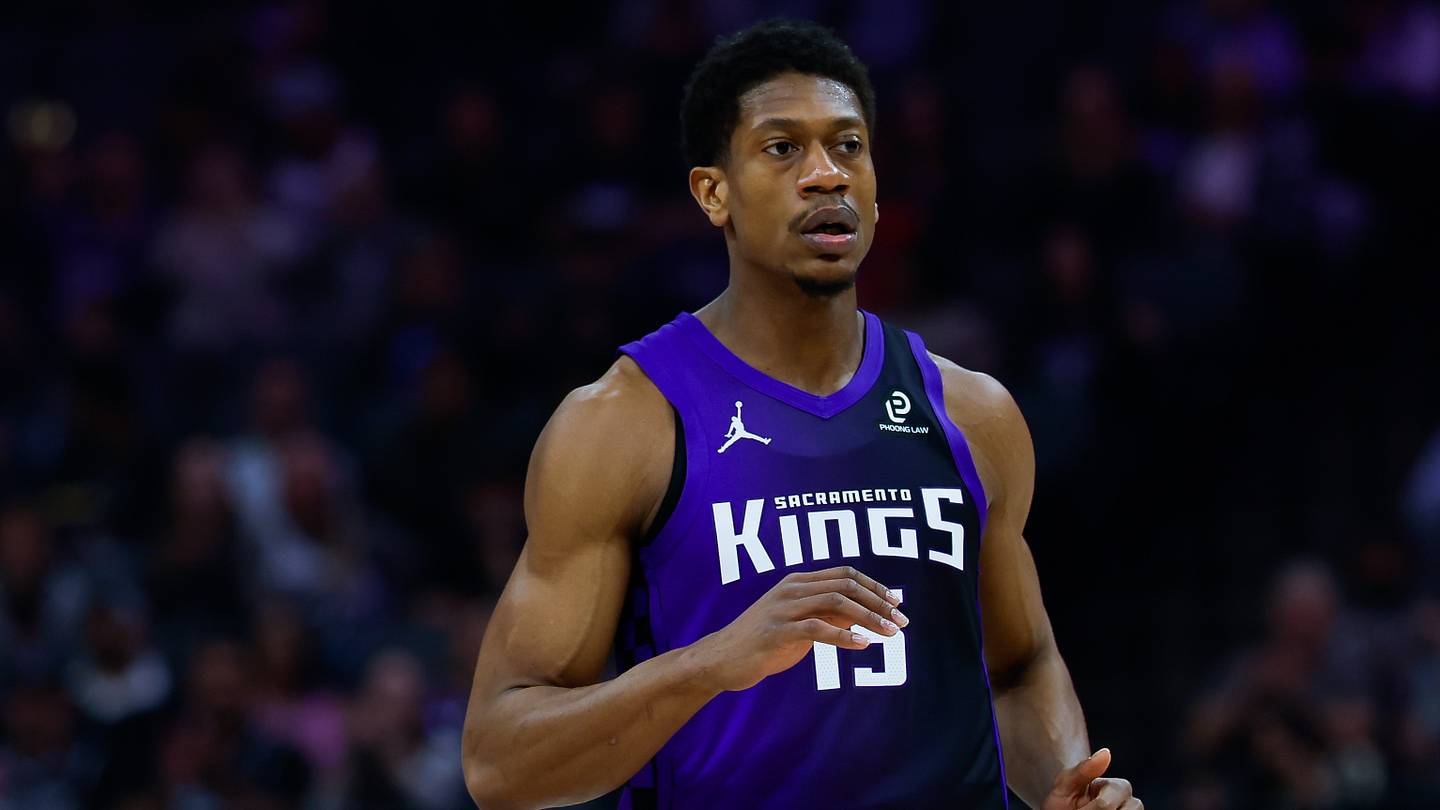
Source: SI NBA. Casualplayhub News adds summary, context, and editorial framing while linking back to the original report.
Ad eligibility review: sensitive-topic
The Sacramento Kings are heading into the 2026-27 NBA season with a roster that sparks more questions than answers. They have a promising rookie in Darius Acuff Jr., selected seventh overall, who is expected to become the franchise's next face. Alongside him, three veterans—Domantas Sabonis, Zach LaVine, and Malik Monk—each face uncertain futures with the team. And then there is Ben Simmons, returning to the NBA after a tumultuous period, looking to reestablish himself as a force on the court. Amid all this, the situation surrounding De'Andre Hunter has quietly become one of the most intriguing subplots in Sacramento.
Hunter arrived at the Kings last year via a trade deadline deal that sent fan favorite Keon Ellis and Dennis Schröder to the Cleveland Cavaliers. General manager Scott Perry saw Hunter as a perfect fit: a switchable wing who can defend multiple positions, knock down three-pointers, and either start or come off the bench. That archetype is exactly what the Kings have been chasing for years. But now, with Hunter playing on an expiring $24.9 million contract, his future in Sacramento is far from secure.
Perry has been careful not to commit to Hunter long-term, and that ambiguity is intentional. The Kings have multiple paths they can take. On one hand, Hunter is the kind of player who can help a team win now. His two-way ability makes him a valuable piece in today's NBA, where versatile wings are at a premium. On the other hand, that same versatility makes him an attractive trade chip. An expiring contract is a precious commodity in a league where teams are hesitant to take on long-term salary. Hunter, therefore, could be the easiest player Perry has ever tried to move since taking over the GM role.
The signing of Ben Simmons adds another layer to this puzzle. Simmons, once an All-Star, is looking to prove he can still contribute at a high level. His versatility as a playmaking forward gives the Kings another option at the wing spot. If Simmons performs well, it could make Hunter expendable, allowing Sacramento to trade him for assets that better fit the team's long-term plans. Conversely, if Hunter clearly outperforms Simmons—which is a real possibility given the recent trajectories of both players—Hunter's value on the trade market would only increase.
It is a circular logic that keeps the Kings in a flexible position. The returns for LaVine and Sabonis have been underwhelming, so trading Hunter could help offset those disappointments. Perry has to decide whether Hunter is part of the core or a temporary bridge player. The answer will likely come from on-court performance. If Hunter plays well, he becomes a valuable trade asset. If he struggles, the Kings might hold onto him and hope he regains form. Either way, the addition of Simmons gives Sacramento more options than they had just days ago.
Ultimately, the Kings are in a wait-and-see mode. The season will reveal who fits alongside Keegan Murray as the long-term starter at wing. Simmons is not necessarily that answer, but his presence provides a safety net. The front office has flexibility, and that is a luxury in the NBA. Time will tell how Perry navigates this situation, but for now, De'Andre Hunter's future is more uncertain—and more intriguing—than ever.
Article commentary
The Sacramento Kings' decision to sign Ben Simmons has sent ripples through the team's roster dynamics, and nowhere is that more apparent than in the shifting status of De'Andre Hunter. At first glance, this move seems like a low-risk gamble on a former superstar who has lost his way. But looking deeper, it reveals a clever strategic layering by general manager Scott Perry. The Kings are not just adding depth; they are creating leverage. Hunter's expiring contract is a valuable asset in a league increasingly wary of long-term commitments. Teams are often reluctant to take on multi-year deals, but an expiring contract like Hunter's offers flexibility. It allows a team to clear cap space, acquire a player who can contribute immediately, or even flip him for future picks. The Kings, by signing Simmons, have essentially created a backup plan at the forward spot. If Hunter is traded, Simmons can step into a similar role, though with different strengths. This gives Perry the freedom to negotiate without desperation. What makes this situation particularly interesting is the context of the Kings' broader roster. Domantas Sabonis and Zach LaVine have not generated the trade returns the front office might have hoped for. Their contracts are substantial, and the market has been lukewarm. By contrast, Hunter's expiring deal is easier to move, and his skill set—defense, three-point shooting, positional versatility—is exactly what contending teams covet. The Kings could package Hunter with other assets to land a star, or they could simply let him walk at the end of the season and recoup something via trade. There is also the human element. De'Andre Hunter is entering a contract year, and he knows his performance will determine his next payday. That motivation can be a double-edged sword. It could lead to a career-best season, which would boost his trade value, or it could create pressure that leads to inconsistency. The Kings are betting on the former, but they have a safety net in Simmons. Ben Simmons, meanwhile, is a wild card. His return to the NBA is a story of redemption, but his recent history suggests he is no longer the player he was in Philadelphia. He can still defend and facilitate, but his scoring ability is limited. If Simmons can regain even a fraction of his former All-Star form, the Kings will have a versatile weapon. If not, he is still a useful rotation piece. From a front-office perspective, the Kings are playing a smart game. They are not committing to any one direction. They have the flexibility to rebuild around Darius Acuff Jr. or to compete now with the veterans. The Hunter-Simmons situation is a microcosm of that broader strategy. It is a calculated move that keeps options open. Critics might argue that the Kings are simply delaying tough decisions, and there is truth to that. But in the modern NBA, flexibility is a form of power. By signing Simmons, Sacramento has made De'Andre Hunter more expendable without weakening the roster. That is a rare and valuable position to be in. The season ahead will reveal whether Perry can turn this flexibility into a tangible upgrade. For now, the Kings have given themselves a chance to pivot in any direction—and that is the best any GM can ask for.