U.S. Women Rally Past Italy 55-52 in FIBA World Cup Scare
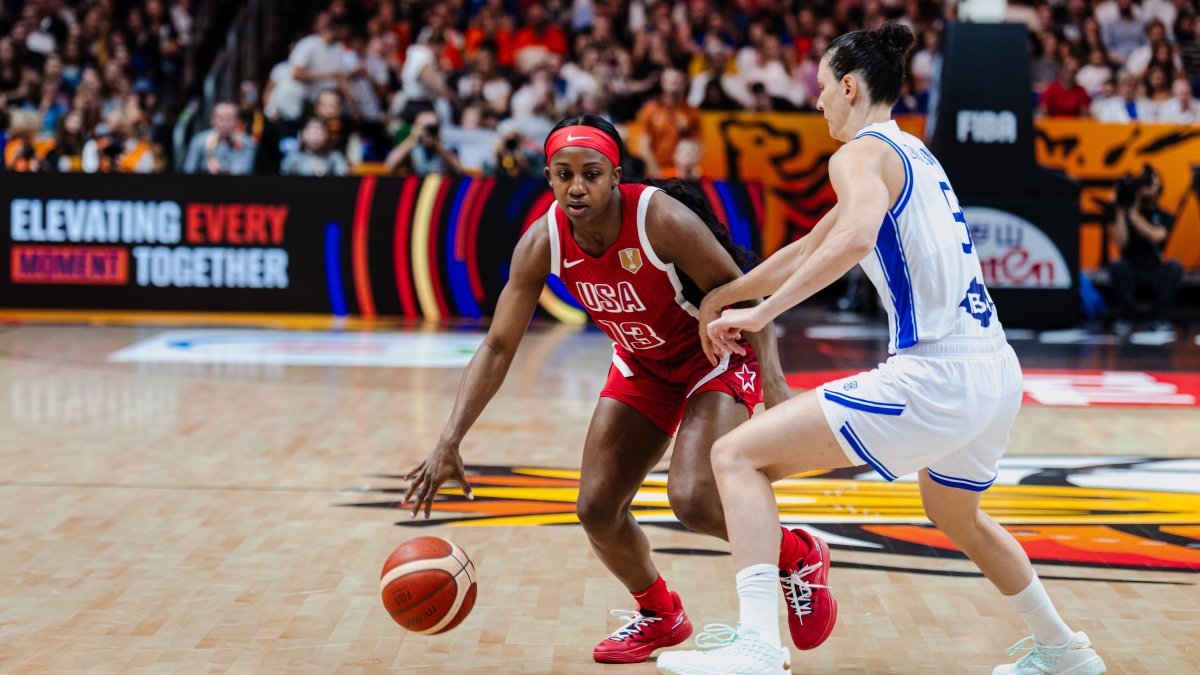
Source: NBC 5 Dallas-Fort Worth Sports. Casualplayhub News adds summary, context, and editorial framing while linking back to the original report.
The United States women's national basketball team encountered its most formidable challenge in nearly two decades during a FIBA World Cup clash against Italy on Sunday, escaping with a 55-52 victory that tested the team's composure and adaptability. Jackie Young led the Americans with 10 points in an offensively muted performance—the lowest scoring output for a U.S. win in the tournament since beating Australia 42-38 in 1967.
“You have to be able to win different ways in this tournament because every team stylistically plays a little bit different,” head coach Kara Lawson said. “You do have to be able to win when you don’t have your fastball. We didn’t have a fastball tonight, but we figured it out late and we’ll grow from it.”
The U.S. (2-0) extended its World Cup winning streak to 32 games, a run dating back to a semifinal loss to Russia in 2006. Only one team had come within single digits during that stretch—Australia lost by eight points in 2010. Yet Italy threatened to rewrite that narrative, forcing the Americans into a desperate final push.
Italy’s 2-3 zone defense dismantled the U.S. rhythm early. After racing to a 23-8 lead, the Americans stalled as Italy switched tactics, closing the half on a 16-7 spurt to trail just 30-24. The Italians carried momentum into the third quarter with an 11-2 run to take a 35-32 lead—their first advantage of the game. The U.S. answered to lead 42-39 entering the fourth, but Italy refused to fade. Cecilia Zandalasini’s steady scoring kept Italy within striking distance, and the underdogs grabbed a 50-48 lead with 4:29 remaining.
Then came the pivotal sequence. Breanna Stewart, who had missed her first eight shots, finally converted a basket to put the U.S. up 51-50. Moments later, Chelsea Gray drew an offensive foul with 3:03 left, a play Lawson described as “a big momentum changing play—an incredible winning play by Gray.” Young followed with a layup, and Gray’s jumper with 1:07 remaining gave the U.S. a 55-50 advantage. Matilde Villa cut the deficit to three, but the Americans held on as Zandalasini’s contested three-pointer at the buzzer caromed off the rim.
“Obviously, Italy really kind of mucked up the game for us a little bit,” Breanna Stewart said. “It made it difficult for us to score. They are a tough team. Tons of respect to what they’ve done. And, just proud of the resiliency of this group.”
The U.S. shot just 29% from the field, including 1-for-12 from three-point range, and missed numerous layups. Italy’s defensive discipline and energy forced the Americans into a style they rarely encounter in dominating victories. “We missed some shots. We missed some layups, some shots that we have made in the past,” Gray admitted.
Italy’s Zandalasini, who scored a game-high 14 points, later apologized for her emotional reaction toward an official after the final whistle. “I would like to apologize for how I reacted in the end,” she said. “It was a lot of emotions today, but I should have kept them inside of me a little better.”
Italy, making its first World Cup appearance since 1994, had lost to the U.S. by 34 points in a qualifying tournament just six months earlier. The gap has clearly narrowed. Coach Lawson acknowledged the broader trend: “We’ve seen that through the tournament that every game feels like a dogfight. It’s really hard. On any given night, if you’re not prepared to play, you’ll lose. That’s awesome for our sport.”
In other Sunday action, China edged the Czech Republic in overtime, Australia topped Turkey, and Belgium defeated Puerto Rico. The U.S. will now prepare for upcoming group games, knowing that opponents will study Italy’s blueprint for slowing their offense.
The game also served as a reminder of the U.S. women’s resilience. The Americans pulled off their eighth consecutive Olympic gold medal in 2024, edging France by a single point. Sunday’s scare echoed that tight margin, reinforcing that dominance in women’s basketball is no longer a foregone conclusion.
Article commentary
Sunday’s 55-52 thriller between the United States and Italy was more than a close call—it was a vivid snapshot of how the global landscape of women’s basketball is shifting. For nearly two decades, the U.S. women’s national team has operated from a pedestal of near-invincibility, winning 32 straight World Cup games and eight consecutive Olympic gold medals. Yet this matchup revealed that opponents are no longer content to simply compete; they are actively devising strategies to beat the Americans. Italy’s success stemmed from a disciplined 2-3 zone defense that disrupted the U.S. offense at every level. The Americans, accustomed to dominating through athleticism and transition scoring, struggled to find rhythm in a half-court game. Their 29% field-goal percentage and 1-for-12 showing from three-point range underscored a fundamental vulnerability: when the three-ball stops falling and easy layups are contested, the U.S. can look surprisingly ordinary. This game also highlighted the value of veteran composure. Chelsea Gray’s intelligent defensive play—drawing a charge with the game in the balance—was the kind of basketball IQ that separates championship teams from merely talented ones. Breanna Stewart, despite a brutal shooting night, found a way to contribute when it mattered most. Their ability to execute under pressure remains a hallmark of the U.S. program. From Italy’s perspective, the performance signals a significant leap. Losing by 34 in March and then pushing the Americans to the brink on the global stage shows rapid improvement. Cecilia Zandalasini emerged as a legitimate star, and the team’s tactical discipline under head coach Andrea Capobianco deserves praise. If Italy can sustain this level of play, they could be a medal contender. The broader implication is that the U.S. monopoly on women’s basketball gold is no longer a certainty. The 2024 Olympic final against France, decided by a single point, already revealed cracks. Sunday’s game reinforces that the margin for error has shrunk. Other nations are investing in player development, tactical sophistication, and athleticism. The U.S. still holds the top tier, but the gap is measurable and closing. Coach Kara Lawson’s postgame comments were telling. Her openness to “win different ways” and acknowledgment that opponents require full focus reflect a healthy respect for the competition. This adaptability will be crucial as the tournament progresses. The U.S. cannot rely solely on talent; they must adjust to defensive schemes designed to neutralize their strengths. Questions remain about the U.S. offense. The heavy reliance on individual creation rather than fluid ball movement against the zone raises concerns. Shooting percentages will likely improve, but the inability to consistently exploit gaps in a packed defense is a red flag. Teams like Australia, France, and China will take notes. Ultimately, Sunday’s game was a gift to women’s basketball. Close contests, upsets, and drama attract fans and grow the sport. The U.S. still has the depth and experience to win, but the path is no longer a coronation. It’s a dogfight—and that’s exactly what the sport needs.