Iran Plans 'Exclusion Zone' Through Strait of Hormuz
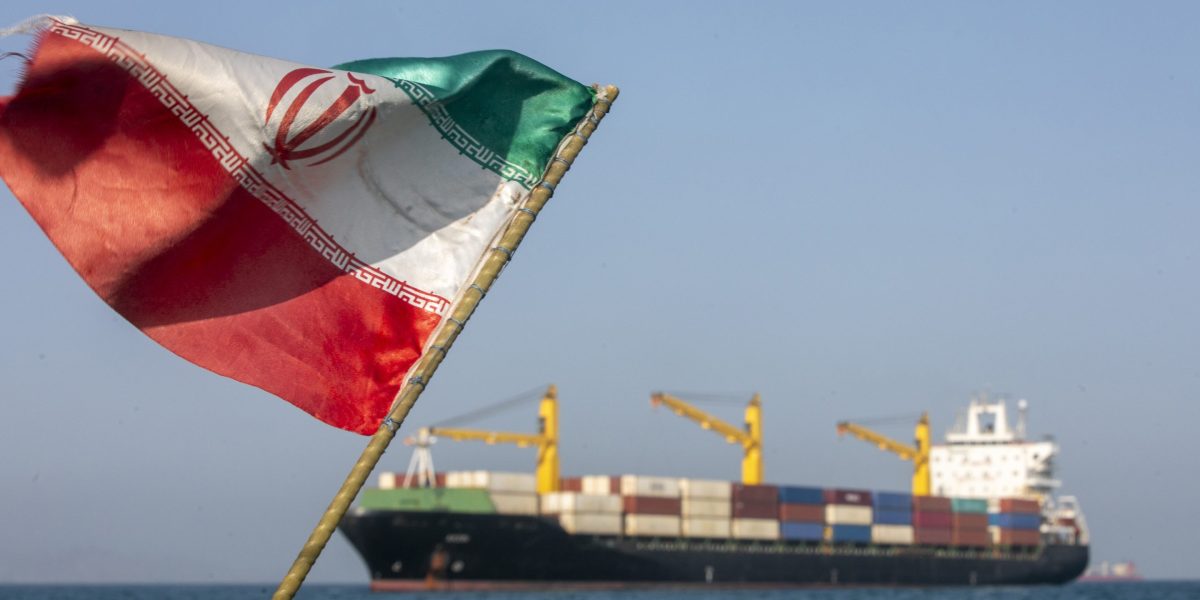
Source: Fortune. Casualplayhub News adds summary, context, and editorial framing while linking back to the original report.
Ad eligibility review: sensitive-topic
Tensions in the Middle East are escalating after Iran claimed it struck an unmanned U.S. military vessel in the Strait of Hormuz, a charge the Pentagon has flatly rejected. Captain Tim Hawkins, spokesperson for U.S. Central Command, labeled the accusation a "total lie." State-run media in Tehran had asserted that the American vessel attempted to enter a restricted area, but no evidence has been provided to support the claim.
The incident follows a pattern of retaliation. The U.S. had previously struck Iranian oil tankers in response to Iran launching ballistic missiles at Navy warships. Attacks resumed after a roughly month-long lull, with the conflict originally ignited by U.S. and Israeli strikes on Iran on February 28. A ceasefire agreement announced in June collapsed, and intermittent fighting continues as both sides seek to inflict military and economic damage.
Iran's parliament speaker, Mohammad Bagher Qalibaf, declared that the era of "proportionate responses" is over, promising retaliation that is "faster, heavier and more painful." The new head of Iran's Supreme National Security Council, Mohsen Rezaei, told state broadcaster that Tehran plans to announce an "exclusion zone" outside the Strait of Hormuz. This zone, Rezaei said, "will begin from the line of the U.S. naval blockade, extend toward the Strait of Hormuz, and from this side continue into the Persian Gulf." The announcement is expected in the coming days or weeks, though specific details remain scarce.
In southern Lebanon, Israeli airstrikes killed at least seven people and leveled a vacant hospital, according to Lebanon's Health Ministry. Two people died in the village of Arabsalim, two in Nabatiyeh al-Fawqa near a strategic hill recently captured by Israeli forces, and three in Nabatiyeh al-Tahta after a drone strike hit a parking lot. At least 20 others were wounded, including three children and five women. Israel's military said the strikes responded to a Hezbollah drone attack on troops earlier Sunday, and that the empty hospital had been used as a command center by the militant group. Despite a ceasefire that took effect over two months ago, low-level skirmishes and Israeli strikes persist in the south.
Meanwhile, in Gaza, the humanitarian toll continues to mount. Dozens of Palestinians gathered in Gaza City to mourn over 110 people, including at least 70 children, whose remains were recovered from the Zeitoun neighborhood. Rescue crews dug bodies from the rubble of three family homes flattened by Israeli strikes earlier in the war. "We are witnessing a painful, heartbreaking scene," said Mustafa Quzghat, a relative. The bodies, wrapped in white shrouds and draped with Palestinian flags, were laid out in rows. Gaza's Health Ministry reports that over 73,650 Palestinians have been killed since the war began, with the ministry's data considered generally reliable by U.N. agencies. The toll does not distinguish between civilians and militants.
Jared Kushner, President Trump's son-in-law, defended the lack of progress in negotiations over the fragile Gaza ceasefire. Speaking at a news conference in Ukraine, Kushner described Gaza as "a dystopian place for a long time" and noted that demilitarizing Hamas is "beyond our comprehension, so demilitarizing it is not going to be easy." He added, "We're working through some political issues in Israel. I think we agree with them on the end state. They just have a crazy election, and that makes them a little irrational in certain regards." Israel's election is scheduled for October 27.
An Israeli strike on a civilian vehicle in western Gaza City killed a father and his daughter, wounding at least six others. The Israeli military said it struck a "terrorist" in the area. Since the October ceasefire agreement, Israeli strikes have killed at least 1,344 Palestinians in Gaza, according to the Health Ministry. Israel maintains it is targeting Hamas and other militants in response to ceasefire violations.
The war began on October 7, 2023, when Hamas-led militants attacked southern Israel, killing around 1,200 people and taking 251 hostages. The foreign ministers of Egypt, Saudi Arabia, Jordan, and five other governments issued a statement warning that any Israeli plan to remove Palestinians from Gaza would violate international law and undermine U.S.-backed efforts to end the war. Israel's national security minister, Itamar Ben-Gvir, recently published a plan to encourage Palestinian migration, while Defense Minister Israel Katz said Israel is prepared to facilitate removal by sea, air, or other means. The governments called the statements "inflammatory" and a threat to Palestinian rights and the future of a Palestinian state.
Article commentary
The latest developments in the Middle East underscore a dangerous escalation that risks spiraling into a broader conflict. Iran's announcement of an "exclusion zone" in the Strait of Hormuz is a provocative move that directly challenges the U.S. naval presence and international maritime norms. The strait is a critical chokepoint for global oil shipments, and any attempt to restrict transit could disrupt energy markets and draw in naval forces from other nations. While Iran frames this as a defensive measure against U.S. blockades, the timing—following a retaliatory strike on Iranian oil tankers—suggests a calculated effort to pressure Washington and its allies. The U.S. denial of Iran's claim to have struck an unmanned vessel is notable, but it also highlights the fog of war that often surrounds such incidents. Without independent verification, both sides are engaging in a propaganda battle aimed at shaping domestic and international perceptions. The rhetoric from Tehran, particularly the promise of "faster, heavier and more painful" retaliation, indicates a shift away from proportional responses toward a more aggressive posture. This could be a response to internal political pressures or an attempt to regain leverage after the failed ceasefire. Parallel to the naval standoff, the conflict in Lebanon remains a simmering front. Israeli strikes on Hezbollah positions, despite a formal ceasefire, reveal the fragility of the truce. Hezbollah's continued use of civilian infrastructure, such as the empty hospital, raises serious concerns under international humanitarian law, but Israel's retaliatory strikes also risk civilian casualties, as seen in the deaths of seven people. The cycle of attack and reprisal makes a lasting peace elusive, particularly with Iran backing Hezbollah and the U.S. supporting Israel. In Gaza, the staggering human cost—over 73,000 dead, with a high proportion of children—continues to mount. The recovery of 110 bodies from a single neighborhood months after the initial strikes illustrates the relentless destruction. International calls for restraint have done little to halt the violence, and the involvement of figures like Jared Kushner, who dismissed Gaza's situation as "dystopian" while defending slow diplomatic progress, highlights the disconnect between Western political maneuvering and the ground reality. The upcoming Israeli election adds another layer of unpredictability, with far-right figures pushing for policies that many nations view as illegal. From a geopolitical perspective, the region is at a crossroads. The U.S. faces the challenge of maintaining deterrence without triggering a full-scale war with Iran. Meanwhile, the Arab states' condemnation of Israeli plans for Palestinian migration suggests a growing rift between Israel and its potential regional partners. The absence of a coherent diplomatic framework leaves the door open for further escalation. The next few weeks will be critical: if Iran follows through on its exclusion zone and the U.S. responds militarily, the Strait of Hormuz could become a flashpoint. Without urgent de-escalation, the cycle of violence will only deepen, with civilians bearing the heaviest burden.