Record $1.25 Trillion Interest Bill Deepens U.S. Debt Crisis
Source: Fortune. Casualplayhub News adds summary, context, and editorial framing while linking back to the original report.
The U.S. government now faces a staggering financial reality: annual interest payments on its $40 trillion national debt have reached $1.25 trillion, a record that eclipses even the peak of 1991. This figure, equivalent to 18.5% of all federal revenue, means that for every dollar collected in taxes, nearly 19 cents are consumed by interest obligations alone. To put that in perspective, the interest bill is larger than the entire defense budget proposed for 2026.
Investment firm Doubleline highlighted the milestone in a recent analysis, noting that the net interest burden has now surpassed the 1991 record of 18.4% of revenue. That earlier peak came during a period of economic recovery from recession and Gulf War oil shocks, when 30-year Treasury yields were around 8%—down from over 10% in prior decades. At that time, the debt held by the public was only 44% of GDP. Today, that figure has ballooned to over 100% of GDP, with public debt exceeding $32 trillion. Even though long-term bond yields are currently lower than they were in 1991, the vastly larger debt base means the government is far more exposed to any rise in rates.
"The federal government has reached a record interest burden with the long bond nowhere near a record yield," Doubleline analysts wrote. "The yield itself might look ordinary by historical standards, but the government's sensitivity to it is not."
This growing interest burden creates a self-reinforcing cycle. The government must borrow more just to cover the interest, which in turn leaves less room for spending on infrastructure, education, and other growth-driving investments. The Kobeissi Letter, a global market commentary, noted that interest expense as a percentage of revenue has tripled since 2015, citing data from the Congressional Budget Office. The CBO projects that interest expenses could climb to 25% of revenue by 2036, assuming no major recession or spike in Treasury yields.
"The US debt crisis is in uncharted territory," the Kobeissi Letter posted on social media. "These projections assume no major slowdown, recession, or significant rise in Treasury yields over this period."
Complicating the situation further is a surge in corporate bond issuance, particularly from technology giants racing to fund artificial intelligence infrastructure. In the first half of 2026 alone, AI-focused companies issued $225 billion in bonds, much of it in 10-to-30-year maturities. This flood of corporate debt is competing directly with Treasury bonds for investor capital, a phenomenon economist Ed Yardeni calls a "classic crowding-out effect."
"Capital flowing into corporate bonds is capital not flowing into Treasuries, and Treasury yields have had to rise to clear the market," Yardeni wrote in a recent note. "In short, the AI revolution is producing a classic crowding-out effect, causing Treasury yields to rise."
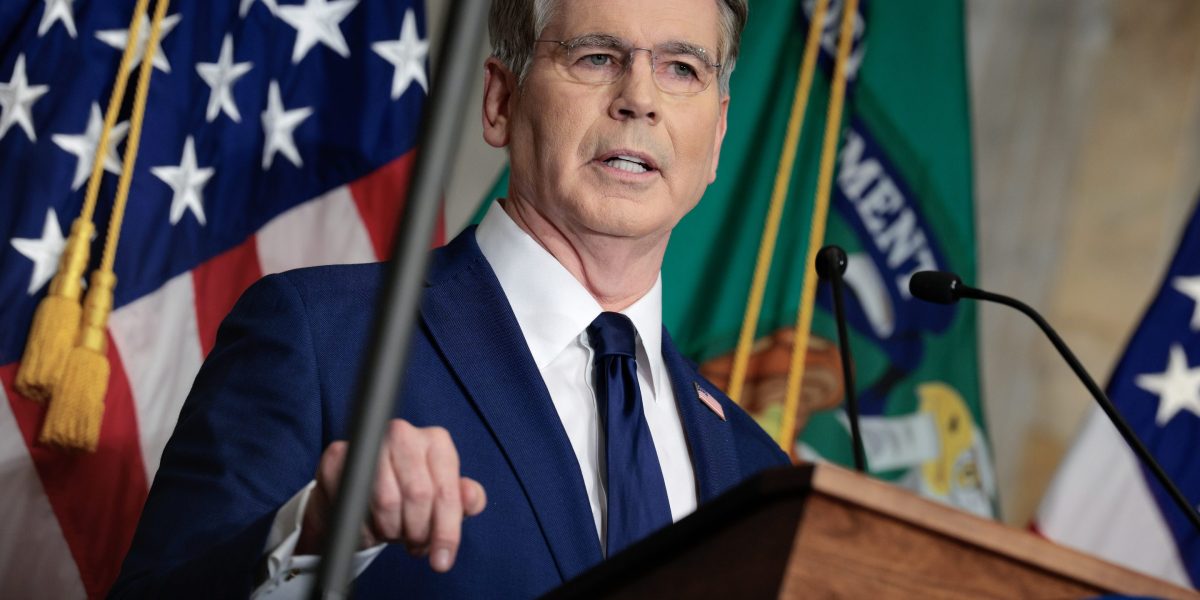
The Treasury Department has taken an unusual step to address the pressure. Secretary Scott Bessent doubled the size of the Treasury's buybacks of 10-to-30-year bonds, from $2 billion to at least $4 billion per operation. The move surprised investors and marked a rare direct intervention by the head of the Treasury. Doubleline analysts characterized the strategy as blurring the line between cash management and market control, underscoring the gravity of the moment.
"Net interest expense has already reached a record share of revenue, while the Treasury continues to finance large deficits in a market with heavy private demand for capital," analysts said. "That makes the level of the long bond more consequential than the historical comparison alone suggests."
As the debt continues to grow and interest payments consume an ever-larger share of the budget, policymakers face a stark choice: raise taxes, cut spending, or risk a crisis of confidence in U.S. sovereign debt. Each option carries significant political and economic consequences, and the window for action may be narrowing.
Article commentary
The latest figures on U.S. debt interest payments paint a sobering picture of fiscal fragility. That the federal government now spends $1.25 trillion annually—more than the entire defense budget—just to service its debt is a milestone that should alarm both policymakers and citizens. Yet the broader context matters more than the headline number. What makes this moment different from the 1991 peak is not just the scale of the debt, but the structural vulnerability it reveals. In 1991, the debt-to-GDP ratio was manageable at 44%. Today, it exceeds 100%, meaning the U.S. owes more than its entire annual economic output. This elevates the stakes of any interest rate movement. Even a modest rise in yields can translate into tens of billions in additional interest costs, crowding out discretionary spending and limiting the government's ability to respond to recessions, crises, or wars. The crowding-out effect noted by economist Ed Yardeni is a particularly acute concern. The rush of AI companies to issue long-duration bonds is not just a private sector phenomenon; it is actively reshaping the government's borrowing environment. When corporate giants offer higher yields to attract capital, the Treasury must compete by raising its own yields, which in turn increases the cost of debt service. This feedback loop is a ticking time bomb, especially if the economy slows and tax revenues decline. The Treasury's decision to double bond buybacks is a telling sign of unease. While buybacks are a routine tool for managing the maturity structure of debt, the size and timing of this intervention suggest a more active effort to keep yields from spiraling. It blurs the line between market management and outright manipulation, and it raises questions about how long the Treasury can sustain such measures without eroding market confidence. Looking ahead, the projections from the Congressional Budget Office are grim but perhaps too optimistic. They assume no major recession or significant yield spike. Given the current economic uncertainties—persistent inflation, geopolitical tensions, and a potential slowdown in consumer spending—those assumptions feel fragile. If the economy does falter, tax revenues will drop while spending on safety nets rises, pushing deficits and debt even higher. The political dimension cannot be ignored. Neither party has shown a willingness to tackle the primary drivers of the debt: entitlement spending and tax cuts. The 2017 tax cuts, which are set to expire, have been a major contributor to the deficit. Extending them would add trillions more to the debt. Meanwhile, Social Security and Medicare face long-term insolvency. Without reform, the interest burden will only grow, consuming an ever-larger share of the budget. In the end, the U.S. retains a unique advantage: the dollar's status as the world's reserve currency gives it a lender of last resort in the form of global demand for Treasuries. But that advantage is not infinite. As other nations diversify their reserves and as domestic debt crowds out private investment, the margin for error shrinks. The $40 trillion debt is not a crisis today, but it is a clear warning that the era of easy borrowing is coming to an end. The question is whether Washington will heed it before the bond market forces the issue.