Why Jalen Williams' Clutch Return Could Redefine OKC Thunder's 2026 Title Push
Source: SI NBA. Casualplayhub News adds summary, context, and editorial framing while linking back to the original report.
Ad eligibility review: sensitive-topic
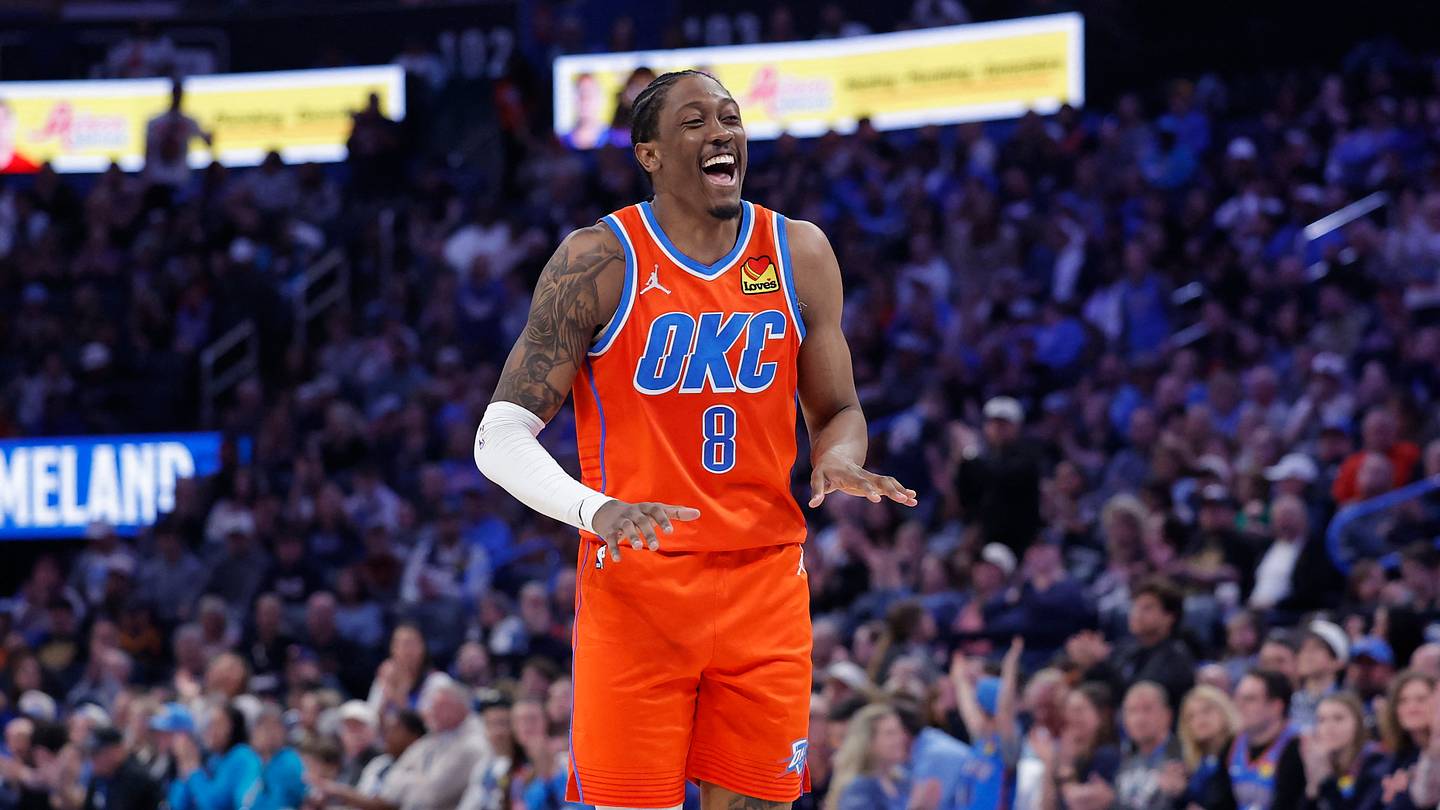
When the Oklahoma City Thunder tip off next season, the roster may have a few new faces, but one familiar presence could prove decisive in the moments that define championships. Jalen Williams, the All-NBA forward who missed 49 games last season, is poised to return as a full-time contributor—and his impact in high-pressure situations might be the Thunder's most underrated weapon.
Last season, the Thunder were the league's best team, winning 64 games and earning home-court advantage throughout the playoffs for the second consecutive year. Their dominance was particularly stark in clutch games—those within five points in the final five minutes. They finished with a 24-10 record in such contests, a 70.6% winning percentage that ranked second only to the Los Angeles Lakers. That excellence earned Shai Gilgeous-Alexander the Clutch Player of the Year award for the second time, cementing his reputation as one of the most lethal performers when the game is on the line.
Yet even as Gilgeous-Alexander thrived, the Thunder operated with a noticeable flaw. Williams, who had established himself as the team's second-best creator behind the superstar guard, managed to appear in just 33 games all season. In clutch situations specifically, he was on the floor for only 10 of the Thunder's 34 such games. Those limited appearances, however, produced a 7-3 record—a small sample that underscores his value. Without him, the Thunder's offensive load fell heavily on Gilgeous-Alexander, making the team more predictable in late-game scenarios.
The cost of that predictability became evident in the conference finals. Oklahoma City's struggles in that series exposed a lack of secondary playmaking under duress. Opponents could load up on Gilgeous-Alexander, forcing others to beat them. While rookie Ajay Mitchell and other role players showed flashes, the absence of a proven, high-usage option like Williams was glaring. The team's title hopes, it became clear, hinge on his health.
Now, with a full offseason of recovery and training, Williams is expected to be available for the entirety of the 2026-27 campaign. His return does more than add depth—it fundamentally alters how the Thunder approach close games. Defenses that once sold out to stop Gilgeous-Alexander will have to respect Williams' ability to create his own shot, drive to the rim, or find open teammates. This dynamic should free up the MVP candidate for cleaner looks, while also giving the Thunder a reliable second option when the shot clock is winding down.
Head coach Mark Daigneault has already shown he trusts Williams in those moments. In the 10 clutch games he played last season, Williams averaged 18.4 points on 51% shooting, with a plus-minus of +12.3 per 100 possessions. Those numbers, though drawn from a small sample, point to a player who thrives under pressure. And with a full season alongside Gilgeous-Alexander, that synergy should only deepen.
Beyond statistics, Williams' presence offers a psychological edge. The Thunder's conference finals exit left a bitter taste, and the team has talked openly about needing more poise in tight playoff environments. Having a second star who can take over possessions—and the confidence that comes from winning 7 out of 10 clutch games with him—could be the final piece of the puzzle. As teams inevitably load up on Gilgeous-Alexander in crunch time, Oklahoma City will be more than comfortable letting Williams take the reins.
The narrative around the Thunder's 2026-27 season has largely focused on internal development and potential roster tweaks. But Williams' clutch play, often overlooked amid discussions of his health and All-Star case, might be the single factor that elevates this team from regular-season juggernaut to legitimate championship favorite. If he stays on the floor, the Thunder's already terrifying late-game arsenal becomes truly multifaceted—and that's a problem the rest of the league will have to solve.
Article commentary
The Oklahoma City Thunder's 2025-26 season was a masterclass in regular-season dominance, but their playoff exit revealed a structural flaw that health alone may not fix. Jalen Williams' return is rightly celebrated, yet the fixation on his availability obscures a deeper question: can the Thunder's clutch identity sustain the step up in defensive intensity that the postseason demands? Last season, the Thunder's 70.6% winning percentage in clutch games was remarkable, but it came against a backdrop of regular-season predictability. Opponents had 82 games to study Gilgeous-Alexander's late-game tendencies, and the conference finals showed that a focused defense can still compress his space—even with Williams on the floor in limited minutes. The sample size of Williams' clutch appearances (10 games, 7-3) is too small to project dominance over a full playoff run. A 60-game season of healthy Williams will certainly help, but it won't erase the fact that defenses scheme for stars, not for supporting casts. Moreover, the Thunder's reliance on clutch performance is a double-edged sword. Teams that win a high percentage of close games often regress slightly the following season—not because they get worse, but because variance swings back. Oklahoma City's 24-10 record in such games was partly a product of Gilgeous-Alexander's extraordinary late-game efficiency, which may be difficult to replicate at the same level. Adding Williams could mitigate that regression by diversifying the late-game attack, but it also introduces a new variable: how will the two stars share the ball when every possession matters? There is also the matter of health. Williams played just 33 games last season due to a series of nagging injuries. Even if he returns for a full campaign, the Thunder must manage his workload to keep him fresh for the playoffs. Daigneault's rotation patterns will be scrutinized, as will the team's ability to win without him during back-to-backs or tough road stretches. From a broader perspective, the Thunder's situation mirrors the modern NBA's obsession with 'clutch' as a badge of honor. But the reality is that championships are won in the margins—transition defense, rebounding, and half-court execution over 48 minutes. Williams improves those areas, but he doesn't solve the Thunder's occasional vulnerability against elite size or physicality, which the conference finals exposed. Still, the optimist's view is compelling. The Thunder have the league's best regular-season record two years running, a top-three net rating, and a MVP frontrunner. Adding a healthy, improved Williams to that mix—especially one who has shown he can perform in high-leverage moments—should make them the favorites in the West. The key is whether his presence can tip the balance in a seven-game series against a team like Denver or Minnesota, where every clutch possession is contested by defenders who know the book on Gilgeous-Alexander. Ultimately, the Williams narrative is about trust. The Thunder trust him to handle the ball, make decisions, and take big shots. That trust was earned in limited minutes, but it needs to be tested over a full playoff run. If it holds, the overlooked boost becomes a defining advantage. If not, the Thunder will be left wondering what might have been—again.