Mobley and Allen's Key Performances Fuel Cavaliers' Season
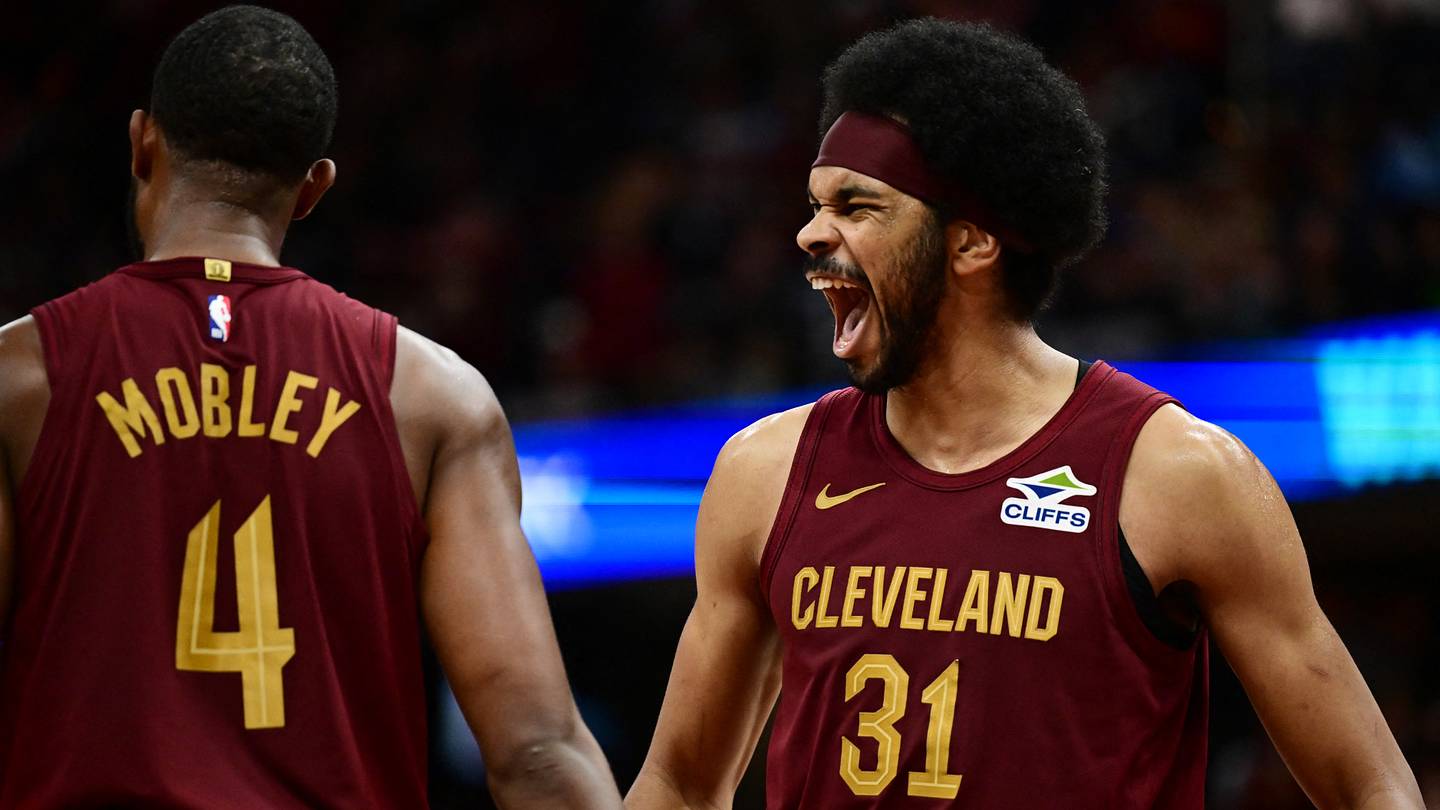
Source: SI NBA. Casualplayhub News adds summary, context, and editorial framing while linking back to the original report.
The Cleveland Cavaliers head into the upcoming season with a subtly transformed identity. The biggest change came in the form of Peyton Watson, a wing acquired during the offseason. That move required parting ways with a beloved player, but the front office believes the trade strengthens the roster. After a quiet summer, Watson's arrival signals a clear intent to address a longstanding need. Now, all eyes turn to the frontcourt, where Evan Mobley and Jarrett Allen remain the foundational pieces.
Last season, injuries forced head coach Kenny Atkinson to experiment with different frontcourt combinations. Dean Wade and Jaylon Tyson saw increased minutes, and both delivered when called upon. Tyson, in particular, had a breakout performance against the Philadelphia 76ers. He poured in a career-high 39 points, leading the Cavaliers to a two-point victory. De'Andre Hunter, since traded to the Sacramento Kings, contributed 16 points off the bench. Mobley and Allen also chipped in, but it was Tyson who stole the spotlight. Donovan Mitchell had a relatively quiet scoring night, nearly recording a triple-double with 13 points, 12 assists, and just one rebound shy of the milestone. The win highlighted the team's depth, as six players finished in double figures.
Mobley's standout game came against the Utah Jazz, where he dropped 34 points and grabbed 17 rebounds. The performance was a reminder of his immense potential and the "next step" Atkinson and others expect. Mitchell, facing his former team, also scored 34 points. New additions James Harden and Keon Ellis added 13 points each. Allen missed that contest, but he had his own signature moment later in the season. Facing the Portland Trail Blazers on the road, Allen erupted for 40 points, 17 rebounds, five assists, four blocks, and two steals. It was a career-high scoring night, and his dominance sparked a seven-game winning streak that ended with a loss to the Oklahoma City Thunder. The Blazers had no answer for the All-Star center.
Peyton Watson, now with the Cavaliers, had a respectable season of his own. His best game came for the Denver Nuggets, scoring 35 points in a win over the Washington Wizards. Watson's two-way versatility gives Cleveland a legitimate wing option, something the team has lacked. Together with Mobley and Allen, the Cavaliers boast a frontcourt that can defend multiple positions, stretch the floor, and dominate the glass. If the team is to contend for a championship, this frontcourt trio will be central to that pursuit. The pieces are in place, and the chemistry is building.
Article commentary
The Cavaliers' frontcourt evolution offers a fascinating case study in roster construction. Evan Mobley and Jarrett Allen have formed one of the most effective twin-tower pairings in the league, but their impact extends beyond traditional stats. Mobley's ability to guard on the perimeter and protect the rim creates a defensive backbone, while Allen's rebounding and finishing provide a steady interior presence. Yet last season revealed vulnerabilities when injuries struck. The team's reliance on Dean Wade and Jaylon Tyson highlighted the need for a reliable wing, a gap the front office addressed by acquiring Peyton Watson. Watson's arrival is intriguing. He brings length, athleticism, and a developing offensive game. However, his best performance came with Denver, not Cleveland, raising questions about fit. Can he replicate that production in a new system? The Cavaliers hope his defensive versatility will unlock more switching schemes, especially in playoff matchups. Meanwhile, the twin towers remain the cornerstone. Mobley's 34-point, 17-rebound outing against Utah was a glimpse of his ceiling, but consistency remains the challenge. Allen's 40-point explosion showed his offensive growth, yet both players have occasionally struggled against smaller, faster lineups. From an analytical perspective, the Cavaliers' frontcourt net rating when both Mobley and Allen share the floor is strong, but the team often stagnates offensively when defenses pack the paint. The addition of Watson, who can space the floor and attack closeouts, should alleviate some of that congestion. Still, the team's success hinges on Donovan Mitchell's ability to orchestrate the offense and create for others. The frontcourt's role is clear: defend at an elite level, dominate the boards, and capitalize on mismatches. The championship window is open, but the path is narrow. The Eastern Conference is deep, with the Celtics, Bucks, and 76ers all boasting formidable lineups. The Cavaliers' frontcourt gives them a unique advantage, but they must prove they can adapt when opponents go small. Watson's versatility could be the key, but it will take time to integrate. If the chemistry clicks, Cleveland has the pieces to make a deep run. If not, the front office may need to consider further adjustments. For now, the narrative is one of cautious optimism, built around a frontcourt that has already shown it can carry the team on any given night.